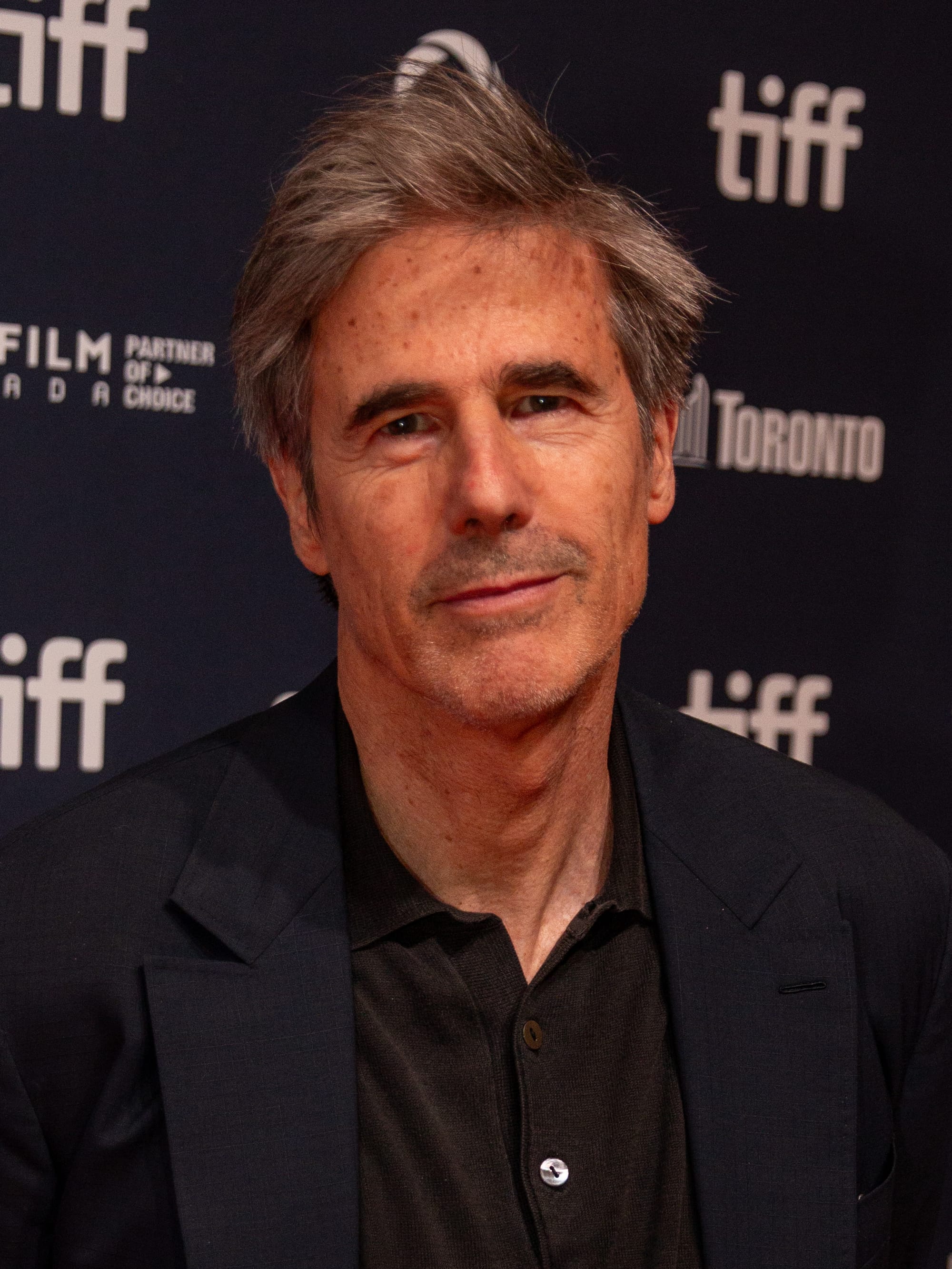
Cover: Walter Salles at the Toronto International Film Festival for I’m Still Here in 2024. Photograph: Adam Chitayat / WikiPortraits, CC BY SA 4.0. Existing Wikimedia crop by Indopug.
Walter Salles remembers an usher having to get him out of the cinema after The Passenger. Antonioni’s film had affected him so strongly that he stayed in his seat after the last screening. He wanted to make something capable of producing that feeling, although, as he later told IU Cinema, he was initially too shy to move straight into fiction.
Photography and documentaries came first. That sequence helps explain a career in which journeys are rarely just journeys. A railway station, a motorcycle trip or a family home becomes a place to discover how people live inside a larger history.
Central Station brought the Brazilian director international recognition in 1998. The Motorcycle Diaries widened his geographical canvas, while his collaborations with Daniela Thomas kept returning to Brazilian lives. I’m Still Here brought that attention to memory and family into an Oscar winning film. His latest documentary project turns to footballer and democracy campaigner Sócrates.
A childhood between countries, then a camera
Born in Rio de Janeiro on 12 April 1956, Salles grew up moving between countries because of his father’s diplomatic work. In a public conversation reported by Remezcla, he recalled missing Brazil while living abroad and finding a refuge in cinema during his childhood in Paris.
The International Film Festival Rotterdam biography also records his attendance at the University of Southern California’s School of Cinematic Arts. His later account to IU Cinema places humanist photography before filmmaking. Images of ordinary people drew him towards documentary, and documentary towards fiction. His early screen work included television and music films as well as a portrait of artist Frans Krajcberg. These were practical ways of looking and listening before constructing a dramatic world.
IMDb’s Walter Salles credits record A Grande Arte, also known as Exposure, in 1991. The move into features preceded the film that would make him widely known by several years. His career did not begin with Central Station, even if that is where many international viewers first encountered him.
Daniela Thomas and the search for a Brazilian story
Foreign Land in 1995 established an important partnership with Daniela Thomas. Their shared directing credits would also include Midnight in 1998, a segment of Paris, je t’aime in 2006 and Linha de Passe in 2008. The São Paulo festival’s career record makes clear how often they returned to each other across otherwise different projects.
Thomas described their working relationship at the Cannes press conference for Linha de Passe: they did not divide every responsibility in advance. Having two directors could soften the hierarchy and make colleagues more comfortable contributing. Salles added that each could follow the other’s intuition and have their own judgement tested.
That is a more revealing account of collaboration than a neat division between the person who handles actors and the person who handles images. Their partnership depended on a continuing conversation about what the film needed.
Central Station became the breakthrough
In Central Station, Fernanda Montenegro’s Dora writes letters for customers at Rio’s railway station. Her journey with a boy, played by Vinícius de Oliveira, brings an initially difficult adult and a vulnerable child into an uneasy relationship.
The Sydney Film Festival’s credits identify João Emanuel Carneiro and Marcos Bernstein as the screenwriters and Walter Carvalho as cinematographer. The film’s emotional force rests on several kinds of work meeting: the writing, Montenegro’s performance, the child’s presence and the attention paid to the country around them.
Cannes’s biography records the scale of its success: the 1998 Golden Bear in Berlin, a BAFTA, a Golden Globe and two Oscar nominations. Montenegro was nominated for Best Actress; the film was nominated in the foreign language category. Those nominations were recognition, rather than an Oscar win for the film.
Salles’s documentary Socorro Nobre, about correspondence between a woman in prison and an artist in exile, belongs beside this period of his work. Letters, distance and an encounter with another person’s life were already subjects he was exploring.
The road opened out into Latin America
Behind the Sun followed in 2001, adapting Ismail Kadare’s writing. Then The Motorcycle Diaries in 2004 carried Salles into the journey of the young Ernesto Guevara and Alberto Granado.
In the IU Cinema interview, Salles says retracing their route changed his own sense of belonging. He had understood himself as a Brazilian filmmaker; the journey made him feel part of a wider Latin American cultural territory. The location work became an education for the director as well as a means of making the film.
That account gives the road a precise role in his career. Travelling exposes a character, and sometimes the filmmaker, to experiences their previous surroundings could not provide. The journey is a way of changing perspective.
Hollywood, São Paulo and Kerouac
Salles’s next feature credit was Dark Water in 2005, with Jennifer Connelly as a mother trying to build a new life with her daughter in an unsettling apartment. The film’s credits identify Rafael Yglesias as screenwriter. The setting and genre changed, but the relationship between a parent, a child and an unfamiliar place still gave the drama its centre. His filmography then moved between an international anthology, Paris, je t’aime, and the return to Brazil with Thomas for Linha de Passe.
The latter follows four brothers and their mother in São Paulo. Sandra Corveloni’s performance won the Best Actress award at Cannes in 2008. It is an essential part of the career between the better known road films, and another reminder that Salles’s work has repeatedly made room for central female performances.
On the Road arrived in 2012, adapting Jack Kerouac with screenwriter José Rivera, who had also written The Motorcycle Diaries. The distributor’s announcement names Garrett Hedlund, Sam Riley and Kristen Stewart among the cast and records Francis Ford Coppola’s long involvement in developing the adaptation.
Before filming the fiction, Salles undertook documentary research into Kerouac’s travels and the people connected to the book. In his Cannes account of that preparation, the research was a means of understanding the journey and what remained of the America it described. The documentary habit had survived the move into major literary adaptations.
Documentary remained part of the later career
Jia Zhangke, A Guy from Fenyang in 2014 placed another filmmaker at the centre of Salles’s work. The later short When the Earth Trembles, also part of Where Has the Time Gone? in 2017, continued his work outside the conventional feature release cycle.
These credits matter because the gap between On the Road and I’m Still Here was not an absence from filmmaking. Salles continued making portraits and shorter work. For another director whose career grew through documentary form, our Brett Morgen story follows a very different approach to archive and biography.
I’m Still Here brought memory back to a family home
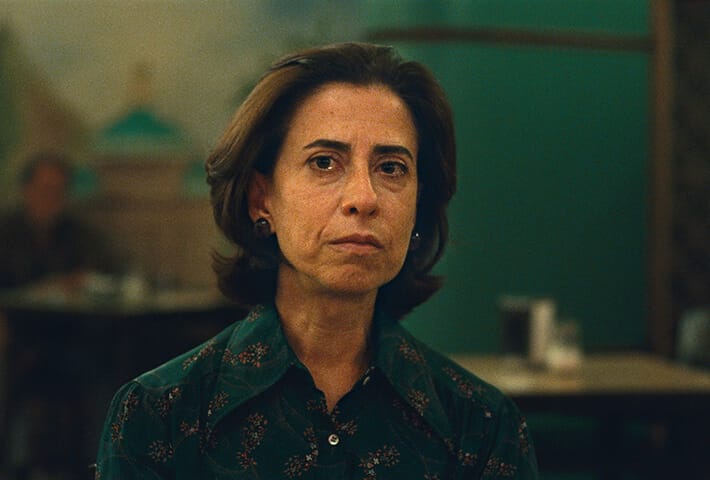
I’m Still Here in 2024 returned Salles to Brazil under military dictatorship. Adapted from Marcelo Rubens Paiva’s book by Murilo Hauser and Heitor Lorega, it follows Eunice Paiva and her family after state violence ruptures their lives. Fernanda Torres, Selton Mello and Fernanda Montenegro lead the cast listed by Sony Pictures Classics.
The relationship was personal as well as historical. In a Le Monde interview, Salles described knowing the Paiva family when he was thirteen. Their home was part of his own memory before it became the setting of a film.
At the 2025 Academy Awards, I’m Still Here won International Feature Film for Brazil. It also received Best Picture and Best Actress nominations, the latter for Torres. More than a quarter of a century after Montenegro’s nomination for Central Station, Salles had directed another performance from the same family into that category.
The next chapter turns to Sócrates
As of October 2026, Salles’s latest documentary project is Sócrates Brasileiro. The São Paulo International Film Festival programme listed its first two episodes, still being completed, for 23 October. This was a festival presentation of work in progress, rather than evidence that the complete series was already available to stream.
The subject is the footballer, doctor and political campaigner Sócrates. The episodes connect his childhood and arrival at Corinthians with the democratic movement associated with the club. Globoplay is credited as producer, with VideoFilmes and Anonymous Content Brazil as coproducers.
It is a recognisable continuation of Salles’s interests: an individual life becomes a way into the country around it. The route has taken him through fiction, documentary, literary adaptation and now a series, with collaborators and real encounters shaping the work along the way.
Where to begin watching and reading
- For the breakthrough: begin with Central Station, then compare its journey with The Motorcycle Diaries.
- For the Thomas partnership: place Foreign Land beside Linha de Passe.
- For the later work: pair the documentary portrait of Jia Zhangke with I’m Still Here.
Use Salles’s IMDb filmography for individual credits and Sony Pictures Classics’ official Instagram for distributor updates. The latter is the distributor’s account, not Salles’s personal profile.
If you are preparing your own film for an audience, a free Vidreno account lets you explore releasing it through Vidreno On Demand.