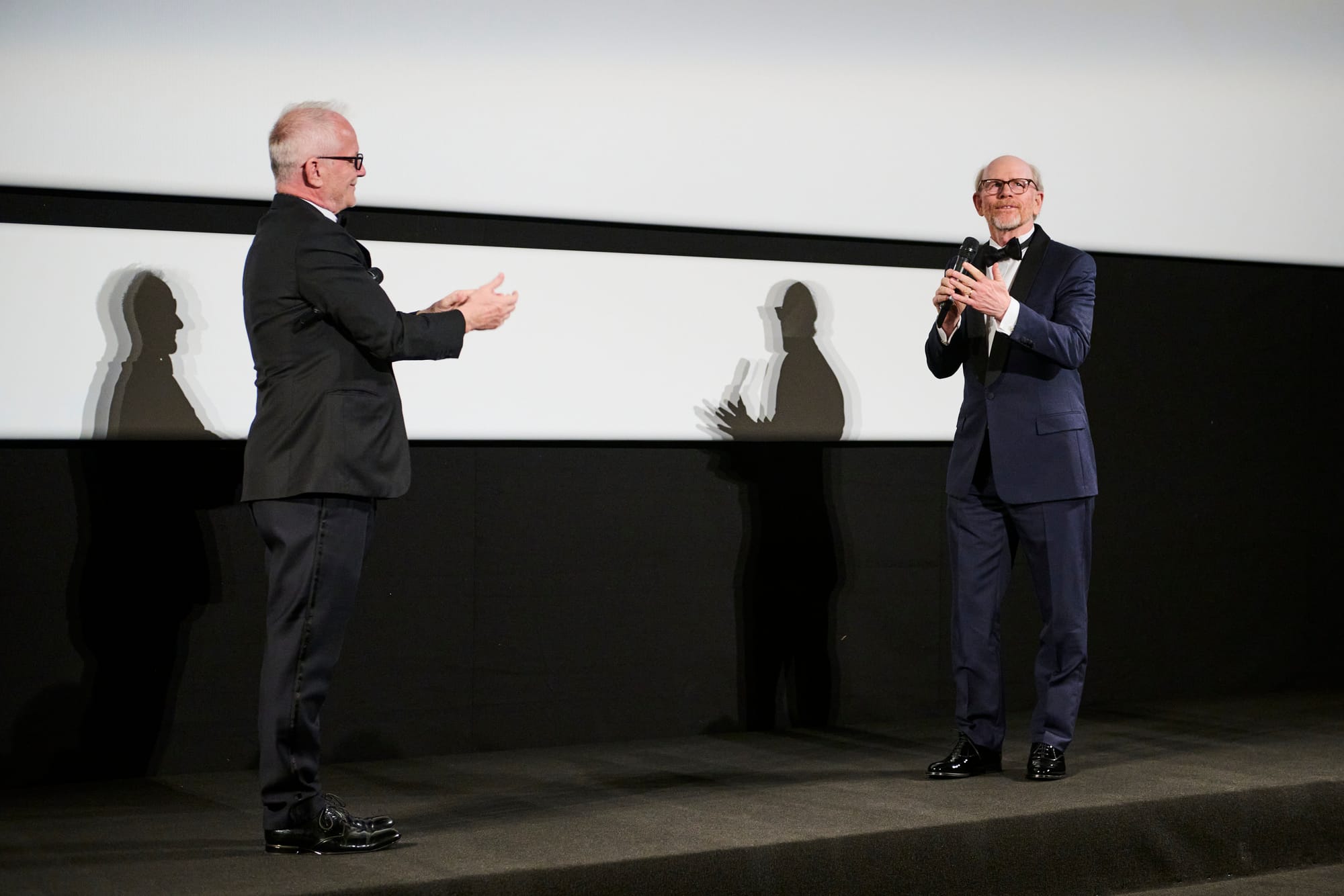
At Bait’s Berlin premiere, Mark Jenkin saw crowds outside the cinema and assumed another film must be drawing them. It was a single screen venue. They had come for his film.
He recalls the surprise in his Scared To Dance interview. The moment makes more sense when you know what came before it: paid production work in London, years of films in Cornwall and a screenplay that kept returning under different titles.
Cover photograph: Thom Axon, via Kodak’s Bait production interview.
London work and a return to Cornwall
Born in Newlyn, Cornwall, in 1976, Jenkin began his career in London. The Luxembourg City Film Festival biography traces that beginning and his later connection with Falmouth University, where he became Distinguished Professor of Film Practice.
Jenkin remembers working in London as a promo producer between 1999 and 2002. He returned to Cornwall at Easter 2002 with money to write. The project he began then would eventually become Bait, although the idea had first occurred to him in 1999.
Other films occupied the intervening years. His IMDb credits include Golden Burn in 2002, The Rabbit in 2004, The Midnight Drives in 2007 and Happy Christmas in 2011. Bait was a public breakthrough, but it was not the beginning of his experience.
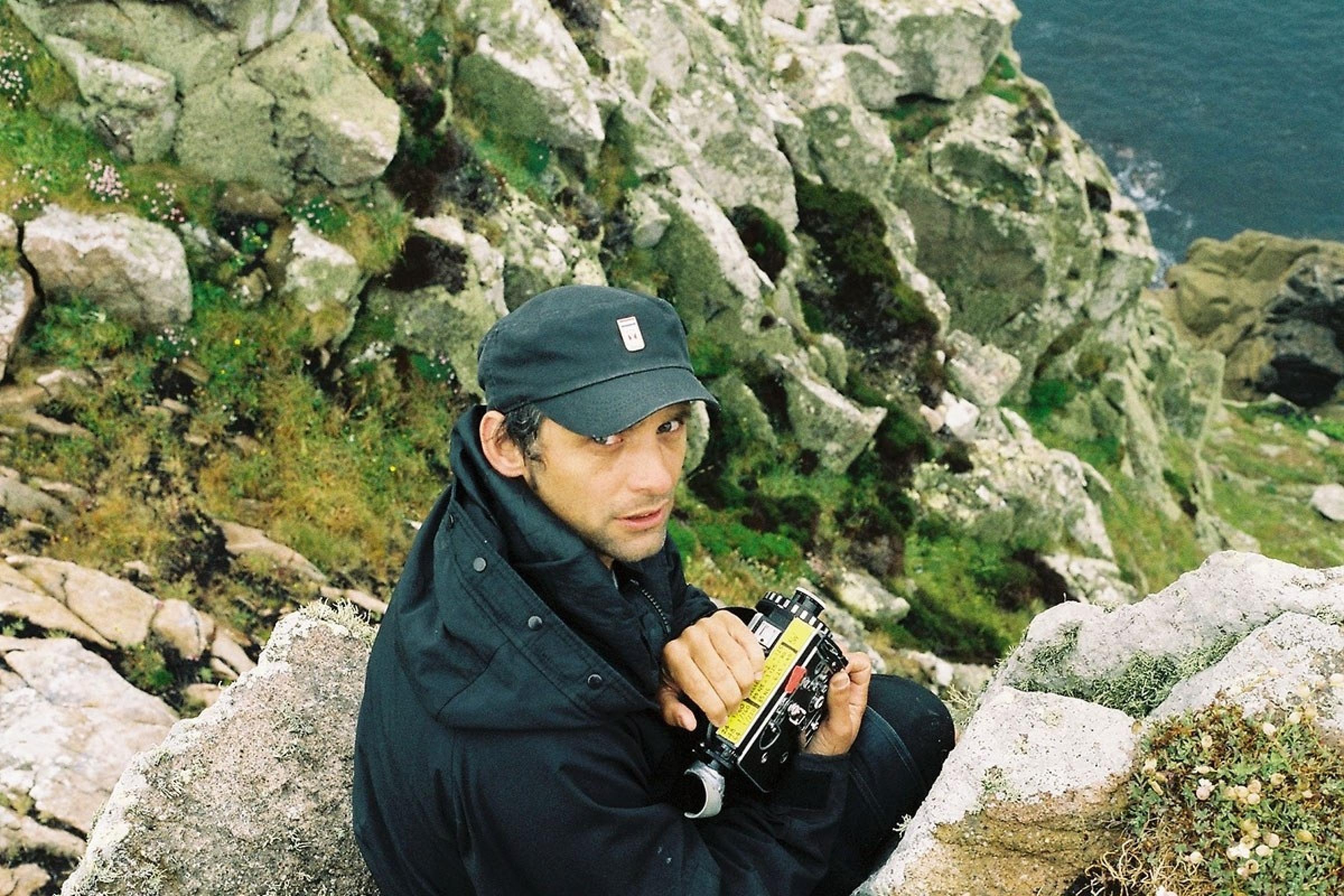
The earlier work also gave him room to find a process he wanted to sustain. In his Kodak interview, he describes setting personal rules that simplified production and kept costs under control: shoot sparingly, record sound separately and develop the film himself.
The smaller film that helped Bait happen
Bronco’s House gave those ideas a concrete form. Jenkin and producer Denzil Monk raised £6,000 through crowdfunding for the 44 minute film, about a couple trying to secure a home before their child arrived. Jenkin describes it as the practical precursor to Bait, made through the same basic method.
In the interview’s account of that period, the important change is that producers could see a finished example. Kate Byers and Linn Waite of Early Day Films saw Bronco’s House and helped revive the larger project. Jenkin credits their willingness to work with the resources available for getting Bait made.
The long development was also a history of revision. He says the production used draft 42 of the screenplay. That detail complicates the appealing image of a filmmaker simply picking up a camera and making something. The distinctive method sat alongside years of writing.

Bait turned local tensions into an international breakthrough
Bait follows a fisherman without a boat in a Cornish community reshaped by tourism and expensive holiday homes. Edward Rowe’s Martin Ward lives with the consequences of those changes. The conflict is about who can continue to work and live in a place that others consume as an image.
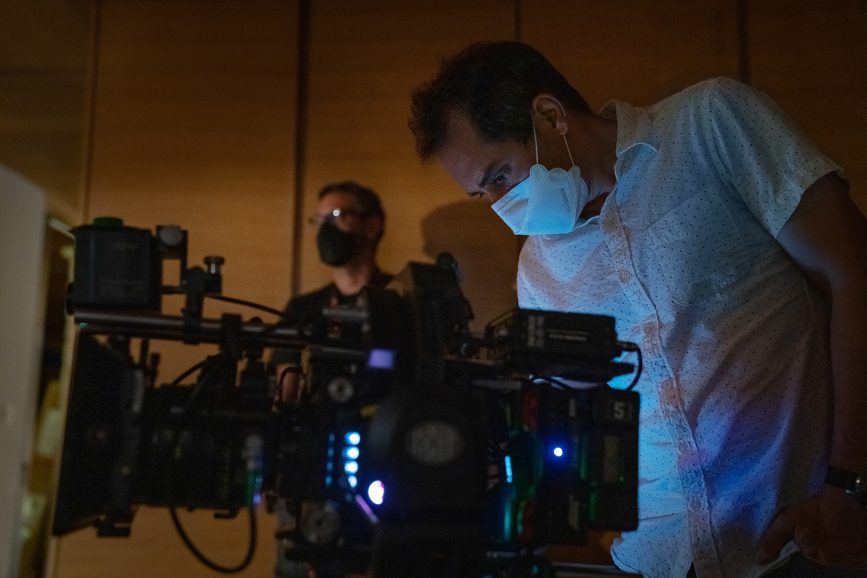
The film’s production was equally rooted in Cornwall. Jenkin shot it over 21 days in 2017, with Michael Eddy as focus puller and Colin Holt working on lighting. He then spent months developing the negative. Its grain and uneven texture came from a physical process, rather than an effect applied to make new footage look old.
Berlin brought the film to international attention in 2019. BFI Distribution released it in UK cinemas that August. In 2020, Jenkin, Byers and Waite shared the BAFTA for outstanding debut by a British writer, director or producer.
The award recognised a team as well as a filmmaker. Early Day Films’ production account also records Byers and Waite’s BIFA breakthrough producer award. Their contribution belongs inside the story of Jenkin’s emergence, rather than in a footnote after it.
Enys Men opened a stranger chapter
Enys Men reunited Jenkin with Mary Woodvine and Edward Rowe. Set in 1973 on an isolated Cornish island, it follows a wildlife volunteer whose repeated observations become increasingly difficult to separate from nightmare.
The BFI’s announcement places its world premiere in Directors’ Fortnight at Cannes in 2022. Denzil Monk produced it for Bosena, with Film4 cofinancing. The return of familiar collaborators gave Jenkin continuity even as the storytelling moved away from Bait’s recognisable village disputes.
His output also continued outside features. The Sayle Screen filmography includes the BFI commissioned short A Dog Called Discord in 2023. The shorter form remained part of the career after it had helped establish him.
Rose of Nevada brought a larger canvas
Rose of Nevada began with an original story by Jenkin and Woodvine. A fishing boat returns after vanishing 30 years earlier; the new crew’s voyage carries them into a disturbance in time. George MacKay and Callum Turner lead the cast, with Woodvine and Rowe among the familiar collaborators.
According to the BFI’s release announcement, the film premiered at Venice in 2025 and reached UK and Irish cinemas on 24 April 2026. Monk produced it through Bosena, with development support from Film4 and financing from Film4 and the BFI.
Jenkin again wrote, directed, photographed, edited, scored and designed sound. The project had a larger budget and crew than its predecessors, while retaining its Cornish production base. His method had become something that a bigger production could be built around.

The filmmaker with many credits still needs a crew
Jenkin is candid about the paradox of doing so many jobs. In the Scared To Dance conversation, he explains that operating the camera while directing depends on assistants and the lighting team making that possible. His long list of credits does not erase their work.
Sound has become another route through the career. He describes his music as part of the film’s sound design, working alongside mixer Ian Wilson. Bait was not originally meant to have a score; experiments during the lengthy post production gradually became part of it. Later live performances have given that side of his filmmaking another audience.
The throughline is a growing ability to keep the jobs he enjoys while finding collaborators who make the whole film possible. The small productions, the long screenplay development and the later institutional support all belong to that story.
Explore the films and the people behind them
Jenkin’s website, Instagram profile and IMDb filmography provide useful routes into his work. For another career shaped by a close working partnership and a distinctive view of images, read Steve Yedlin’s story.
Our Philip Barantini profile follows a different route into directing, from acting and kitchen work to Boiling Point and Adolescence.
If you are making your own work, Vidreno offers a place to explore hosting and sharing films. Start with a free account.