Tony Gilroy spent years writing films before he directed one. By the time Michael Clayton arrived in 2007, he had already worked on romantic comedy, Stephen King, courtroom thrillers and Jason Bourne.
That makes his story more interesting than a sudden discovery. There were several doors to get through: earning a living from scripts, seeing them produced, becoming trusted with expensive films, then taking responsibility for the whole picture.
Before the screenplays, there was music
Gilroy was born in New York in 1956 and grew up upstate. His father, Frank D. Gilroy, was a playwright whose The Subject Was Roses won a Pulitzer Prize and a Tony. His brothers also entered film: Dan as a writer and director, John as an editor.
But Tony initially wanted a different working life. In his Bullseye conversation with Jesse Thorn, he recalls hoping to become a studio musician, then encountering the standard of the players in Los Angeles.
Writing was familiar territory, but it was not instant employment. At his BAFTA screenwriters’ lecture, he described years of bartending before selling his first screenplay at 30.
The first film was a skating romance
The Cutting Edge, released in 1992, put his writing on screen. Gilroy told BAFTA that the assignment was essentially Shakespeare’s The Taming of the Shrew transplanted into pairs figure skating. He wanted a film made badly enough to take it on.
It is an unexpectedly useful place to start this career. Before the conspiracies and corporate fixers, there were two people who needed to work together despite themselves.
His subsequent IMDb credits trace the widening range: Dolores Claiborne, Extreme Measures, The Devil’s Advocate, Armageddon and Proof of Life. These were different kinds of writing jobs, rather than a neat march through one genre.
Bourne gave the action a personal problem
Gilroy wrote on The Bourne Identity in 2002, The Bourne Supremacy in 2004 and The Bourne Ultimatum in 2007.
His BAFTA account gets beneath the chases. A man without a memory discovers who he might be through his abilities, then realises those abilities are disturbing. Competence becomes evidence against him.
Michael Clayton made him a director at 50
For his first feature as director, Gilroy moved into the less glamorous workings of a law firm. George Clooney played Michael Clayton, a fixer dealing with other people’s problems while his own life unravelled.
The Academy’s 2008 record shows the scale of that arrival: seven nominations for the film, including Gilroy for directing and original screenplay. Tilda Swinton won supporting actress; Clooney and Tom Wilkinson were also nominated.
Those credits describe an ensemble achievement. The film’s pressure depends on the people around Clayton as much as the man at its centre, with James Newton Howard’s score also recognised by the Academy.
The career kept moving between roles
- Duplicity, 2009: another feature written and directed by Gilroy.
- The Bourne Legacy, 2012: a return to the franchise, this time also directing.
- Nightcrawler, 2014: a producing credit on his brother Dan’s film.
- Rogue One, 2016: a writing assignment that eventually opened the route to Andor.
The pattern matters. Directing did not erase the writer or collaborator. Different projects called for different forms of involvement.
From a Rogue One assignment to building Andor
Gilroy told Bullseye that Kathleen Kennedy first brought him onto Rogue One for a short writing stint. He returned for a much larger involvement the following year. It was a professional assignment before it became a continuing part of his life.
With Andor, he helped turn Cassian’s earlier years into a story of change. Diego Luna was both the central performer and an important producing partner.
The production designer belonged in the writing conversation
In his Scriptnotes interview, Gilroy describes working with production designer Luke Hull before the wider writing group assembled. Designing Ferrix and other places helped establish what the show could be.
Beau Willimon and Dan Gilroy then joined a concentrated story conference, with Hull present. Locations, scale and practical limits were part of the conversation while the story was still being shaped.
He also describes preparing scripts and discussing them in enough detail that directors could arrive with a clear understanding of what each sequence needed. The preparation was intended to give collaborators room to do their work.
For another example of writing and direction developing together, read our account of how The Social Network was made.
Behemoth! brings the music back
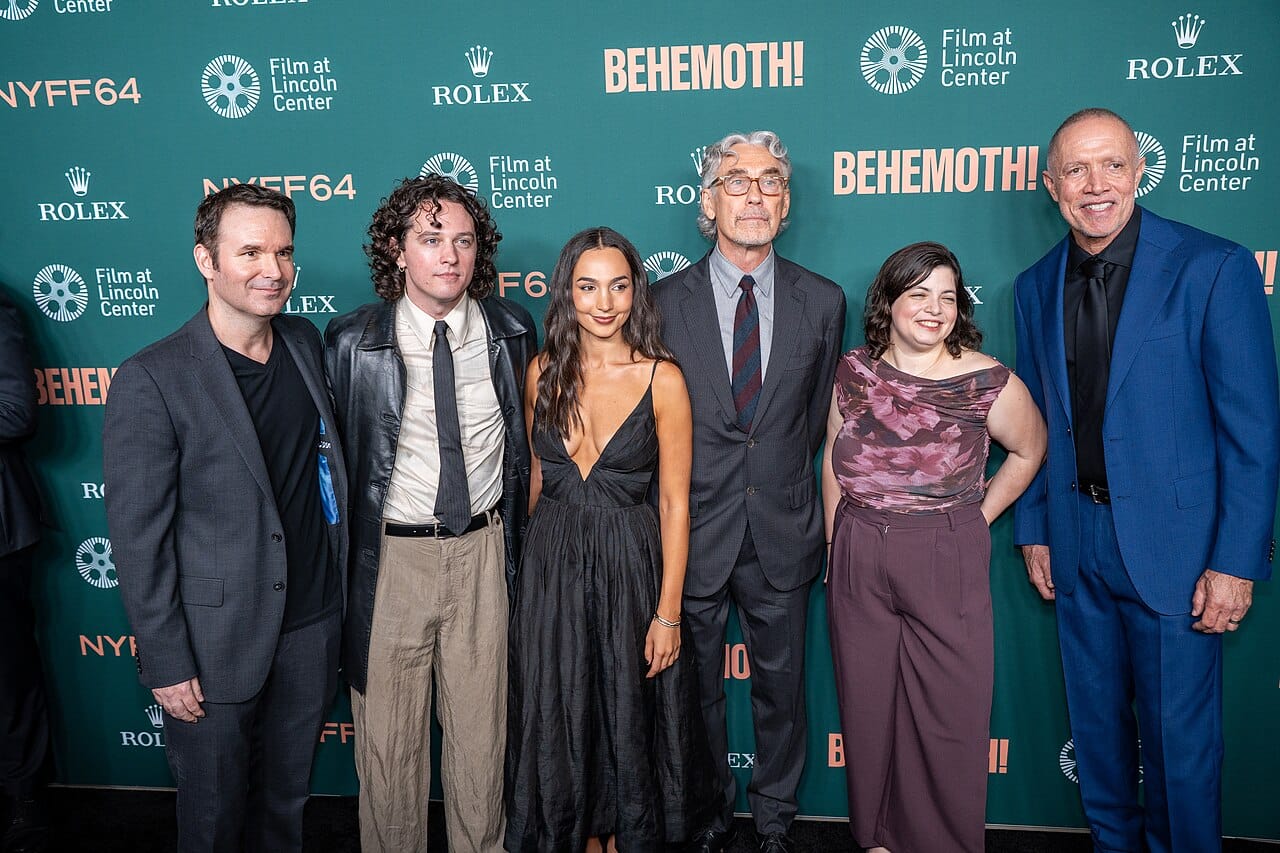
His 2026 film Behemoth! returns to the musical world he once hoped to work in. AFI’s programme describes Pedro Pascal’s character, Alex Serian, as a cellist returning to Los Angeles and the work of recording film scores.
Nine composers contribute as the Behemoth! Collective, while John Gilroy edits and produces alongside Tony Gilroy and Sanne Wohlenberg. Music is built into the character’s working life and the film’s structure.
It is a fitting later chapter: an early ambition returning through a craft developed over decades. The musician did not become the career Gilroy expected, but it remained material he could draw on.
Where to explore his work
- Tony Gilroy on IMDb for his writing, directing and producing credits.
- BAFTA Guru’s original lecture for his approach to scripts and character.
- Bullseye’s filmed interview for his account of Andor and his earlier ambitions.
We have not identified a verified personal social account for Gilroy. The linked interviews come from the organisations that recorded them.
For another very different route into writing and directing, explore Christopher Nolan’s career story. If you are making work of your own, Vidreno gives you a place to publish your films.