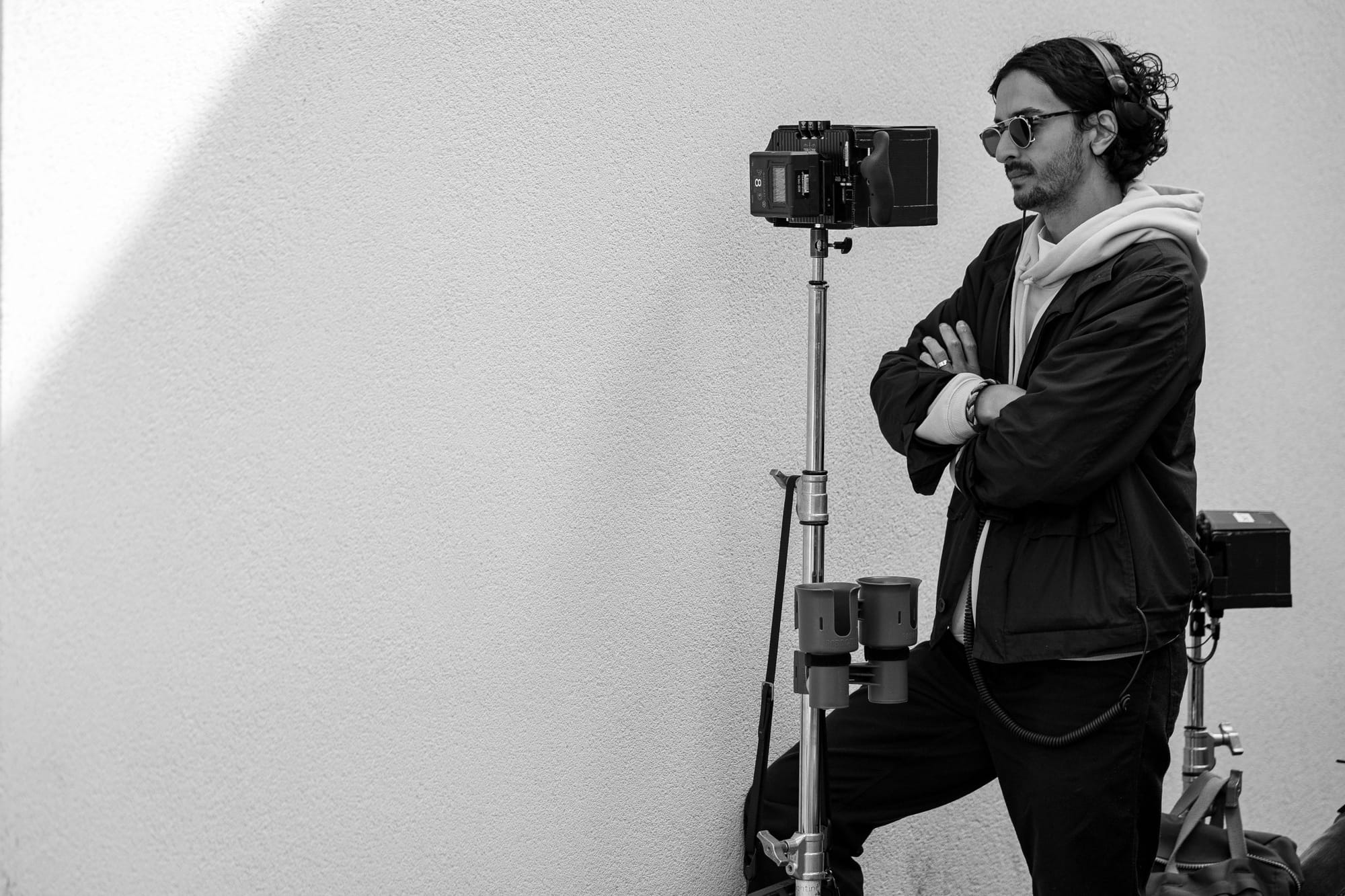
The first draft left Imran Perretta exhausted. He had been reaching back into his teenage life to write Ish, and the BBC suggested that another writer might help him find some distance.
Producer Dhiraj Mahey asked who he would choose if he could ask anyone. Perretta named Enda Walsh. Within days, the playwright behind Hunger wanted to meet.
In Sean Wilson’s interview for BFI Distribution, Perretta describes expecting a little mentoring. Instead, Walsh began discussing what he could contribute to the opening act and suggested starting work the following Monday.
It is a useful place to begin Perretta’s story. His debut feature grew out of very personal experience, but making it required him to let other people into the work.
Before the galleries, there were basketball videos
Perretta grew up in South London, the son of a Bangladeshi mother and an Italian father. In his interview with The Polis Project, he connects his filmmaking to the experience of becoming a teenager after 9/11.
The first images that made filmmaking feel possible came closer to home than Hollywood. He told Shortlist that homemade grime videos and the DVDs circulating among friends offered a way in. He began making basketball videos with his own friends.
That beginning matters because it puts the camera before the awards. Perretta was already finding things to film, among people he knew, long before a feature production became possible.
The art career that came before the debut
Perretta’s gallery work joined images, sound and performance. Film London’s profile records his selection for Bloomberg New Contemporaries in 2014 and a residency at Wysing Arts Centre in 2017.
Works including Brother to Brother and 15 days preceded the destructors, the 2019 moving image work that brought wider recognition. The screens were in galleries, but he was already working with the materials of cinema.

His official biography marks three important steps: a Jarman Award nomination in 2019, a Turner Prize Bursary in 2020 and a Paul Hamlyn Foundation Artist Award in 2023.
The support had a practical meaning. In his Paul Hamlyn Foundation profile, he explains that the award would help him support his family and spend more time in the studio with less financial pressure.
Music ran through this work too. His projects with Paul Purgas, and with Purgas and Nabihah Iqbal, sat alongside the films. Later, A Riot in Three Acts included a new string quartet suite commissioned and performed by Manchester Camerata.
Ish became the cinema breakthrough
Ish follows two boys in Luton whose friendship is damaged by a police stop and search. Perretta drew on an encounter from his own adolescence, when he and a friend were treated differently by the police and their relationship did not recover.
The BFI’s production account identifies a substantial group behind the debut. Mahey and Bennett McGhee produced it, BBC Film developed it, and BBC Film and the BFI financed it with additional backing. Jermaine Canute Edwards shot the film in black and white.
Perretta’s own experience supplied the starting point. The production gave him collaborators who could help turn that material into a film other people could enter.
Finding a friendship that already existed
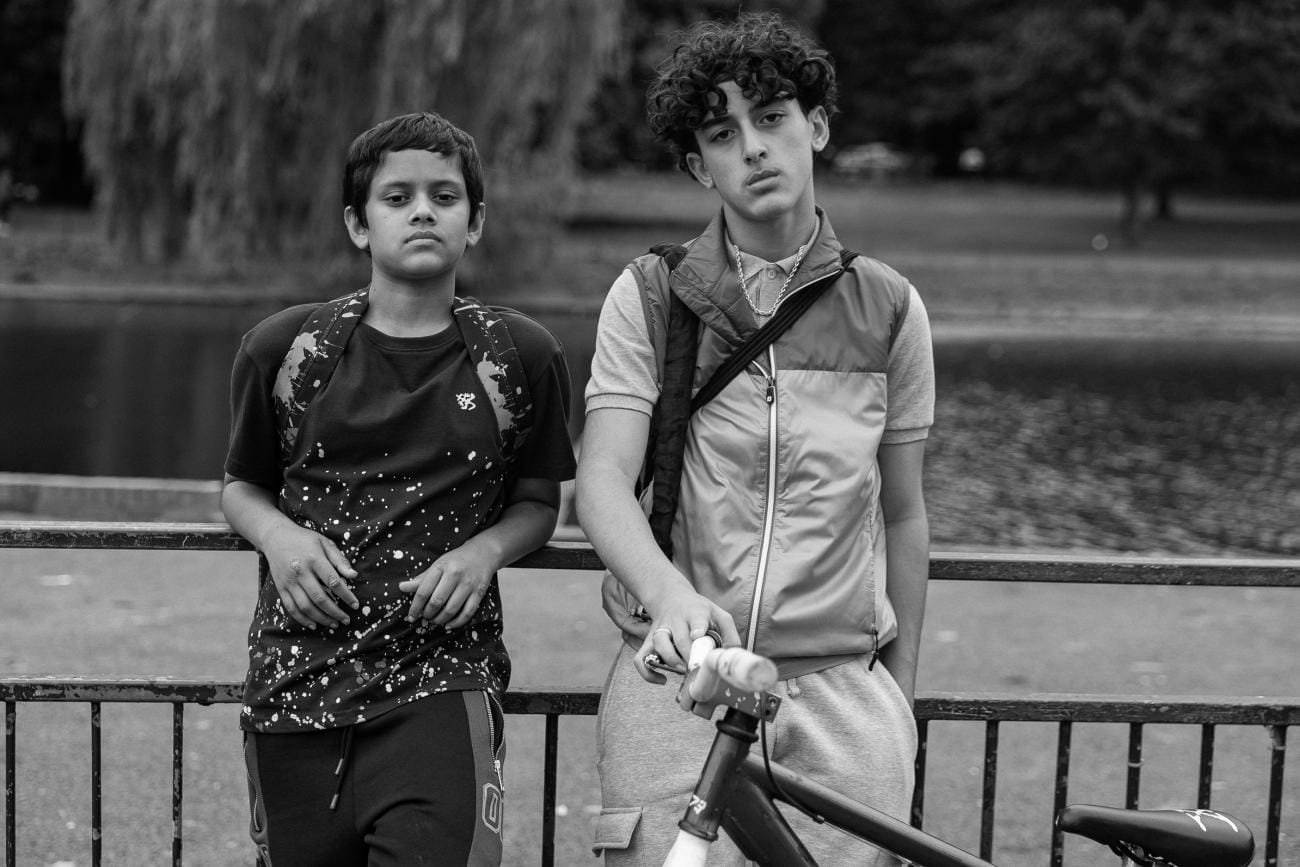
Farhan Hasnat and Yahya Kitana were newcomers to acting, but their friendship was real. The BFI confirms that both were local to Luton and had known each other since childhood.
That gave the film something a casting session cannot manufacture. The boys brought their own ease with each other into scenes about a relationship coming apart.
When the lights failed, the scene kept going
One of the most revealing production stories concerns a night sequence with the boys carrying flares. Perretta told Shortlist that the generators failed near the end of their permitted working time.
Edwards continued following the performers handheld, with the flares providing the light. What could have ended the shoot became footage Perretta particularly valued for its freedom.
It was a collaboration at its most immediate: performers carrying on, a cinematographer responding and a director recognising what the accident had given them.
He brought the music with him
Perretta also composed Ish. His earlier gallery work had already made sound central to his practice, and the Manchester Camerata commission had given him experience of writing for an ensemble.
He told Wilson that his earliest scoring had partly come from necessity: he could not afford to pay someone else. For Ish, he worked with arrangers, an orchestra and the vocal collective Shards. The responsibility was his, but the execution was shared.
The film’s IMDb credits list Perretta as composer as well as director and writer, alongside Walsh on the screenplay. These are connected parts of his practice, rather than a sudden extra job taken on for the debut.
What happened after Venice?
Ish premiered at Venice Critics’ Week in 2025 and won its Audience Award. Its UK and Irish cinema release followed on 31 July 2026 through BFI Distribution.
On 14 October 2026, Perretta was among the BFI and CHANEL Filmmaker Award winners. The recognition belongs to a career that now moves between cinema, exhibitions and composition.
- The gallery work continues. His official biography records a Tate Britain presentation of the destructors beginning in July 2026.
- The writing partnership continues. In his July interview, he said he and Walsh were working on something new. That is a writing project, not an announced finished film.
- The first feature has a public life. Audiences can follow its release through the BFI’s film page.
Perretta’s route is different from the acting career that preceded Philip Barantini’s directing breakthrough. Both stories show why a debut is rarely the beginning of the work.
For Perretta, the earlier films, collaborations and music did not disappear when cinema opened up. They became the foundation of it.
Making a film of your own? A free Vidreno account gives you a place to explore sharing your work.