Before Aimee Lou Wood became familiar to millions of television viewers, she was selling flowers in the rain. Then came the missed calls from her agent. She had landed Sex Education. A theatre job followed within days.
That sudden change makes a neat breakthrough story. What came afterwards is more interesting: an actor learning how a camera sees her, finding confidence alongside experienced collaborators and eventually writing the words herself.
Stockport, drama school and the rehearsal room
Wood was born in Stockport in 1994. Acting offered a way into another world long before it became a profession. Her training took her to RADA, where she graduated in 2017, as the school’s official graduate profile confirms.
Her early professional work included Mary Stuart and People, Places and Things. These were beginnings built around performance in a room, with other actors and an audience, rather than the instant visibility television would bring.
In a 2019 interview with the Standard, she recalled selling subscriptions for Freddie’s Flowers when the Sex Education offer arrived. Soon afterwards, she was cast as Effie in Bruce Norris’s Downstate.
Directed by Pam MacKinnon, Downstate took her to Chicago’s Steppenwolf Theatre and then London’s National Theatre. Even as her screen career accelerated, the rehearsal room remained somewhere she could concentrate on the work itself.
The big break: Aimee Gibbs in Sex Education
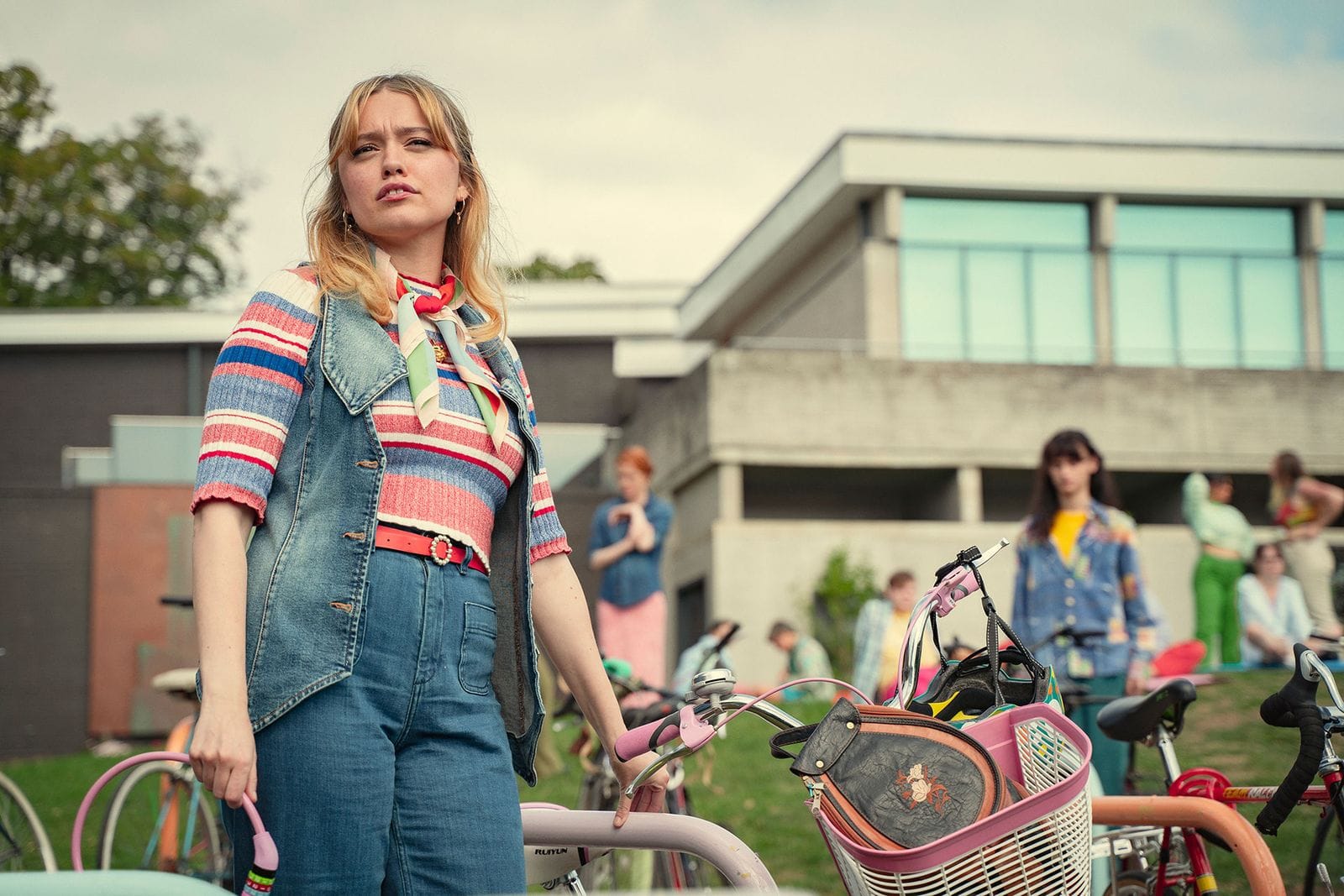
Sex Education arrived in 2019. Wood’s Aimee Gibbs could be funny, trusting and apparently carefree, but the role gradually asked for much more. Across four seasons, the character’s vulnerability became as important as her comic timing.
The second season’s account of sexual assault and its aftermath gave Wood emotionally demanding material within a comedy. The performance helped establish her as an actor who could hold humour and pain in the same character without flattening either.
It was also an education in screen acting. Speaking to Vogue in 2021, Wood described learning to accept the messiness of an emotional take. A performance did not have to look tidy to feel true.
That distinction matters. Rather than polishing away every awkward expression, she was learning to trust what the camera could catch. Her growing confidence made room for more vulnerability, not less.
In 2021, she won BAFTA’s Female Performance in a Comedy award for Sex Education. Her first television job had become the role that made her name.
Learning from Bill Nighy, then stepping into Cabaret
Her film work included Will Sharpe’s The Electrical Life of Louis Wain. Living, released in 2022, gave her a particularly important collaborator: Bill Nighy.
In Oliver Hermanus’s film, written by Kazuo Ishiguro, Wood plays Margaret Harris, a former colleague of Nighy’s Mr Williams. His diagnosis forces him to reconsider how he has spent his life. Margaret’s energy helps open another possibility.
Wood told Glamour that working with Nighy was valuable beyond the scenes themselves. Conversations and shared lunches became opportunities to learn. She also admired Margaret’s decisiveness, a quality she wanted to carry into her own creative choices.
The memories she treasured included a simple scene in a pub with Nighy. The pleasure was in doing the work together, rather than in what a successful film might mean from the outside.
In 2023, she played Sally Bowles in Cabaret. The stage remained part of her career, alongside screen credits including Uncle Vanya, Seize Them!, Alice & Jack and Toxic Town. Her agency credits show the breadth of those collaborations.
The White Lotus and a much larger audience
In the third season of The White Lotus, Wood played Chelsea opposite Walton Goggins as Rick. The Thailand set story brought her into Mike White’s ensemble and gave her optimism a complicated relationship to the world around her.
In a TIME interview from the production, she discussed her admiration for White’s charged group conversations. The drama often lives in the friction between what people say and what everyone else hears.
After Sex Education’s long character arc, this was another way of working: a tightly contained ensemble story, with each relationship feeding the larger picture.
Film Club: making a world of her own
Film Club began with Ralph Davis, a friend from drama school who shared her sense of humour. During lockdown, writing together gave them a creative outlet. The result became a BBC series in 2025.
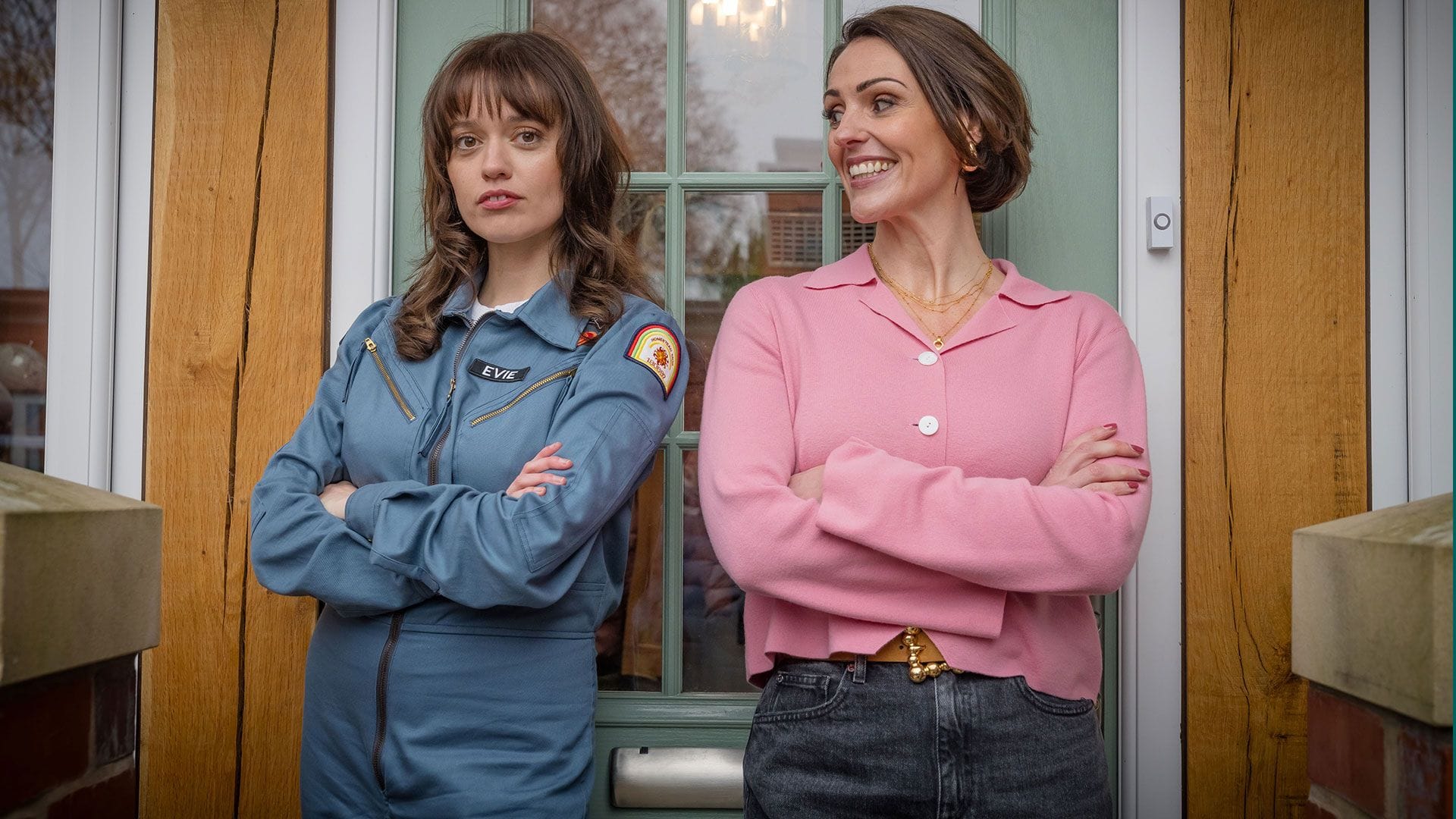
Wood plays Evie, whose regular film nights with Noa, played by Nabhaan Rizwan, provide a place to escape and connect. When Noa faces a move away, the arrangement can no longer protect them from saying what they mean.
In a press interview about the series, Wood explained how the project changed once other people began making it. Watching scenes she was not in helped her see that the story belonged to the ensemble too.
Even the film night decorations carried that spirit. Props made by students contributed a handmade quality, supporting the idea that these characters were creating their own little cinema rather than inhabiting a perfect showroom.
Writing with another actor’s voice in mind
Suranne Jones plays Evie’s mother, Suz. Wood told Glamour, in a joint interview with Jones, that she had imagined Jones’s voice while writing the part. Hearing the dialogue performed turned that private idea into a shared experience.
Director Catherine Morshead was another familiar collaborator, having worked with Wood on Daddy Issues. Film Club brought those relationships into a project where Wood’s responsibilities extended beyond her own performance.
Writing also exposed something different. Performing somebody else’s words provides a certain distance; sharing a story you helped create can feel more revealing. Film Club made her taste, humour and creative judgement part of the finished work.
The next chapter: Anna Dostoevskaya and Pattie Boyd
As of October 2026, The Idiot(s) brings Wood into another period story. She plays Anna Dostoevskaya opposite Johnny Flynn as Fyodor, in the film directed by Małgorzata Szumowska and Michał Englert.
The official production page identifies Andrew D. Kaufman’s The Gambler Wife as its source. The story puts Anna’s role in the relationship at its centre, rather than treating her simply as the famous writer’s companion.
Another announced role lies ahead. The Beatles’ official site confirms her casting as Pattie Boyd in Sam Mendes’s four film project. That is forthcoming work, not a completed chapter of her screen career.
What her route into film reveals
- The first break did not replace the earlier craft. Theatre remained part of Wood’s development after television made her recognisable.
- Collaborators changed the work. Nighy, White, Davis, Jones and Morshead offered different ways to learn, perform and build a story.
- Writing widened her creative role. Film Club moved her from interpreting one character to helping shape the world around the whole cast.
For another story about moving from acting into a broader creative role, read Philip Barantini’s journey into directing.
Explore Wood’s IMDb credits and Instagram account. If you are building a film of your own, Vidreno gives you a place to publish it and share it with an audience.