A telegram reached Fred Karno’s touring company in 1913 asking for a performer whose name it had got wrong. The enquiry was for Charles Chaplin. He initially wondered whether somebody had left him money.
It was an approach from the film business. Within a year, the stage comedian would be appearing in cinemas as a small man whose clothes never quite fitted and whose dignity survived almost anything.
That encounter, described in the Chaplin Office’s account of his Keystone years, was the opening to a much longer career. Fame came quickly. The freedom to decide what to do with it took work.
A childhood shaped by performers and poverty
Born in London on 16 April 1889, Chaplin grew up around the music hall. His parents were performers, but their profession offered little protection from hardship. He and his brother Sydney experienced poverty and periods in institutions.
His mother Hannah was also an early teacher. The official account of her influence describes a gifted mimic who observed people closely. For a future screen comedian, a walk, a gesture or an attempt to look important could become material.
Chaplin worked as a young stage performer before joining Karno’s company. Touring America brought him an audience beyond Britain and, eventually, the attention of Keystone.
Keystone and the invention of the Tramp
His first released film was Making a Living in February 1914. The Tramp followed, with an important distinction: the costume was first filmed for Mabel’s Strange Predicament, but audiences first saw it in Kid Auto Races at Venice.
The contradiction was visible before he did anything. Baggy trousers, tight jacket, large shoes and a small hat suggested somebody trying to maintain an appearance that circumstances would not allow.
Chaplin brought stage timing into fast moving film comedy. He wanted an audience to understand the person causing the chaos, not simply watch another collision. That ambition would eventually carry him beyond short films.
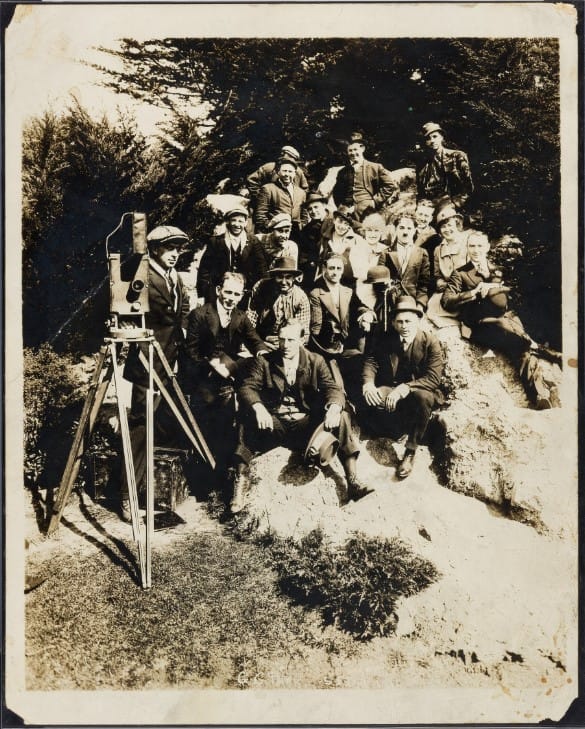
Success gave him a chance to change the business
The move to Essanay in 1915 and then Mutual in 1916 brought better deals and a run of films including The Immigrant and Easy Street. Edna Purviance became a major collaborator across his early work.
He built his own Hollywood studio and worked with First National. In 1919, he joined Mary Pickford, Douglas Fairbanks and D. W. Griffith to form United Artists.
The Chaplin Office’s career overview explains the attraction: the artists retained control of production and owned their distributor. They also had to finance their work. Independence carried responsibility as well as freedom.
The features made comedy carry more weight
The Kid brought a real partnership to the screen
In The Kid (1921), the Tramp becomes the guardian of an abandoned child. Jackie Coogan could closely reproduce Chaplin’s demonstrations, making him an unusually responsive partner.
The production history records months of shooting and repeated attempts at scenes. The result lets a comic partnership become a relationship worth fearing for when officials try to separate them.
He did not keep making the same film
- A Woman of Paris (1923): a serious drama centred on Purviance, with Chaplin stepping out of the starring role.
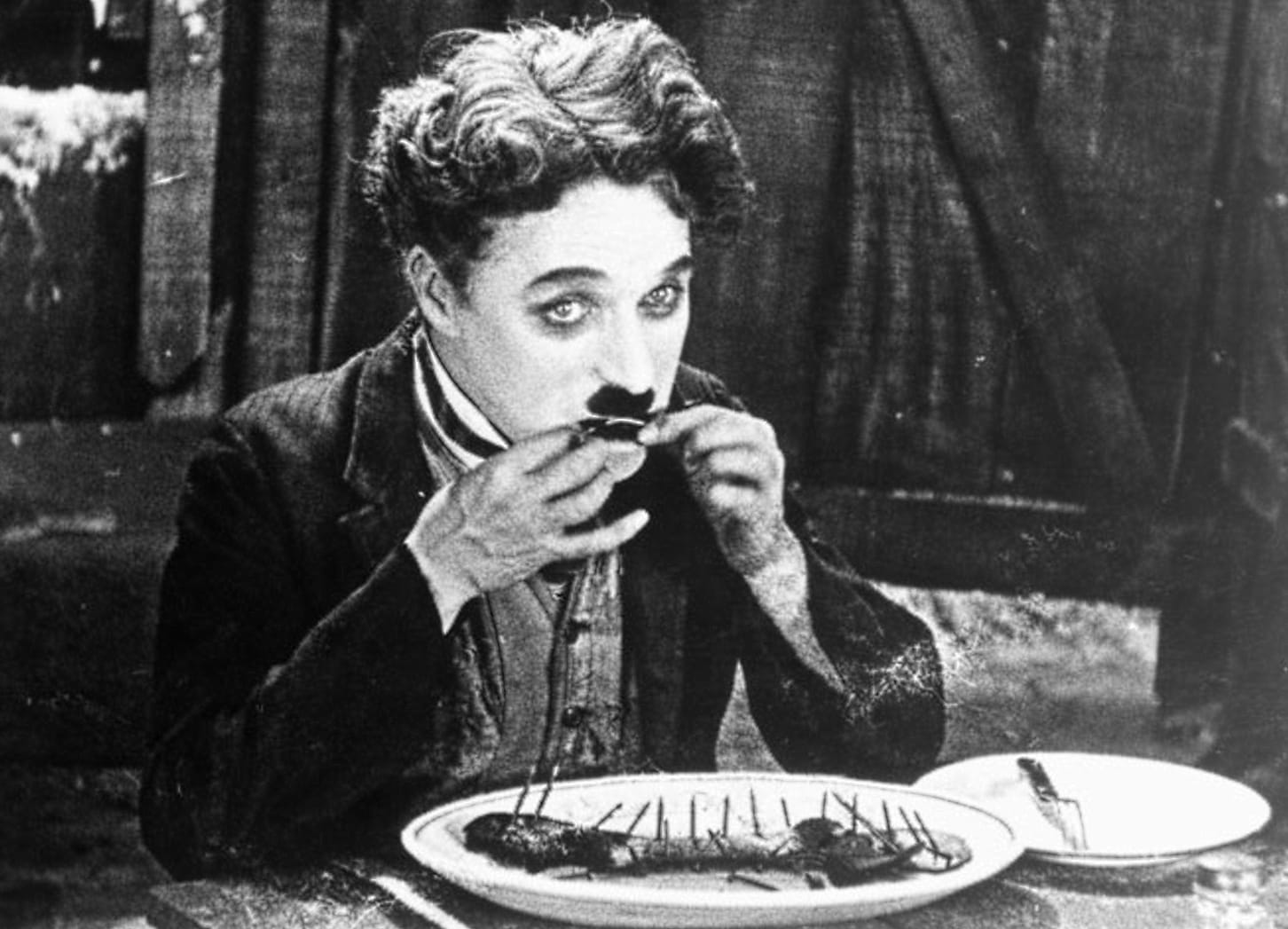
- The Gold Rush (1925): hunger and loneliness become physical comedy, including the meal made from a boot.
- The Circus (1928): the Tramp enters a performing world where being funny by accident and performing on command are very different things.
City Lights arrived after cinema had learned to talk
Sound could have made the Tramp less universal. Audiences around the world understood his movement without needing to share a language. Giving him one particular speaking voice would change that relationship.
Chaplin made City Lights (1931) with a synchronised score and sound effects while preserving visual storytelling. His own music became part of the emotional design.
The official production account describes weeks spent solving the first meeting between the Tramp and Virginia Cherrill’s flower seller. The audience must grasp her blindness and her mistaken belief that he is wealthy, all through action.
That is the craft beneath the apparent simplicity. A tiny misunderstanding has to carry an entire film.
From factory floors to a dictator’s speech
Modern Times (1936), with Paulette Goddard, brought the Tramp into a world of machinery and unemployment. The movement of a worker’s body could now be dictated by the speed of a production line.
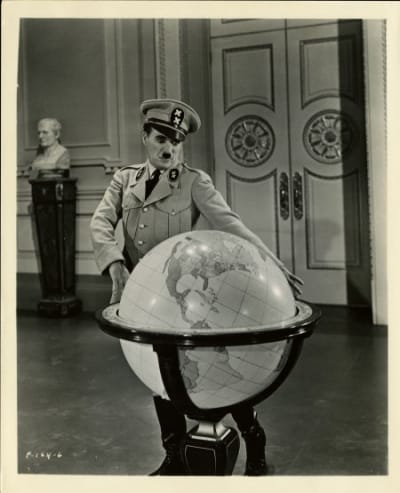
By The Great Dictator (1940), Chaplin had a reason to speak directly. He played both a Jewish barber and the dictator Hynkel, using resemblance and mistaken identity to attack fascism.
The contrast with City Lights is revealing. His commitment was to what a particular film needed. Silence served one story; a speech became central to another.
Limelight, exile and the work that followed
Monsieur Verdoux (1947) took his comedy into darker territory. Limelight (1952) then returned to the London entertainment world of his youth, with Claire Bloom as a young dancer and Buster Keaton joining Chaplin for a stage routine.
Before filming Limelight, he developed the story in a long prose work called Footlights. The production history describes detailed imagined lives for its characters, extending beyond what an audience would see.
While travelling to its London premiere in 1952, he learned that his permission to reenter the United States had been revoked. He settled with his family in Switzerland.
The career continued with A King in New York (1957) and A Countess from Hong Kong (1967), starring Sophia Loren and Marlon Brando. The latter was his final feature as director.
He returned to America for an honorary Academy Award in 1972, received a knighthood in 1975 and died on Christmas Day 1977.
The career behind the silhouette
Chaplin is easy to reduce to a hat and a walk. His films offer a fuller picture: a performer learning to direct, a successful star negotiating for independence, and an older filmmaker finding new subjects when his circumstances changed.
That interest in controlling the means of making a film also runs through Christopher Nolan’s very different early career. The scale and period change, but decisions about time, resources and collaborators still shape what reaches the screen.
Explore Chaplin’s IMDb credits, the official archive and its official Instagram account for more films, photographs and archive discoveries.
Working on a film of your own? Explore sharing it with a free Vidreno account.