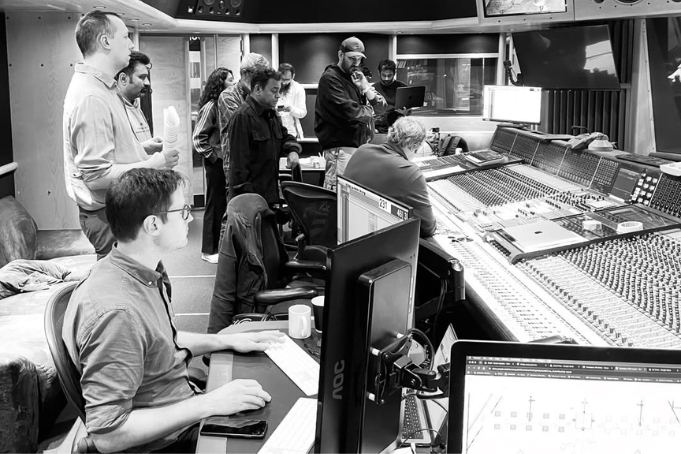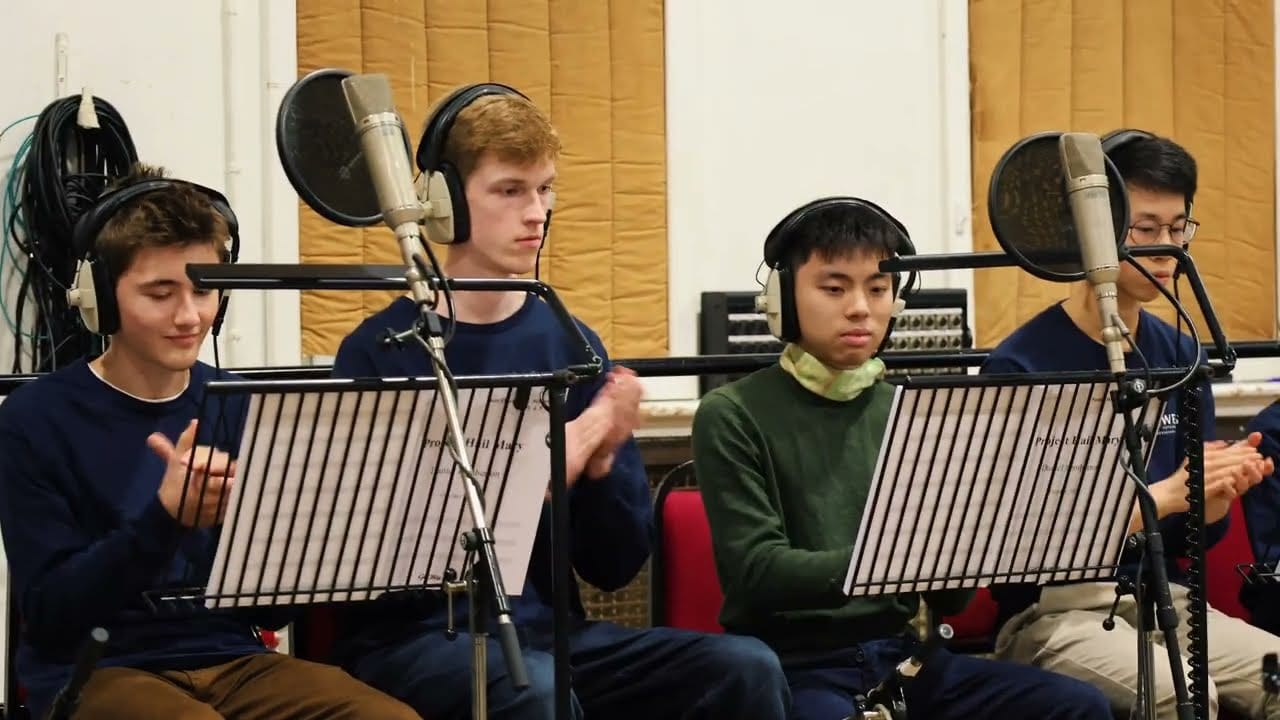
One of the most revealing images from the making of Project Hail Mary is a row of young musicians wearing headphones, sitting behind music stands and clapping. They are helping to build the sound of a spacecraft travelling far beyond Earth.
Daniel Pemberton’s score brings that physical closeness to Phil Lord and Christopher Miller’s film. Its central relationship, between Ryan Gosling’s Ryland Grace and the alien Rocky, needed curiosity and warmth as well as scale.
The answer involved an orchestra, but also a much less conventional collection of sounds. Pemberton treated the music as something to discover through experiments, much as Grace works his way through the problems in front of him.
A space film with friendship at its centre
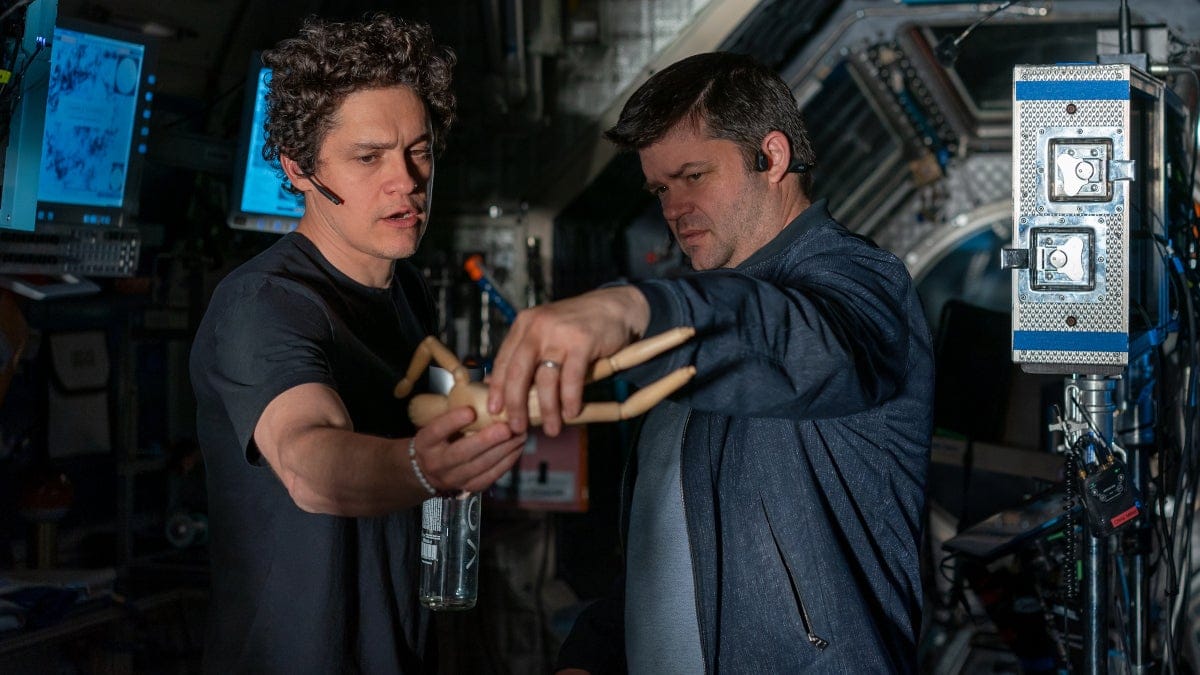
Lord and Miller already knew Pemberton through their Spider Verse collaborations. This time, the musical problem included humour, loneliness, scientific discovery and an unlikely bond. A permanently imposing sound would leave little room for those changes.
The production notes describe the directors’ emphasis on hope. They also recall an early fascination with woodblocks and the rhythmic writing of Steve Reich. That small, dry sound would survive inside a much larger musical world.
The tap that became an instrument
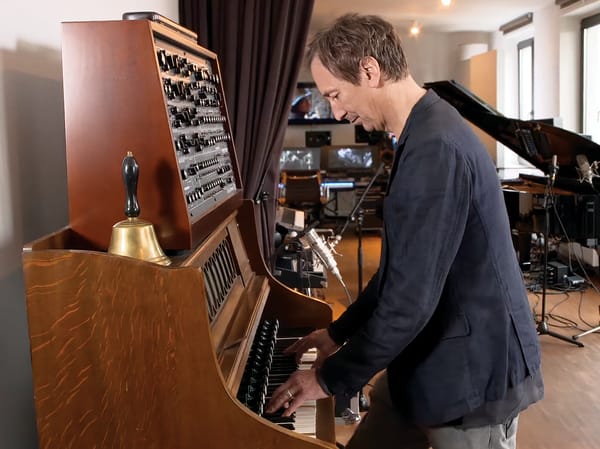
A squeaking tap offered Pemberton an unexpected starting point. He recorded its sound and developed it into something he could play. An ordinary domestic noise could now carry a musical phrase.
This is where the making of the score becomes particularly interesting. Finding an unusual sound is only the beginning. Turning it into an expressive instrument means discovering what happens when its pitch, length and texture change.
In the Dolby conversation below, Pemberton demonstrates the original recording and the resulting instrument. Hearing both makes the connection clearer than a description of an exotic synthesiser ever could.
Glass, voices and the feeling of touch
The Cristal Baschet brought another kind of strangeness. Its glass rods are played with wet fingers, producing a sustained sound that can feel familiar and difficult to identify at the same time. Pemberton recorded specialist Thomas Bloch in Paris.
In his Soundsphere interview, he explains how important physical contact was to the score. He wanted listeners to sense a person making the sound, even when the instrument was unfamiliar.
The palette included several contrasting ingredients:
- Glass and resonance: delicate sustained tones that could suggest discovery without becoming a conventional space fanfare.
- Wood and metal: woodblocks and steel drums giving the music a more tangible, percussive character.
- Human voices: choral writing and transformed vocal textures that could move between warmth and unfamiliarity.
- Hands and feet: clapping, stamping and other body percussion connecting the rhythm to actual people.
Pemberton tells TheWrap that the treated vocal sounds associated with Rocky were held back until the alien appeared. The audience therefore encounters a new musical colour as Grace encounters another being.
The school pupils inside the spacecraft’s sound
Wells Cathedral School pupils contributed body percussion at Abbey Road. Their involvement gave the score an especially appropriate connection to Grace, whose life on Earth includes teaching.
The school’s own film shows the musicians working and lets Pemberton explain their contribution. He praises how well they read the music and respond to the demands of a recording session. The performance is precise, even though the instruments include their own hands.
The result is more specific than an anonymous percussion sound. Small differences in attack and movement remain part of the texture. For a story about connection across an enormous distance, that sense of bodies in a room matters.
How Time Go Fishing grows
The cue Time Go Fishing offers a useful way into the finished score. It begins with a woodblock pulse, then gathers layers as the sequence develops. The small idea from the directors’ early conversations becomes the starting point for something much bigger.
In his premiere interview, Pemberton describes the accumulation of instruments. The excitement comes from how the sound grows, rather than arriving at its largest scale immediately.
There is a quieter detail underneath. Pemberton told Soundsphere that he recorded himself lying on the studio floor, tapping the wood in time with the cue. It added the feeling of fingertips touching a real surface.
You do not need to identify that layer consciously for it to change the texture. It is a useful example of how a large cinematic moment can depend on an almost hidden physical gesture.
Listen to the official release of Time Go Fishing and follow the build from its opening pulse. The changing density is part of the storytelling.
Music that began before the edit was finished
Pemberton’s involvement started early enough for musical sketches to reach Gosling on set. The composer later worked close to the directors during editing, allowing ideas to develop alongside the film rather than simply arriving at the end.
That process gave experiments time to fail and useful discoveries time to grow. A sound did not have to justify its final place immediately. It could first reveal a possibility.
There is a connection with the making of the Interstellar organ score: the distinctive musical identity grows from the interaction between a story, an instrument and the people exploring it.
For filmmakers working with composers, the practical lesson is to share the emotional problem early. A conversation about friendship, uncertainty or wonder can be more productive than asking for a finished imitation of another film.
When your own film is ready to meet an audience, you can explore publishing it through Vidreno.