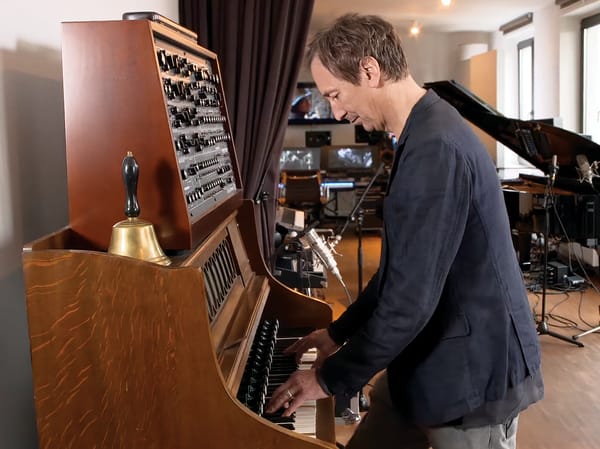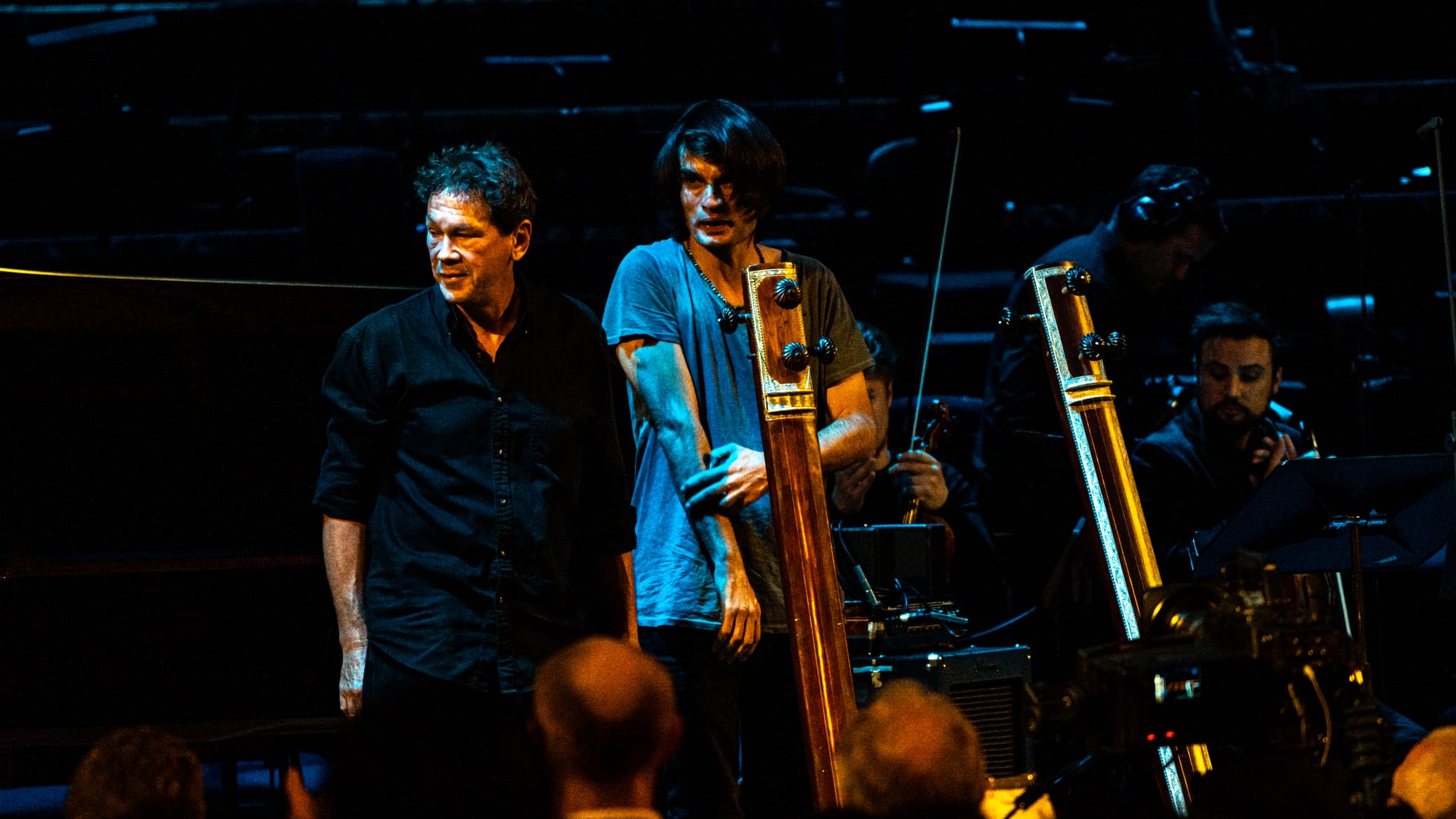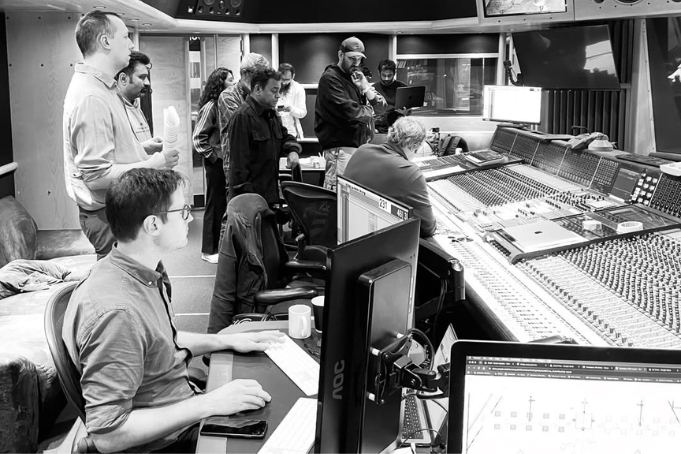
The Ramayana music team in the recording control room. Image published by Variety India in its report on the London sessions. The photographer is not individually identified.
For the first Ramayana teaser, Hans Zimmer supplied a soundscape and A.R. Rahman added Sanskrit verse. That small account of one piece tells us more about their partnership than the idea of two famous names sharing a credit. One composer could begin something that the other would change.
The score for Nitesh Tiwari’s Ramayana: Rise of a Legend grew through that exchange, recording sessions and repeated revisions. With Sony’s official site listing the film for 5 November 2026, the composers’ accounts offer a way into the work before its release.
A shared musical starting point, room for each composer to respond, and repeated revisions as the film developed. The available interviews describe collaboration rather than a simple division between songs and background score.
Beginning with a sound, then answering it
In his January interview with The Hollywood Reporter India, Rahman described Zimmer’s soundscape as the starting point for the teaser. His contribution added Sanskrit verse. It is a specific example of their working method, not a complete breakdown of who wrote every cue in the finished film.
Rahman also described the challenge of approaching a story so familiar to Indian audiences while making something new. He spoke about setting aside inherited expectations without losing the culture’s enduring qualities. The task was therefore as much about judgement as scale: which familiar associations to retain, and where to find another musical approach.
A relationship before the commission
The partnership did not begin with strangers meeting over a film. In his later THR India interview, Rahman recalled a relationship dating back to 2009 and performing with Zimmer’s Oscars band in 2012. Their work on this film included meetings in London, Los Angeles and Abu Dhabi.
That history gives the collaboration a more practical foundation than an imagined contest between styles. Two established composers still needed to make decisions together, but they already had experience of one another.
Recording in London
Variety India’s September report placed the music team at AIR Lyndhurst Studios, with the Chamber Orchestra of London involved in the sessions. The report drew on photographs shared by the orchestra, including a break between recording sessions.
The publication did not establish the dates when those photographs were taken or the precise stage of the score they represented. They document part of the recording work, rather than proving that every cue was complete or that the whole soundtrack was recorded in one room.
For another example of how a physical recording space can shape a Zimmer project, our Interstellar organ story follows the instrument and musicians at Temple Church. The Ramayana evidence points to a different kind of collaboration, involving a larger geographical network.
Revisions could lead back to an earlier idea
Rahman’s October account describes occasions when thirteen iterations led back to an early version. He linked the complexity to changing visual effects, language versions and different versions of the film. During the final stretch, he travelled between Los Angeles, London, Budapest, Mumbai and Chennai.
For a filmmaker, the useful detail is that revision was not always a straight line towards a completely new answer. An earlier musical idea could survive the process. Keeping those versions available matters when the surrounding film is still changing.
This is also why a promotional theme cannot tell us everything about a finished score. Music has to work against particular images, edits and performances. A piece heard in isolation and a cue functioning inside a scene answer different questions.

What to listen for
- How voices and orchestral textures meet. Rahman’s account of adding verse offers a concrete starting point.
- How the music changes with the images. Listen for what a cue contributes to a particular scene, beyond the scale of the sound.
- What returns. Notice when a musical idea becomes familiar and how its context changes.
These are listening questions, not claims about scenes we have reviewed. The strongest available evidence is the makers’ account of a shared process: composing, responding, recording and reconsidering as the film took shape.
Making a film of your own? Explore Vidreno and start with a free account.