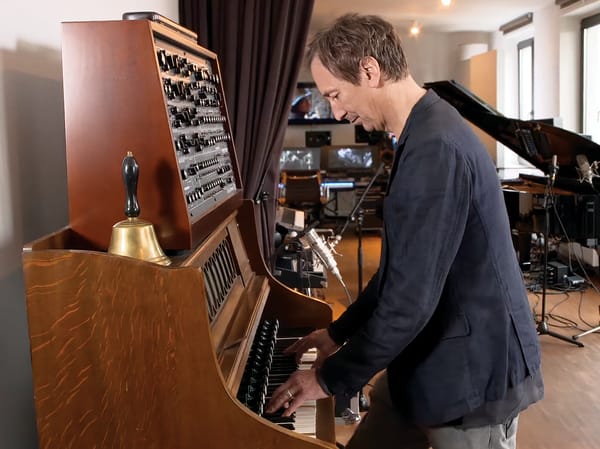
Cover: Volker Bertelmann at the harmonium used for All Quiet on the Western Front. Photo: Netflix, published with NPR’s composer interview.
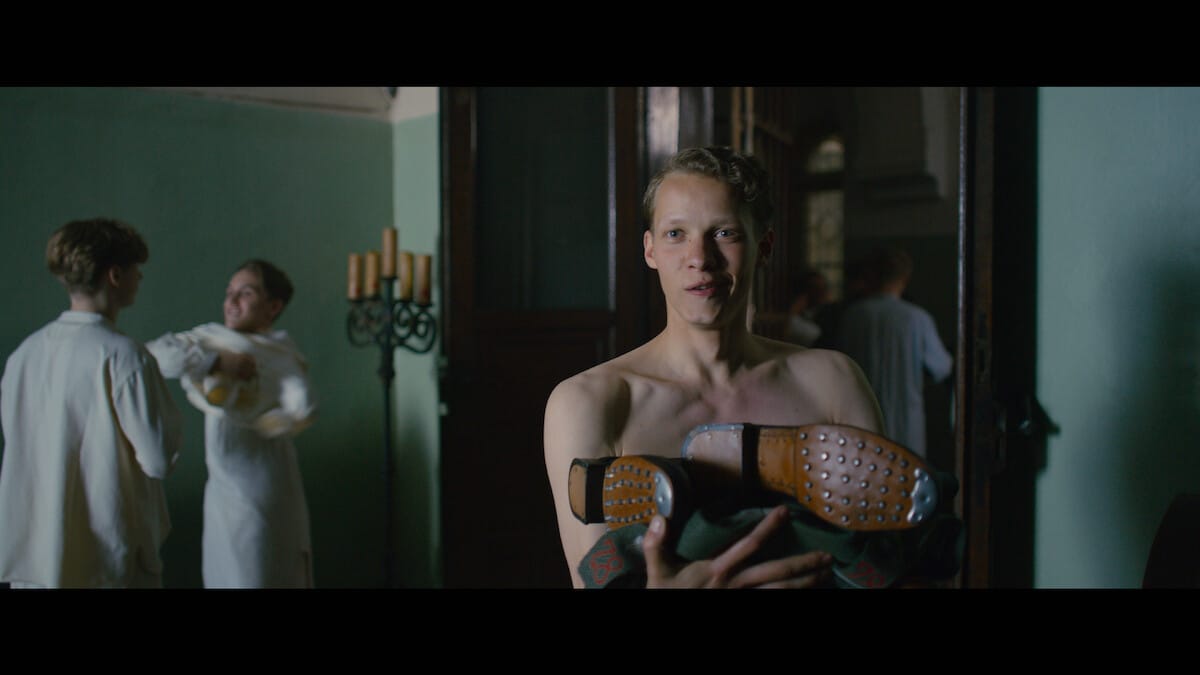
The opening of Edward Berger’s All Quiet on the Western Front follows a uniform through a terrible cycle. A soldier dies, his clothes are recovered and repaired, and another young man receives them. The machinery keeps going.
For composer Volker Bertelmann, that sequence supplied the starting point. The score needed something short enough to interrupt the images and strong enough to suggest the system consuming these men. A familiar instrument, waiting in his studio, became the answer.
One idea sent before there was a safety net
Bertelmann saw the film at a screening in Berlin. In his interview with DW, he recalls writing the first harmonium theme the following day. Rather than collect a selection of ideas, he sent that first piece to Berger.
His later conversation with Robert Kraft for Spitfire Audio makes the risk more tangible. At 14:09, he explains that he normally offers a palette of possibilities. Here he sent one cue and waited, knowing the director might reject its abrasive character.
Berger’s enthusiastic response gave him a starting point for the rest of the score. The useful part of that exchange was permission to develop a specific idea, before it had become a complete musical system.
An old harmonium became a war machine
The instrument had belonged to Bertelmann’s great grandmother. He had it restored in Düsseldorf, where it remained available for a future project. After the screening, its age and physical workings suddenly seemed right for the film.
A harmonium needs air and movement. Its bellows, wooden parts and the effort of playing it were useful material, rather than defects to remove from a clean recording. The historical connection mattered, but the finished sound would not be a polite reconstruction of period music.
In TheWrap’s interview, Bertelmann describes sending the harmonium through distorted amplifiers and increasing its bass. The familiar domestic instrument became difficult to identify. Berger’s response to the recording was: “That’s Led Zeppelin!”
The comparison describes force and character, not a borrowed rock song. The sound could arrive like a physical intrusion into the film.
The microphones recorded more than notes
Bertelmann gave NPR a precise account of the recording: eight microphones around the harmonium, including three inside. They captured the air and wood as well as the musical tone.
He recorded the mechanical sounds independently, allowing him to remove them or bring them back. What can sound like one overwhelming object is therefore a set of choices about which parts of that object the audience hears.
That distinction matters. Keeping an unwanted noise is one decision; recording it separately gives the composer control over when it becomes expressive.
Three notes could change character
The motif did not have to remain equally threatening every time. In a second conversation with TheWrap, Bertelmann explains that he briefly had four notes, then removed one because three felt complete.
He developed the same underlying material into a cello theme for the warmer scene in which the soldiers eat a stolen goose. High violin writing could stretch it into longer, airier notes. A small idea could carry different feelings without the score constantly introducing another theme.
The placements were equally important. Bertelmann describes the uncertainty of the motif’s return as part of its disturbing effect. The audience does not simply settle into a predictable repeating pattern.
In his conversation with The Sonic Atelier, he connects the brevity of the musical ideas to a practical problem: gunfire, explosions and dialogue leave limited space for music to be heard. Small motifs could occupy those openings, then grow into longer writing elsewhere.
The London sessions left room to reshape the orchestra
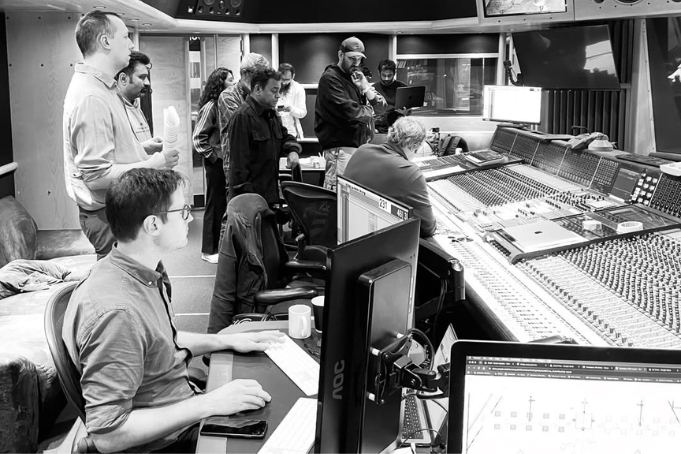
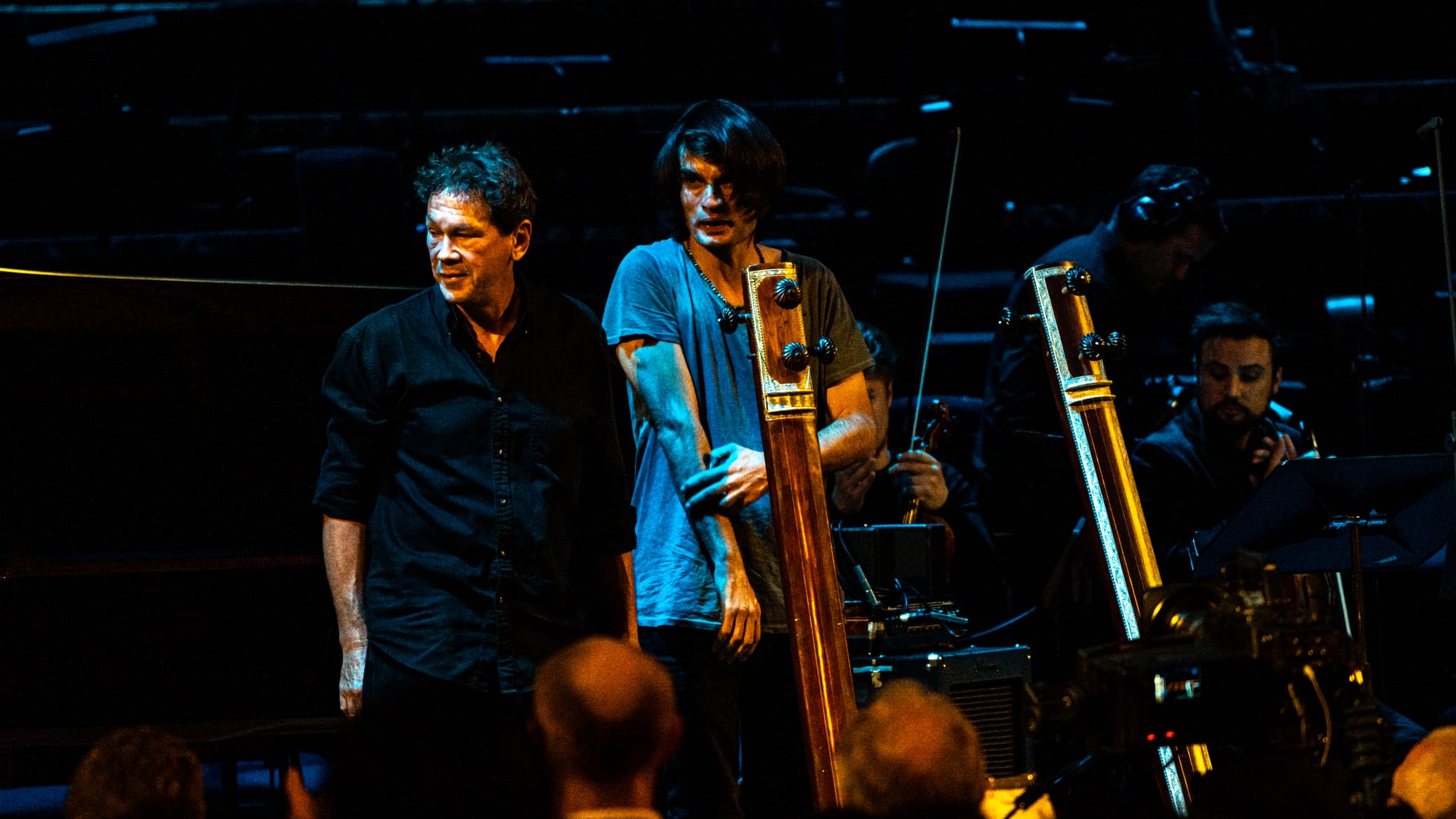
The score was not made by one instrument alone. The London Contemporary Orchestra lists the film among its recording credits, and AIR Studios credits Geoff Foster as score engineer.
Foster’s account, published by AMS Neve, describes three days of sessions at AIR. Bertelmann monitored remotely because of Covid restrictions. They discussed how the musical material would sit beside the film’s powerful sound effects.
Brass and strings were recorded in separate sessions, with elements kept apart so Bertelmann could manipulate them electronically afterwards. The recording process preserved options for the next stage, rather than committing everything to a single orchestral blend.
Music that leaves space for the film
Berger’s request, as Bertelmann recounts it to NPR, was for music that would challenge the pictures rather than underline everything already visible. The snare drum could be awkward and startling, expressing something felt inside Paul rather than supplying a reassuring military rhythm.
The score also needed restraint. Bertelmann told DW that avoiding excessive heroism and sentiment was among the hardest parts of the work. The film could reach the audience emotionally without making combat sound noble.
His account of the landscape passages in TheWrap adds another shade: woods, fields and morning mist reminded him of home. Music could give those quieter views a sense of longing, allowing something human to remain beside the violence.
A way to listen to the finished score
- Start with the opening. Follow the relationship between the uniform, the machinery and the short musical statement.
- Notice the returns. Listen for how silence and placement change the force of a familiar sound.
- Compare the warmer writing. The cello and longer string phrases show how the same material can change emotional character.
- Think about the recording choices. Separating mechanical noises and orchestral groups made those later changes possible.
Bertelmann won the 2023 Academy Award for Original Score. The more useful lesson for a filmmaker is how closely the writing, recording and dramatic purpose were connected. A small musical idea became powerful because each stage gave it a clear job.
Read Bertelmann’s full career story for the route into this collaboration, or explore the organ and musicians behind Interstellar for another film transformed by a distinctive instrument.
Preparing a film of your own? Explore Vidreno and start with a free account.