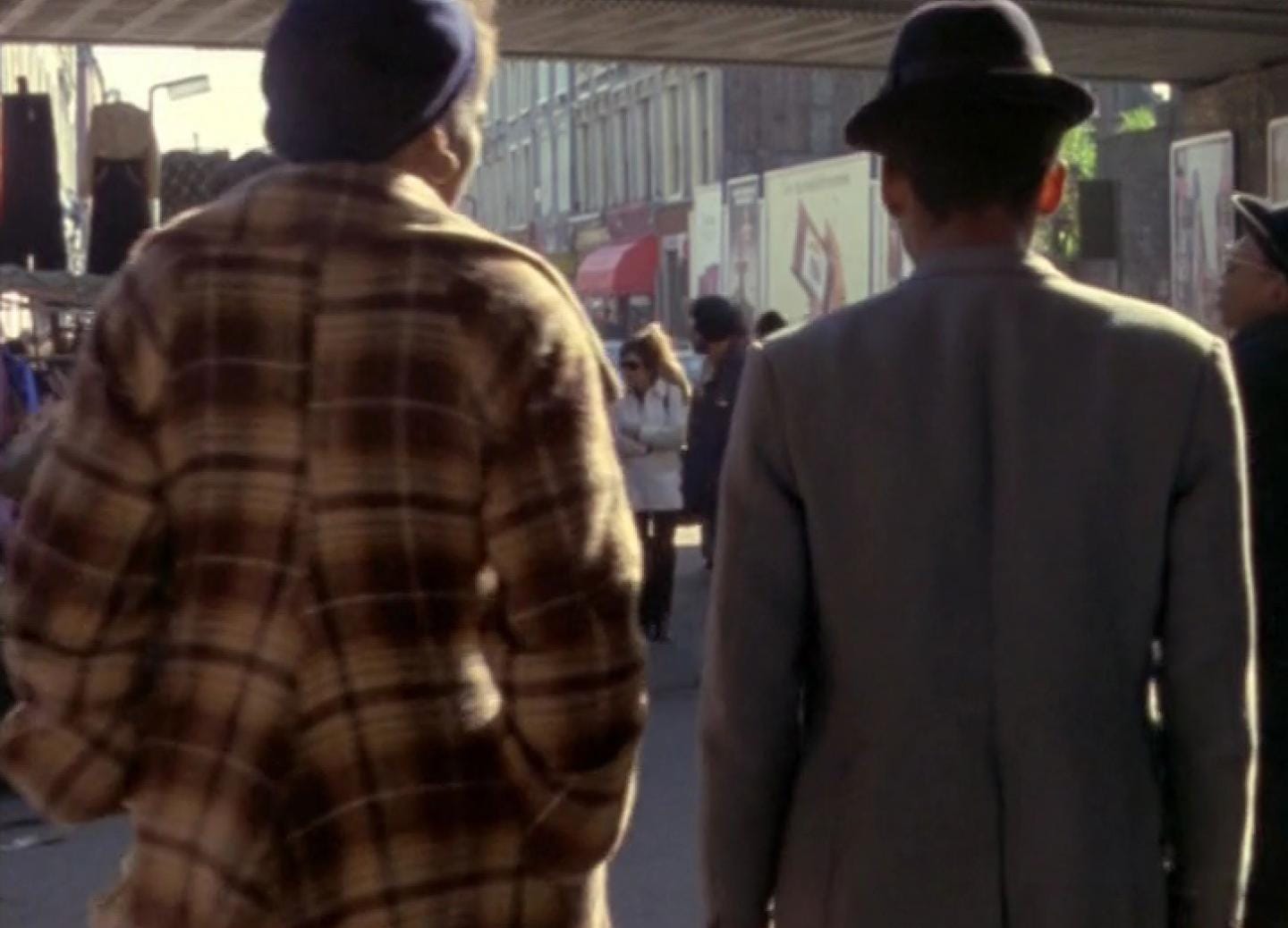
Cover: Tony and his friends on Portobello Road in Pressure. Film still: BFI, via Adam Scovell’s location study.
Herbert Norville thought he was getting a lift home after an audition. The filmmakers said they had another boy to see nearby. When the car stopped outside his house, it turned out that the next address was his own.
That is how Norville remembers the conversation that led to playing Tony in Pressure. It is an unexpectedly warm beginning to a film about exclusion, and a reminder that a landmark production is also made through small meetings, practical favours and people taking a chance.
Writing a London that British cinema rarely showed
The BFI dates Pressure to 1975 and describes it as the first full length Black British film. Ové wrote it with fellow Trinidadian writer Samuel Selvon, placing a British born teenager between the expectations of his parents and the politics of his older brother.
Tony leaves school expecting to find work. Instead, he encounters racism and rejection. His parents’ memories of Trinidad offer him no simple escape: Britain is the country he knows.
Ové’s own account makes the writing’s personal roots clear. In the GaleforceTelevision interview below, he connects Tony’s job interviews with his experience of applying repeatedly and getting nowhere. The story came from a world he recognised, rather than an issue chosen at a distance.
Finding the money and the people
Ové remembers approaching television companies that declined to support the film. The BFI eventually supplied a modest amount of money. Camera and sound professionals he had come to know were willing to give their time and work with him.
The British Council production record names Robert Buckler as producer, Michael J. Davis as director of photography and Alan Cumner Price as editor. Those credits put a team around the familiar story of one pioneering director.
Casting someone who recognised Tony’s life
At the BFI’s restoration discussion, Norville recalls attending Anna Scher’s acting school when the filmmakers came to audition young performers. After the lift home, the remaining question was whether his mother would agree to his taking the part.
He also remembers being close to Tony’s situation himself. Friends and relatives were looking for jobs, returning disappointed and struggling to get established. He did not need to imagine that atmosphere from scratch.
The streets were part of the production
Producer Robert Buckler’s company identifies Ladbroke Grove and Portobello Road as the streets where Pressure was shot. The locations give Tony’s story a specific physical world: shops, markets, towpaths and routes through the neighbourhood.
Adam Scovell’s 2026 BFI location study finds the family’s shop at 194 Kensington Park Road. Other scenes follow the canal near Great Western Road and the market beneath the Westway.
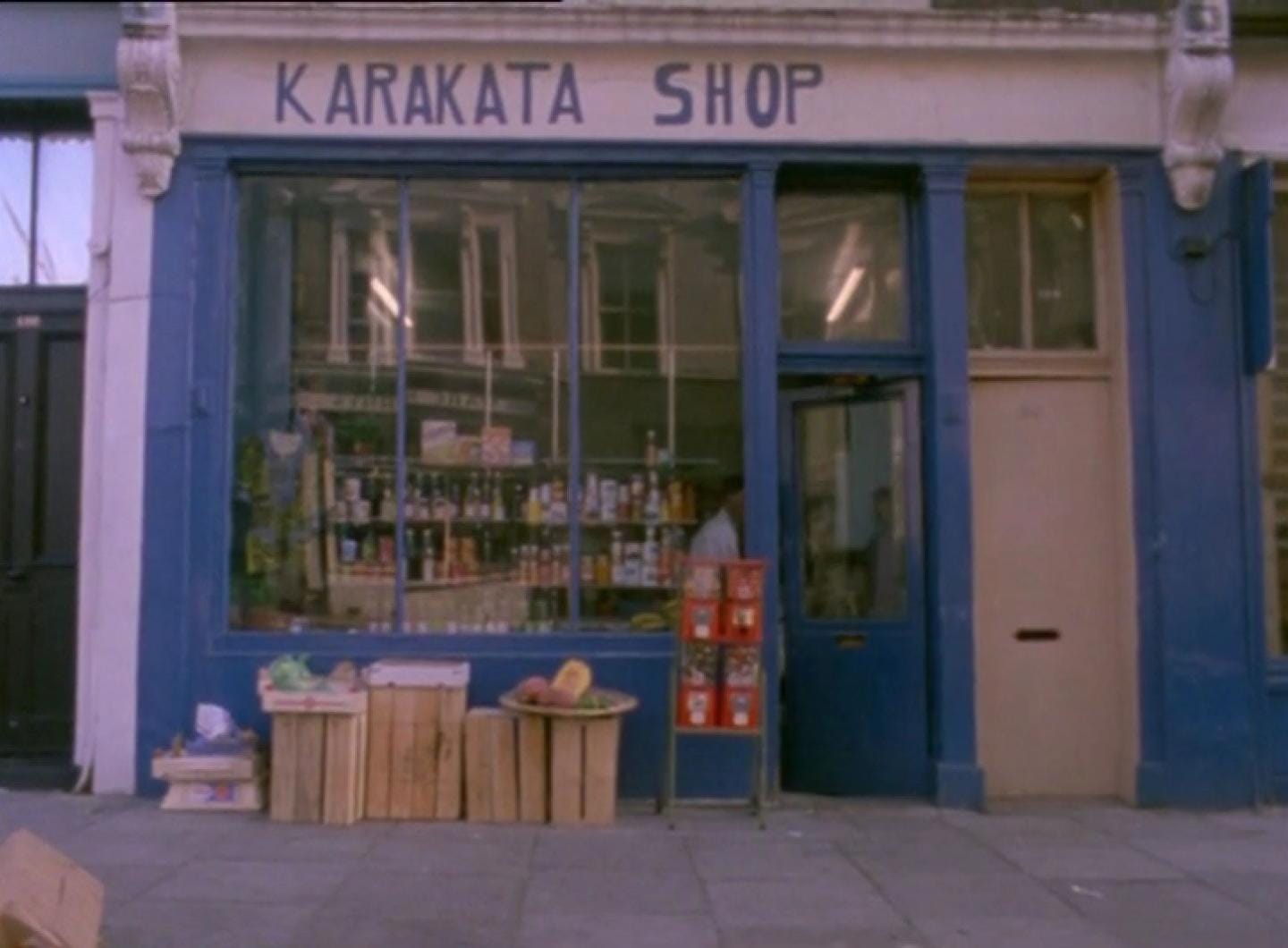
That geography is useful to notice when watching. The film moves through places that connect to one another, rather than using a few recognisable London landmarks as decoration. Its images have also preserved details of a neighbourhood that has since changed.
Realism was not the only tool
At the BFI discussion, filmmaker Rhea Storr draws attention to the shift from documentary realism into a dream sequence. That change in form allows the film to express Tony’s experience through something other than straightforward observation.
It is an important distinction for a production often introduced through its historical importance. The film’s choices about images and structure deserve attention alongside the ground it broke.
Finishing the film did not secure its release
Pressure premiered at the 1975 London Film Festival, but its wider release was delayed for more than two years. The reasons need careful attribution.
In Ashley Clark’s BFI account, longstanding claims that the film was considered too incendiary sit beside a contemporary Time Out report describing complicated distribution disputes. Ové himself recalled a ban in the filmed interview.
Those accounts should not be collapsed into an unqualified claim that the government banned the film. What is clear is the gap between making it, showing it at a festival and getting it to a wider audience.
Restoration brought its images back into view
The BFI National Archive and The Film Foundation restored Pressure in 4K, with funding from the Hobson/Lucas Family Foundation. The restored version received joint festival premieres in London and New York in 2023, followed by a UK cinema release.
In the BFI panel, Alcazar describes the difference in colour and texture she saw in the restoration. It is a useful way to think about preservation: access matters, but so does the quality of the image through which a new audience encounters the work.
The BFI now lists a Blu ray edition. The interviews above offer another route into the production, letting the people involved describe the decisions and accidents behind it.
What filmmakers can take from Pressure
- Write from something specific. Tony’s search for work is rooted in experiences the director and lead actor recognised.
- Give locations a storytelling job. The shop, market and canal establish the world Tony has to navigate.
- Make room for different forms. A film grounded in everyday life can still use dreams and experimentation.
- Treat reaching an audience as work of its own. Completion, distribution and preservation each need people willing to carry the film forward.
For another production shaped by questions of belonging and British life, read how My Beautiful Laundrette was made.
Planning a release for your own finished film? Explore Vidreno as a home for your work.