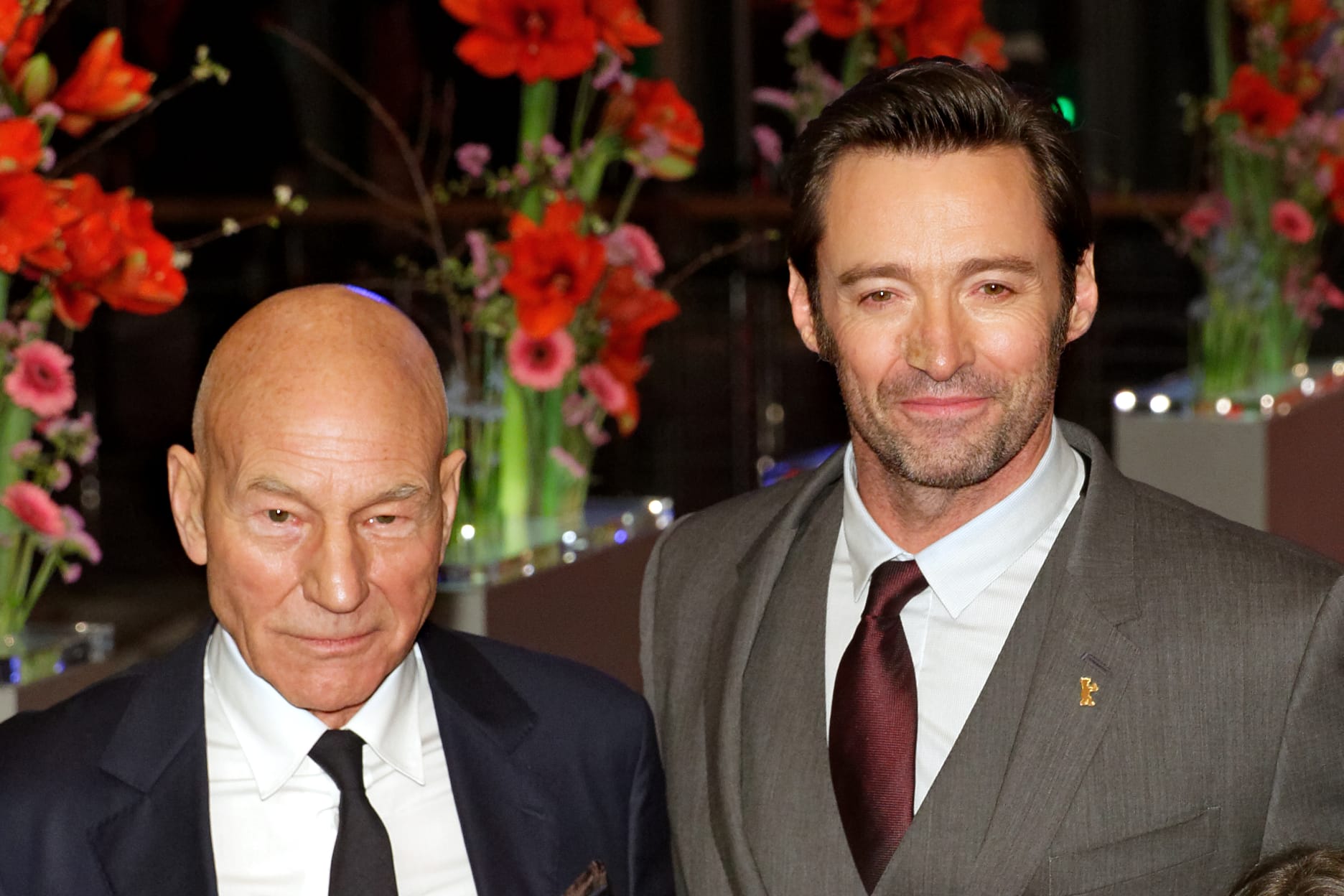
Cover: Patrick Stewart and Hugh Jackman at the Logan premiere during the 2017 Berlinale. Photograph: Maximilian Bühn / Wikimedia Commons, CC BY SA 4.0. Existing colour adjustment by WikiPedant.
Before Patrick Stewart commanded a starship, a teacher asked him to read Shakespeare aloud. Recalling that classroom for PBS in 2023, Stewart described the pleasure of putting unfamiliar words in his mouth and the confidence that followed. Performing offered something more immediate than the prospect of a career: a place where he felt safe.
Stewart died in Los Angeles on 28 October 2026, aged 86, his spokesperson confirmed to the Associated Press. His work leaves a much larger story than two famous characters. Picard and Professor Xavier grew out of decades of theatre, and their success gave him room to keep returning to the stage, comedy and less reassuring screen roles.
Patrick Stewart entered drama school in 1957 and joined the Royal Shakespeare Company in 1966. Star Trek: The Next Generation brought worldwide recognition from 1987. He subsequently moved between major film franchises, classical theatre, voice work and intimate performances, carrying the same interest in character across them.
Mirfield, two teachers and the money to train
Born in Mirfield, Yorkshire, on 13 July 1940, Stewart grew up far from the institutions in which he would make his name. His mother Gladys worked in textiles and his father Alfred served in the army. His IMDb biography records a practical route towards acting: local drama groups, leaving school at fifteen, a brief reporting job and a year selling furniture before Bristol Old Vic Theatre School.
Two people helped make that ambition possible. The Southbank Centre’s account of his memoir conversation identifies schoolteacher Cecil Dormand and acting teacher Ruth Wynn Owen as formative influences. They belong at the beginning of the story, before any producer or casting director.
Stewart also credited a West Riding County Council grant with enabling his training. In a 2023 Southbank interview, he connected that support directly to his enduring pride in Yorkshire. Talent needed teaching and material help to become a working life.
The stage career that television viewers had not seen
Professional work began in 1959. Repertory theatre, Manchester Library Theatre and touring with the Old Vic preceded the RSC, which he joined in 1966. By the time American viewers met Picard, Stewart had been learning his trade in public for nearly three decades.
His early screen appearances also offered very different kinds of authority. He played Sejanus in I, Claudius, Karla in the adaptations of John le Carré’s Tinker Tailor Soldier Spy and Smiley’s People, and Gurney Halleck in David Lynch’s Dune. The New York Times career account traces those roles alongside the stage work, including his Broadway debut in Peter Brook’s A Midsummer Night’s Dream.
That background matters when watching the later performances. Stewart could make a formal speech feel like an argument a person needed to win. The voice was distinctive, but the dramatic problem underneath it was what kept the character alive.
Picard changed the scale of his career
Star Trek: The Next Generation began in 1987 and ran until 1994. Its success was not something Stewart took for granted. In a 2010 interview with StarTrek.com, he recalled being given only a few days to decide whether to accept the role after repeated auditions in Los Angeles. Advice that the programme might be short lived made the commitment seem less daunting.
He also described a character who developed through collaboration. Gene Roddenberry and the writers established Picard, while later conversations with producer Rick Berman allowed Stewart to contribute more, including ideas about dialogue. He specifically resisted taking sole credit for the captain’s creation.
That is a useful distinction for anyone interested in how a performance grows across a series. A memorable character can emerge from years of adjustment between an actor, writers and producers. Familiarity gives the performer more freedom without erasing the work of the people who began the story.
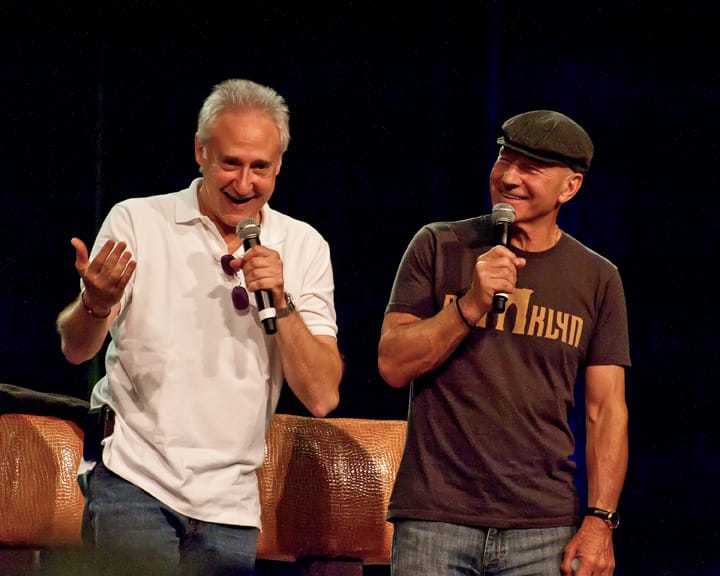
Four films extended the original series cast’s screen journey: Generations, First Contact, Insurrection and Nemesis, released between 1994 and 2002. Brent Spiner and Jonathan Frakes were among the colleagues with whom Stewart’s screen identity became closely associated. Years later, Star Trek: Picard, running from 2020 to 2023, reopened the character’s life rather than leaving it at the end of those films.
In the PBS interview, Stewart explains that science fiction was unfamiliar territory for him. His way into Picard was the complexity of the person, approached through the same acting process he used for Shakespeare.
Professor Xavier and the freedom to unsettle an audience
X Men in 2000 gave Stewart another enduring role as Charles Xavier, opposite Ian McKellen’s Magneto. Hugh Jackman’s Wolverine became another important screen partnership. In James Mangold’s Logan in 2017, the older Xavier’s vulnerability changed the balance between mentor and pupil. The familiar presence now needed care.
Stewart’s later choices also challenged the comfort audiences associated with him. In Jeremy Saulnier’s Green Room, he played a club owner threatening a trapped punk band. A24’s film record places him alongside Anton Yelchin, Imogen Poots and Alia Shawkat. It is a particularly sharp contrast with Picard: the ability to hold attention can make a person frightening as readily as trustworthy.
Comedy and voice work formed another substantial strand. American Dad! used his voice for Avery Bullock, while Extras let him play with his public image. These were not simply pauses between prestigious roles. They showed how much could change when the same performer applied his precision to an absurd or disreputable character.
Fame did not close the theatre door
Stewart’s later stage career included a solo A Christmas Carol and a celebrated Macbeth with director Rupert Goold. In the StarTrek.com conversation, he welcomed the opportunity to preserve the latter on film with Kate Fleetwood, while stressing that the result was a film rather than just a record of the stage production.
At the RSC in 2008, Gregory Doran directed him opposite David Tennant in Hamlet. The company’s production archive records Stewart as both Claudius and the Ghost. Its mirrored setting and emphasis on surveillance gave this familiar play a particular dramatic environment. He was still working inside an ensemble, with a director’s interpretation shaping the performance.
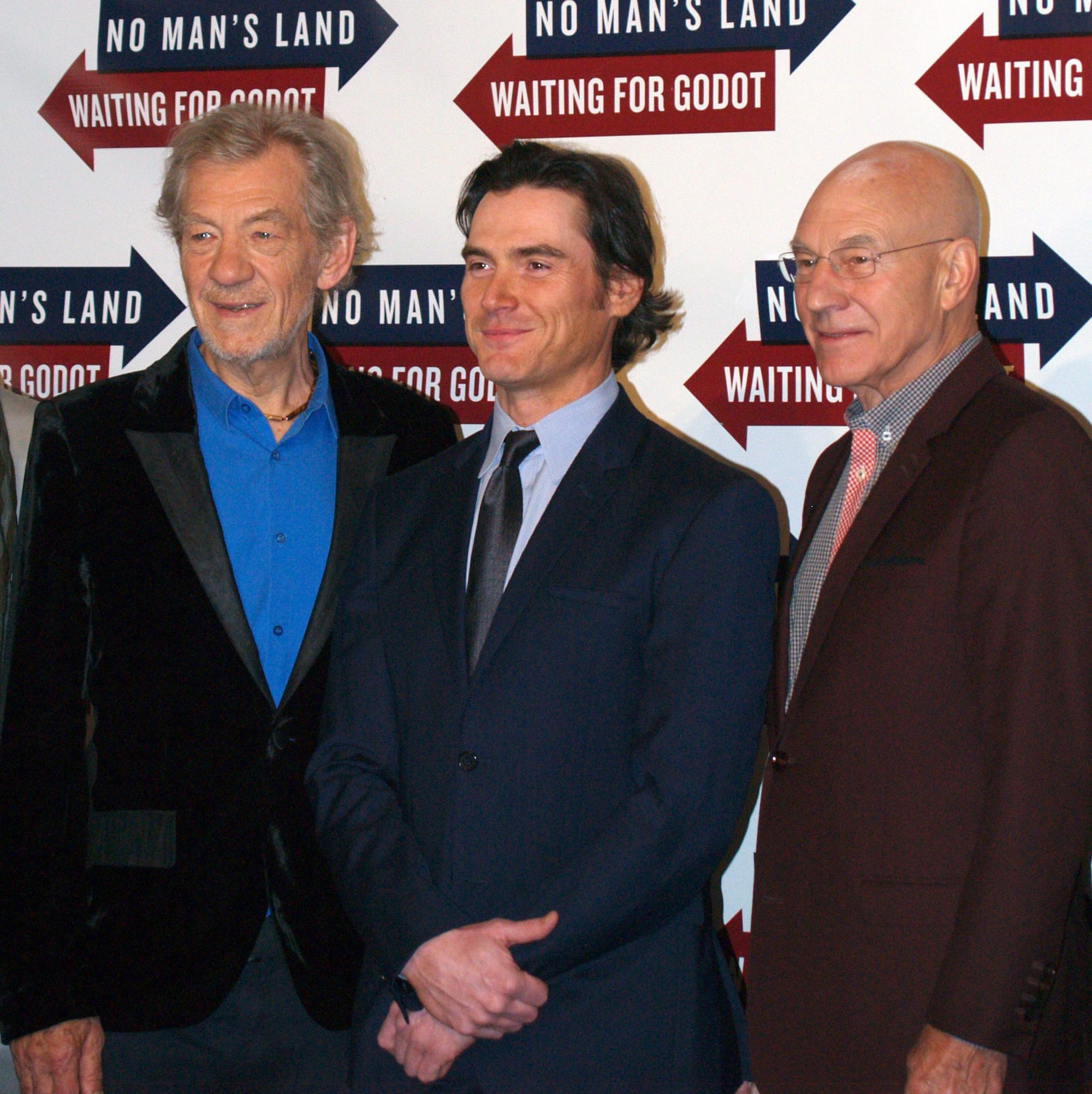
With McKellen, the partnership extended beyond superhero cinema into Waiting for Godot and No Man’s Land. The juxtaposition is part of the pleasure of following Stewart’s career: actors familiar from a vast film franchise could meet again in work built around language, waiting and the shifting balance between two people.
The later work returned to words
The 2023 memoir Making It So gave Stewart a way to tell the route in his own voice. His publisher’s current author page also lists his recording of Shakespeare’s complete sonnets with original commentary. The classroom discovery at the beginning of his career remained an active part of the work at its end.
The range is the point. A career remembered through a captain and a professor also contains a repertory actor, a Shakespearean villain, a comic voice and a storyteller carrying a whole room with words. For another account of a long route into major screen roles, read our Mahershala Ali career story.
A useful route through the work
- Start with the performer speaking: the PBS conversation above is a compact introduction; the Southbank Centre conversation with Samira Ahmed gives his beginnings and theatre work more space.
- Compare authority with vulnerability: place Picard beside the older Xavier in Logan, then the threatening presence in Green Room.
- Keep the stage in view: explore the filmed Hamlet and Macbeth, alongside his memoir and Shakespeare recordings.
Individual credits are listed under Patrick Stewart’s IMDb identity, nm0001772. His publisher identifies @SirPatStew as his official social account.
Preparing a film of your own for an audience? Explore releasing it through Vidreno On Demand with a free Vidreno account.