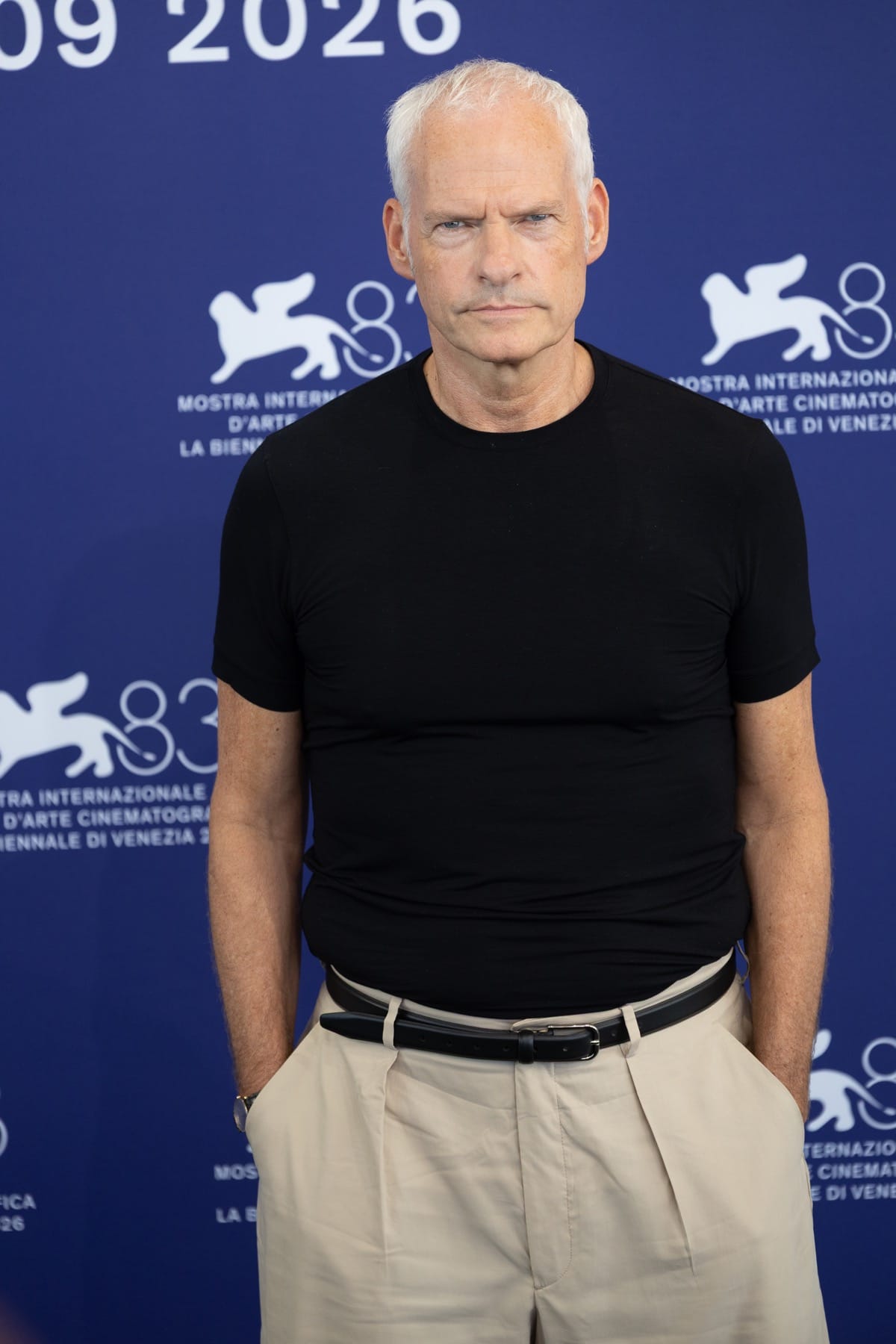
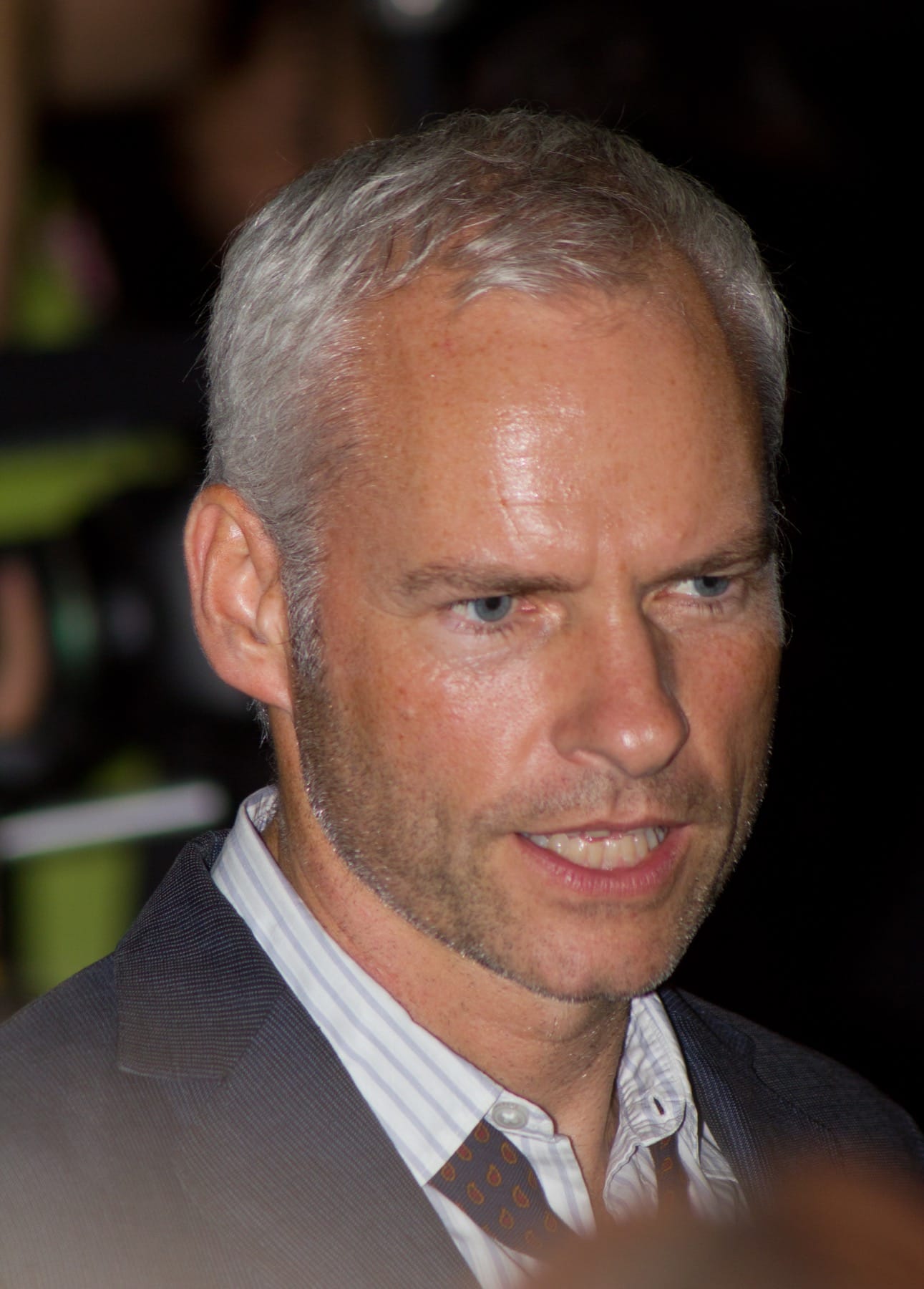
Cover: Martin McDonagh at Venice in September 2026. Photo: LucaFazPhoto, WikiPortraits, CC BY SA 4.0. Uncropped.
Martin McDonagh was a successful playwright before he directed a feature film. The route from The Beauty Queen of Leenane to In Bruges, Three Billboards Outside Ebbing, Missouri and The Banshees of Inisherin began with years of writing, then a theatre company willing to put an unknown voice on stage.
His latest film, Wild Horse Nine, brings that voice to Chile and Rapa Nui. Searchlight lists its US cinema release for 6 November 2026. The geography has changed, but the interest in difficult friendships, guilt and dangerous conversation is familiar.
A London childhood and a voice found through writing
Born in Camberwell, London, on 26 March 1970 to Irish parents, McDonagh grew up between the city where he lived and the Irish world that would populate his early plays. His IMDb record identifies the writer and director behind In Bruges, Seven Psychopaths and Three Billboards.
In his recent conversation with David Marchese for The New York Times’ The Interview, he recalls leaving school at 16. The Clash offered a sense that a working class teenager did not have to accept the life laid out for him.
The years on unemployment benefits were unhappy, he says. Writing became a way to discover both a voice and the ambition to have it heard. He also remembers continuing to write around mundane jobs. This was a long apprenticeship without a neat professional ladder.
The breakthrough depended on Druid and Garry Hynes
The Beauty Queen of Leenane reached the stage in Galway in February 1996. Druid’s history credits director Garry Hynes with finding the script among unsolicited submissions. Druid and London’s Royal Court gave the play its first production.
The mother and daughter at its centre were played by Anna Manahan and Marie Mullen. Their battle over care, dependence and the possibility of escape gave McDonagh’s cruel comedy an intimate human scale. Hynes and the actors were essential to turning the writing into an event audiences wanted to see.
The production travelled through Ireland and London before reaching Broadway in 1998. The University of Galway’s archive records its journey to the Walter Kerr Theatre and six Tony nominations. The breakthrough was a production that travelled, carrying its writer with it.
A Skull in Connemara and The Lonesome West completed the Leenane trilogy. His stage world expanded through The Cripple of Inishmaan and The Lieutenant of Inishmore, while The Pillowman, first staged at the National Theatre in 2003, moved into a disturbing story about a writer and the consequences of his fiction.
Six Shooter made the move to directing possible
McDonagh tested his screen voice in Six Shooter, a short starring Brendan Gleeson and Rúaidhrí Conroy. Grief, a train journey and alarming humour supplied a compact introduction to the combination that would run through his features.
The Academy’s 2006 record names McDonagh as the winner for Live Action Short Film. A short could establish him as a director without immediately requiring a feature. It also began the screen collaboration with Gleeson that would become central to his career.
In Bruges turned a place into a dramatic argument
His first feature, In Bruges in 2008, paired Gleeson with Colin Farrell as hitmen waiting in a beautiful Belgian city. Ralph Fiennes supplied the threat hanging over them. The dialogue could be viciously funny, but the story rested on guilt and the possibility of caring for another person.
According to Focus Features’ production notes, McDonagh’s own conflicting reactions to Bruges suggested two characters who experienced it differently. Producers Graham Broadbent and Pete Czernin helped bring the screenplay to the screen.
One revealing detail is that Ray and Ken were originally Londoners. McDonagh changed them to Irishmen after casting Farrell and Gleeson. A strong written voice still had room to respond to the actors who would speak it.
Farrell later told BAFTA that he had tried to persuade McDonagh not to cast him because he felt unworthy of the script. McDonagh persisted. That decision created a partnership both men would return to.
Seven Psychopaths and Three Billboards widened the company
Seven Psychopaths followed in 2012. Farrell played a writer whose screenplay becomes entangled with the violent lives around him, alongside Sam Rockwell, Christopher Walken and Woody Harrelson. It pushed McDonagh’s interest in storytelling itself into a more sprawling comic crime film.
Rockwell and Walken had already appeared in his 2010 Broadway play A Behanding in Spokane. Theatre and cinema were becoming connected parts of his working life. He also returned to the Royal Court with Hangmen in 2015.
In Three Billboards Outside Ebbing, Missouri in 2017, Frances McDormand’s grieving mother challenged the police over her daughter’s unsolved murder. Rockwell and Harrelson joined a story in which anger keeps spreading beyond its first target. McDormand and Rockwell won acting Oscars at the 2018 ceremony.
Theatre remained active alongside the films. In 2018, A Very Very Very Dark Matter brought Jim Broadbent to London’s Bridge Theatre as Hans Christian Andersen in another unsettling story about authorship.
Success did not settle how audiences read his work. In the Marchese interview, McDonagh discusses criticism of racial language and characterisation in his plays and films. He says criticism of A Behanding in Spokane prompted reflection, while disputing the reading of Three Billboards as a straightforward redemption story. The tension between his intentions and the audience’s response remains part of the career.
Banshees reunited the actors and changed the music
The Banshees of Inisherin in 2022 returned Farrell and Gleeson to a central pair, this time as friends whose relationship breaks apart on an Irish island. Kerry Condon and Barry Keoghan helped give the rupture a wider emotional world.
Composer Carter Burwell’s own account traces his collaboration with McDonagh back to In Bruges, followed by Seven Psychopaths and Three Billboards. Familiarity did not mean automatic agreement. Burwell initially thought an Irish setting and a fiddler suggested Irish music. McDonagh rejected that direction.
Instead, McDonagh shared references including Brahms, a Bulgarian song and Indonesian gamelan. Burwell found a way into the film through the disturbing violence of traditional fairy tales. Their exchange shows how a director can set a clear boundary while leaving the composer room to discover the sound.
Wild Horse Nine carries the conversation to Chile
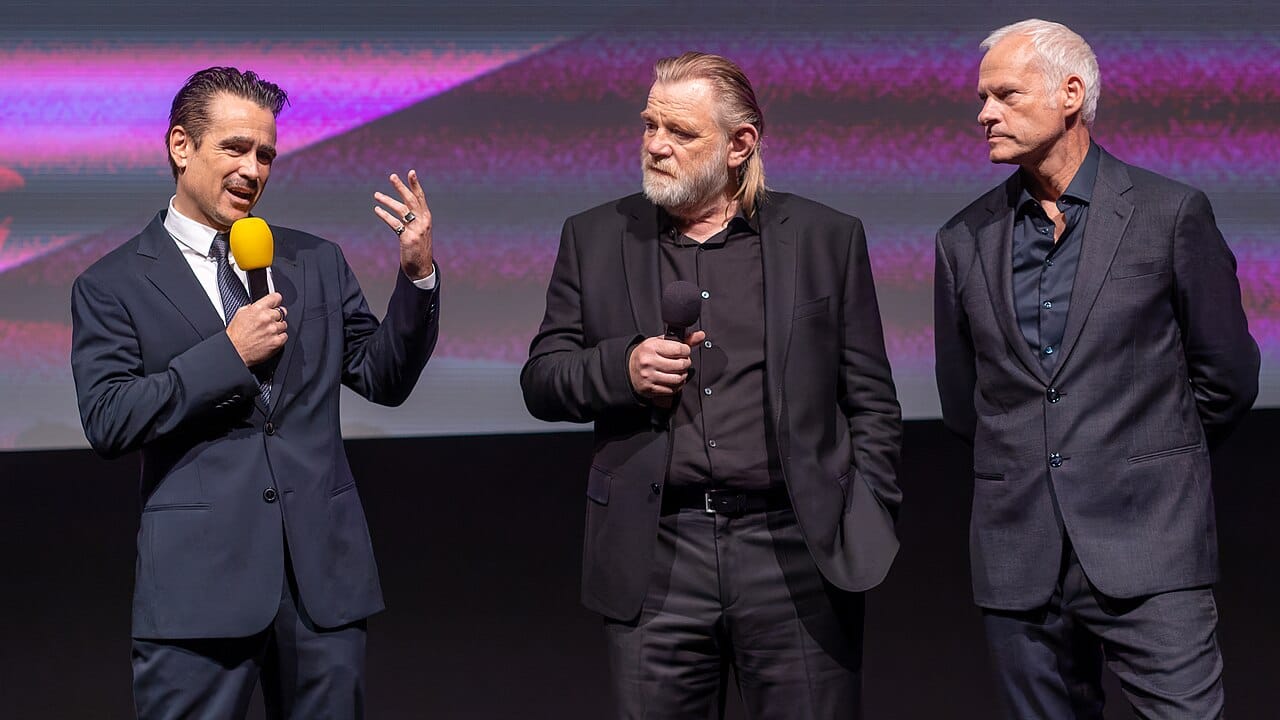
Wild Horse Nine is McDonagh’s fifth feature. John Malkovich and Sam Rockwell play CIA agents, with a cast including Steve Buscemi, Mariana di Girolamo, Ailín Salas, Tom Waits and Parker Posey. Searchlight confirms McDonagh as writer and director, with Broadbent, Czernin and Anita Overland among the producers alongside him.
In an Associated Press interview, McDonagh explains that he visited Easter Island around 15 years earlier hoping it might suggest a film, as Bruges had. Several versions of the central pairing preceded the eventual story involving the CIA and Chile in the 1970s.
The new location continues a pattern: a place creates pressure on people who cannot easily escape one another. For another filmmaker whose career moves between intimate relationships and political history, read our Walter Salles story.
Watch McDonagh reflect on the career
David Marchese’s conversation follows McDonagh from his teenage years to Wild Horse Nine. Around 27 minutes he discusses punk and leaving school; around 31 minutes he reflects on writing while unemployed. At roughly 21 minutes he explains why film’s permanence matters to him after the fleeting life of a theatre production.
That wish to leave something people can still see gives his move into cinema a purpose beyond a change of medium. A performance ends; a film can keep finding viewers. Follow The Interview’s official channel for the conversation and Searchlight’s film page for release information. These are publisher sources, rather than personal McDonagh accounts.
For a different route through theatre and screen work, explore Patrick Stewart’s career story. If you are preparing your own film for an audience, explore Vidreno and start with a free account.