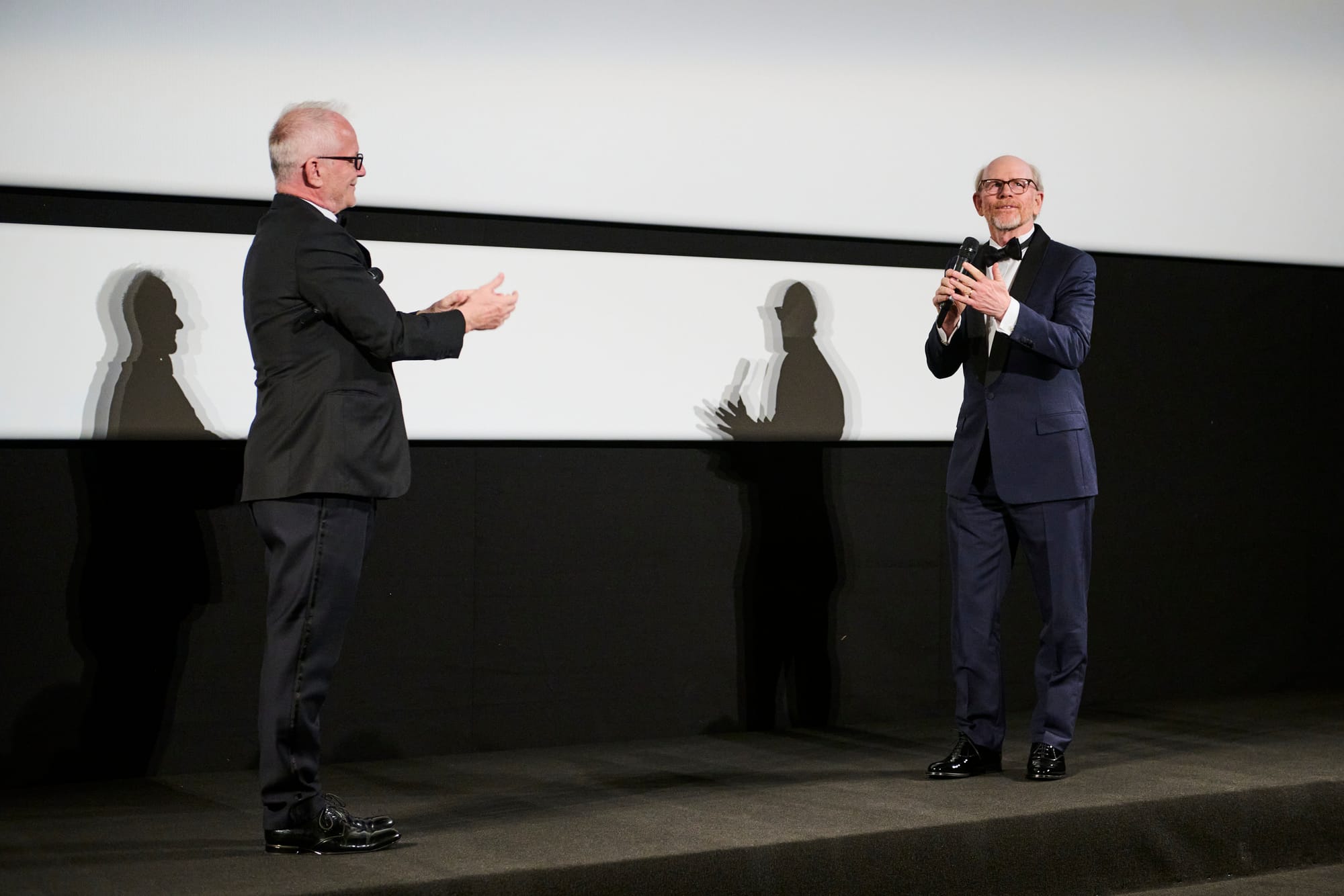
LeSean Thomas, left, with Shinichiro Watanabe at Japan Society in November 2025. Photo: SnowFire, CC BY 4.0. Published crop, unchanged.
LeSean Thomas built an animation career by following the work beyond the drawing board. The Bronx artist became a key creative figure on The Boondocks, moved to Seoul to understand production from the inside, and went on to create Cannon Busters and Yasuke.
His latest series, Bass X Machina, brings him back together with Studio Mir. With Netflix listing its release for 3 November 2026, it is a useful moment to look at the jobs, collaborators and independent projects that made that reunion possible.
Commercial drawing and television animation led to The Boondocks. Working in Korea expanded Thomas’s production experience. A crowdfunded Cannon Busters pilot then put an original world of his own in front of an audience.
Drawing in the Bronx, learning on the job
In his interview with The Undefeated, Thomas describes growing up in the South Bronx surrounded by hip hop and comic books sold through local shops. He attended the arts programme at Julia Richmond High School, but did not go to animation college.
His route into paid drawing started with an unpaid internship designing children’s accessories. That became an assistant designer job, followed by freelance web animation. Work on the animated segments of Lizzie McGuire helped him move towards storyboarding.
That progression matters: his first professional opportunities were commercial assignments, not an invitation to make his own series. He credits mentors with helping him learn what he had not studied formally.
The Boondocks made his work widely visible
The Boondocks was the breakthrough. Thomas recalls arriving as a supervising character designer and co director on its first season, then continuing in character design on the second. It was his first experience of working on such a widely recognised television show.
His official biography also records his later work as creative producer and supervising director on Black Dynamite. Those credits show the range of responsibility he was accumulating: designing the people on screen, shaping sequences and helping oversee a production.
Why he went to Korea
American animation work had shown Thomas one part of a process whose animation production often happened overseas. In the same interview, he explains that he wanted to see that other part for himself. A contact helped him make the move.
Japan Society’s account of his career dates his move to Seoul to 2009 and identifies his work with Studio Mir on Book One of The Legend of Korra. It gives the later Bass X Machina collaboration a history that reaches back well before his Netflix originals.
The move was not a frictionless adventure. Thomas describes long working days and the difficulty of navigating a new language. His career story contains geographical freedom, but also the practical demands of learning to work in another country.

Cannon Busters: asking an audience to back a pilot
Alongside television work, Thomas pursued his own comic creation, Cannon Busters. The crucial crowdfunding step was specific: raise money for an animated pilot.
The original Kickstarter campaign, run by Makestuff LLC in November and December 2014, records the result:
| Campaign measure | Recorded result |
|---|---|
| Funding goal | $120,000 |
| Total pledged | $156,535 |
| Backers | 2,429 |
These are pilot campaign figures, not the budget of the eventual Netflix series. Anime Boston’s guest biography credits Thomas with writing, producing and directing the pilot with Japanese studio Satelight. It was a concrete demonstration of the project, supported by people willing to fund it before a full series existed.
The Netflix series followed in 2019. Thomas’s official biography identifies him as its creator, executive producer and showrunner: a move from contributing to established shows to being responsible for an original series.
Children of Ether widened the circle
Another original project arrived in between. Children of Ether, directed by Thomas, was released through Crunchyroll in July 2017. Its collaborators included storyboard director Shingo Natsume and character designer Hiroshi Shimizu, with production by the French company Yapiko Animation.
Crunchyroll’s release announcement makes that international combination explicit. It is a useful corrective to treating Thomas’s career as a simple move from American cartoons into a single Japanese industry. The work connected people and companies across several countries.
Yasuke brought a different team together
For Yasuke, Thomas worked with MAPPA, character designer Takeshi Koike, actor LaKeith Stanfield and musician Flying Lotus. Netflix released the six episode series on 29 April 2021.
Netflix’s announcement describes an inspiration that began with a children’s book about Yasuke. The resulting series places its samurai in a fantasy world of magic and machines. It should be approached as a fictional reinterpretation rather than a history lesson.
The collaboration took personal work as well as creative ambition. In a TIME interview, Thomas and Flying Lotus recall a 2018 dinner in Japan with MAPPA chief executive Manabu Otsuka. Establishing a comfortable relationship was part of getting the team together.
Music was one of the project’s central creative contributions. For another perspective on collaboration between animation and music, read our story of how Golden was made for KPop Demon Hunters.
Bass X Machina and the return to Studio Mir
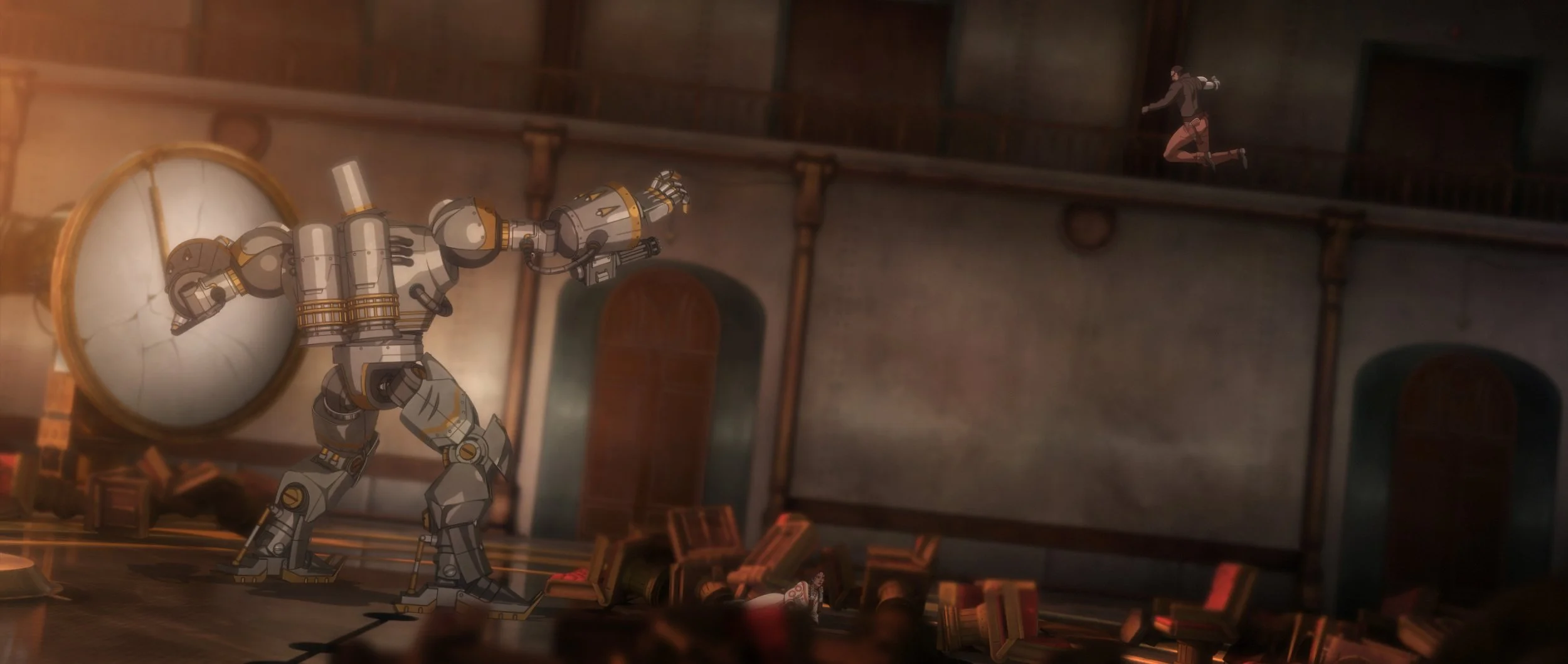
Thomas’s latest series reunites him with Studio Mir, now with his own project at the centre. Netflix’s Media Center lists Bass X Machina for 3 November 2026 and describes a father protecting his family in a lawless steampunk West populated by outlaws, machines and supernatural threats.
The release also coincides with Foreign Exchange, Thomas’s programme of conversations about international animation. Japan Society’s November 2026 programme includes a Pratt session on portfolios and careers, a discussion at the School of Visual Arts and a screening at the Korean Cultural Center New York.
For readers in New York, the 5 November screening and production talk is a particularly relevant opportunity. The host lists a first episode screening followed by Thomas and Studio Mir discussing the journey from concept to finished animation. It starts at 7:30pm local time; admission is free, with RSVP required and seating first come, first served.
There is a clear connection between the young artist who wanted to understand production overseas and the established creator now convening these exchanges. Thomas’s career has grown through doing the work, meeting collaborators and making original projects tangible enough for other people to join.
Follow Thomas and explore his work
Start with his official biography and IMDb credits. His website links to Instagram and X. The interview above is the best starting point for hearing the early career story in his own words.