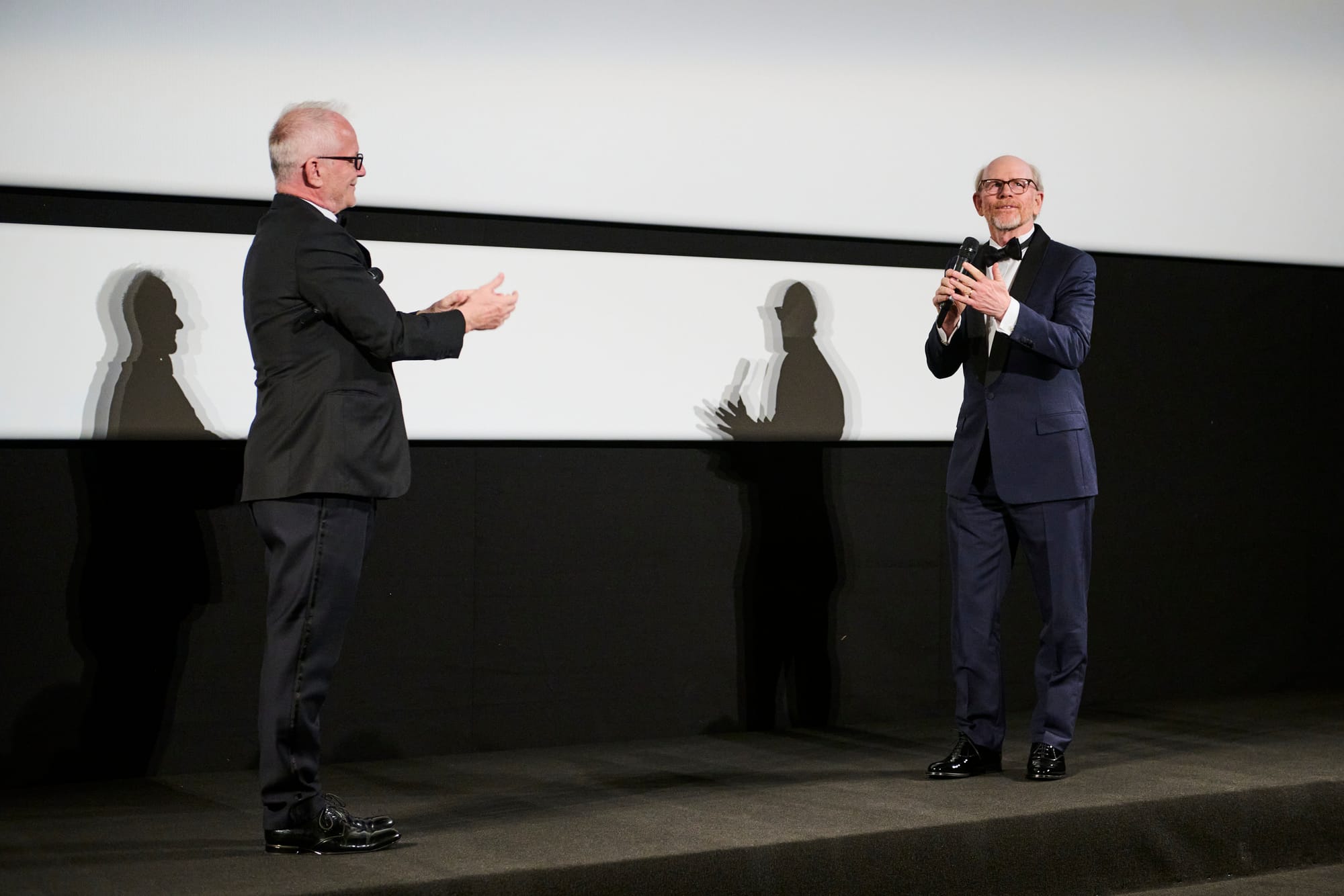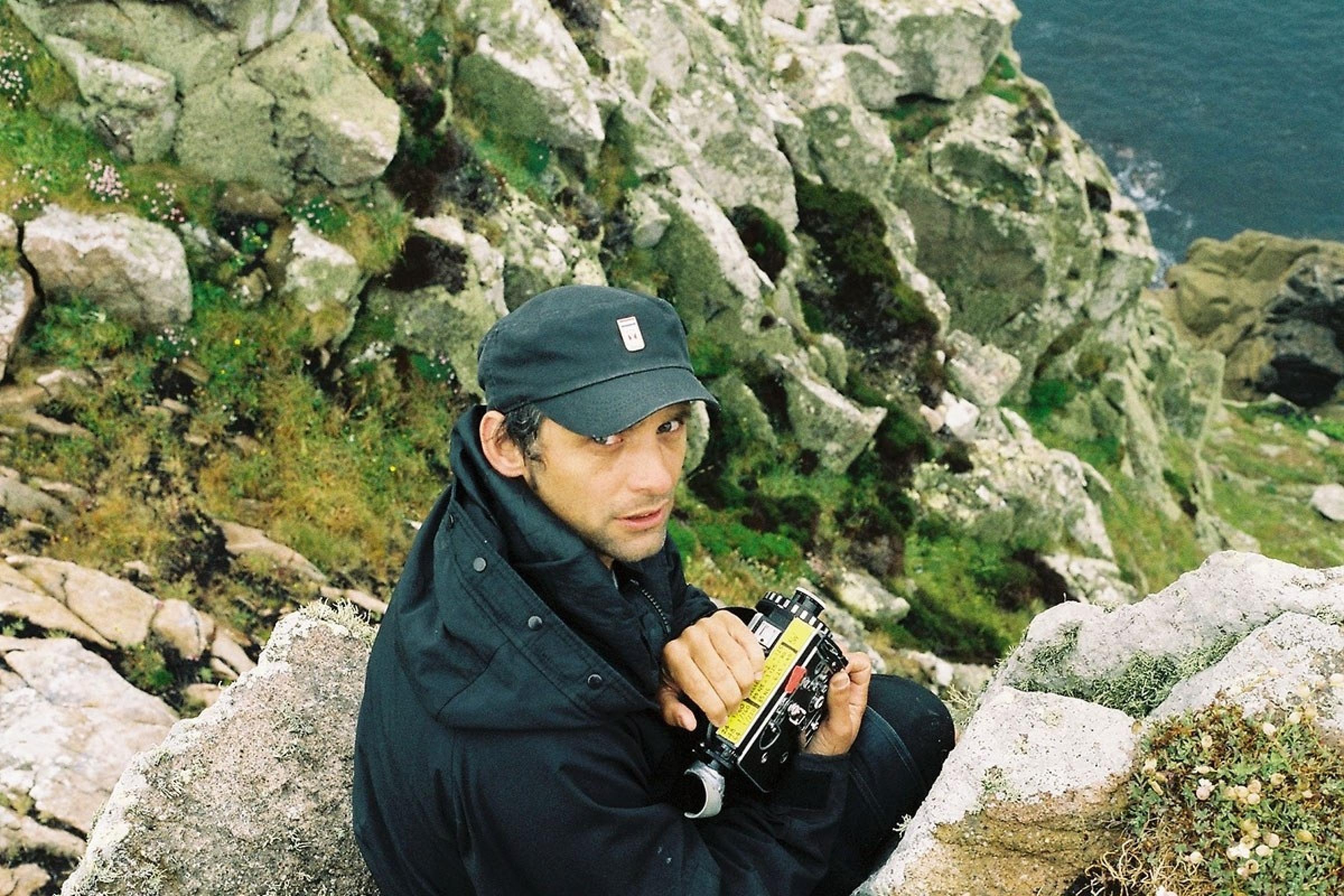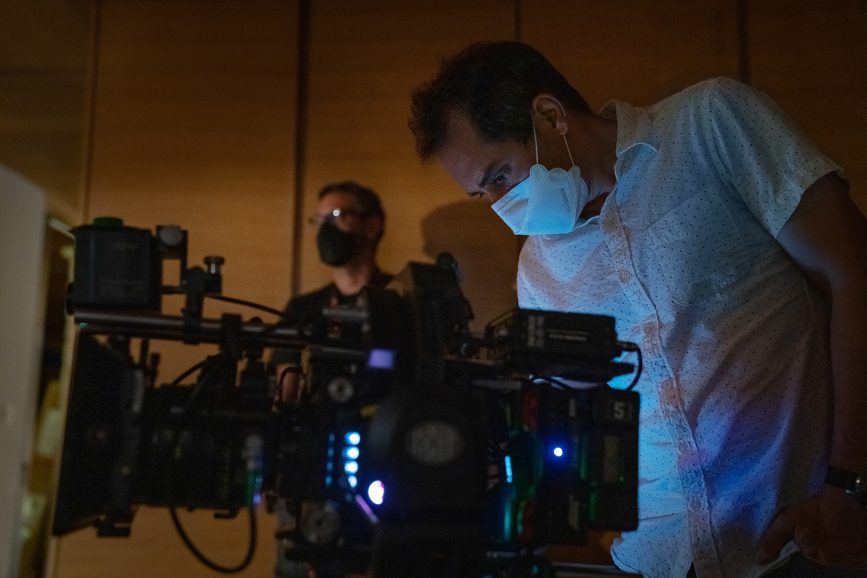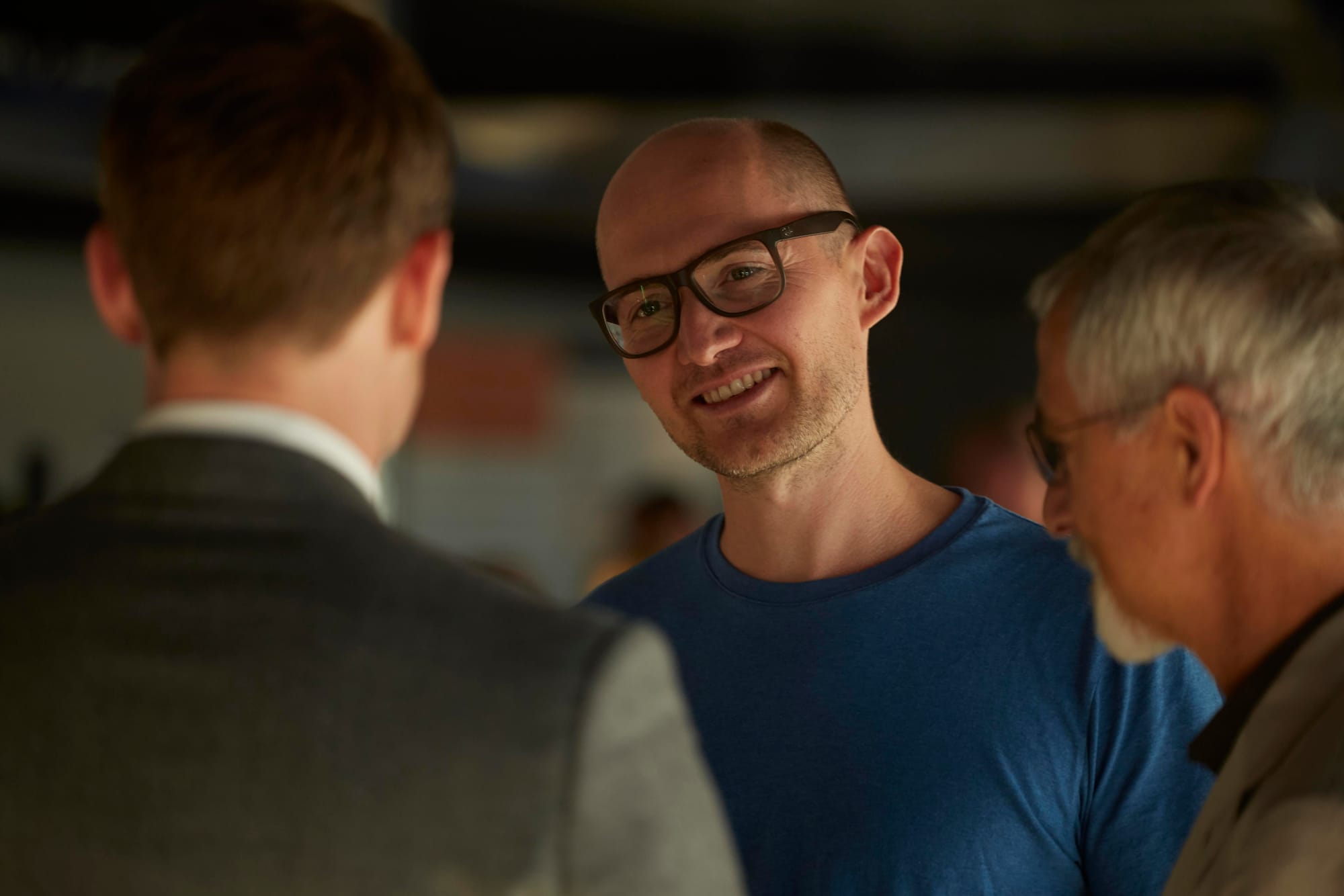
Cover: Watkins with James Norton and David Strathairn on the set of McMafia. Photo: Hettiesview, CC BY SA 4.0.
Before James Watkins was directing a DC horror film, he needed to persuade people that a screenwriter could direct at all. His answer was practical: make a few minutes of the film and give financiers something to watch.
That project became Eden Lake. It remains the crucial turning point in a career that now reaches from British horror to international television and Clayface, opening in US cinemas on 23 October 2026.
The film education that began on television
Watkins traces his early enthusiasm to BBC Two’s Moviedrome. In an interview with Best Movie España, he remembers its mix of international and classic films as an education that widened his sense of what cinema could do.
After university, he moved to London, worked as a runner and read scripts. Writing his own came next. Finishing second in a Working Title competition led to a job as a writer. Many scripts went unmade, but the work gave him paid time to learn.
His early screenwriting credits included My Little Eye and Gone. Later came The Descent Part 2, on which he also worked as second unit director. The United Agents credits show a filmmaker learning different parts of the job before and around his directing breakthrough.
Eden Lake: the big break he had to demonstrate
Watkins wrote Eden Lake intending to direct it. His Working Title arrangement allowed him one project he could take elsewhere, and this was the one he chose.
As he told Mark Salisbury in 2008, producer Christian Colson responded quickly to the script and supported his ambition to direct. They then made short pieces to demonstrate what Watkins could do.
A compressed version of the story did not work as he hoped. Shooting an extract proved more useful, giving him experience with actors and the technical demands of a set. When financiers asked about the director, the team could show roughly seven minutes on a DVD.
The 2008 feature was the breakthrough. Writing had opened the industry door; making those scenes helped Watkins move into a different job.
The collaborator who stayed: editor Jon Harris
Colson also introduced Watkins to Jon Harris. In his Film Stories conversation, Watkins recalls how fortunate he felt to have such an experienced editor on his debut. Their partnership continued through his films, with Harris also credited on Clayface.
There is affection in the way Watkins talks about him, but the working relationship depends on cutting things they like. A shot’s difficulty or a scene’s fine acting does not automatically earn it a place in the finished film.
The Woman in Black and a change of scale
In 2012, Watkins directed Daniel Radcliffe in The Woman in Black, from Jane Goldman’s screenplay. The move from Eden Lake to a gothic ghost story expanded his range while keeping fear at the centre.
The film also offers a revealing example of how release decisions affect the finished work. The BBFC’s case study records that an uncut 15 was available. The distributor instead chose six seconds of cuts, darker shots and reduced sound effects to obtain a 12A.
It received 134 complaints. That figure tells a more precise story than a vague claim about how controversial the film was: the intensity of a scare can depend on sound and visibility as much as what happens in the scene.
Beyond horror: action, Black Mirror and television
Watkins’ career did not stay inside haunted houses. His subsequent work moved between feature films and television:
- The Take, also known as Bastille Day: the 2016 action film added another feature writing and directing credit.
- Black Mirror: he directed the 2016 episode Shut Up and Dance.
- McMafia: the 2018 series brought together creating, writing, directing and executive producing.
- The Ipcress File: he directed and executive produced the 2022 television adaptation.
Those credits matter because they complicate the simple label of horror director. Watkins had become a filmmaker who could work across formats, with different responsibilities and different ways of sustaining a story.
Speak No Evil: making discomfort last
The 2024 Speak No Evil brought him back to intimate horror as writer and director. Remaking Christian Tafdrup’s film, he wanted an English setting and room to take the story in his own direction.
James McAvoy was central to that approach. Watkins told Best Movie España that he wrote with McAvoy in mind: the character needed charm as well as menace, so an audience could understand why people might initially want his company.
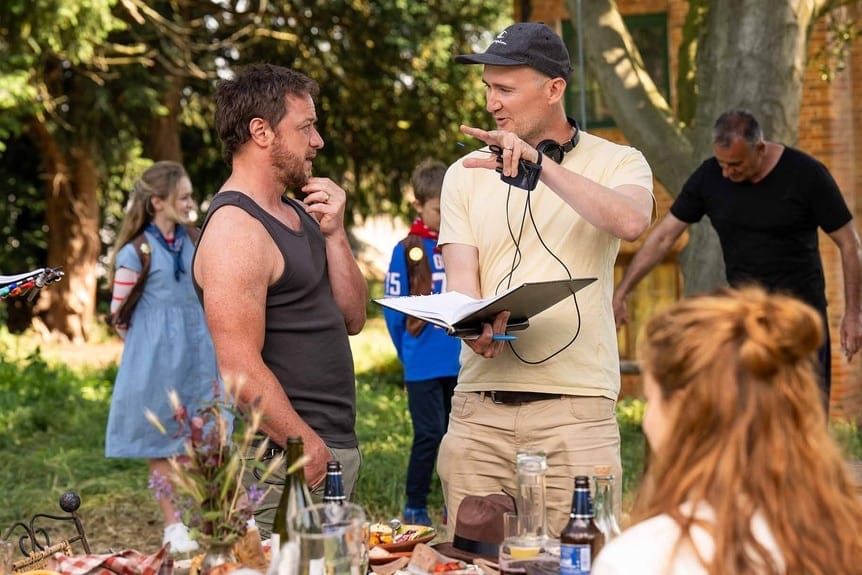
A real location changed the way they filmed
In Film Stories, Watkins describes the low ceilings and awkward rooms of the real farm location. Those limits shaped camera positions and gave the actors a tangible place to inhabit. The building became part of the filmmaking.
The edit needed equal care. Watkins and Harris removed several scenes he loved because they repeated work done elsewhere. For him, pace depends on the audience feeling each moment develop, rather than simply cutting faster.
Clayface: a new scale, familiar collaborators
Clayface brings Watkins into DC’s world with Tom Rhys Harries and Naomi Ackie. The official production credits name Mike Flanagan and Hossein Amini as screenwriters, from Flanagan’s story.
The crew includes cinematographer Rob Hardy, production designer James Price, composer Volker Bertelmann and editor Jon Harris. Even at this different scale, Watkins is still working with the editor who joined him on his first feature.
In IMDb’s interview, Watkins explains that he wanted as much of the work as possible to be practical. Ackie describes how Harries’ prosthetics gave her something tangible to respond to, helping her feel empathy for his character.
One small detail makes that process vivid. At 5:18 in the interview, Harries explains how a string beneath the prosthetics was pulled before a take to alter the appearance of his eye. A disturbing screen image depended on a carefully repeated physical action.
The thread through his career
Watkins’ story is not simply a ladder from a small film to a bigger one. It is a succession of changes in role, format and scale, held together by a continuing interest in how an audience experiences a scene.
The early shorts made his directing ambition visible. Harris became a lasting creative partner. Television broadened the work. And the recent films still find their effects in practical details: an uncomfortable room, a delayed cut, an actor reacting to something in front of them.
For another route into directing, our Philip Barantini profile follows the journey from acting and kitchen work to Adolescence.
Explore the films and interviews
Find Watkins’ filmography on IMDb and his professional credits through United Agents. The Film Stories and IMDb videos above let the filmmakers explain their choices in their own words.
Working towards a release of your own? Explore a home for your films with Vidreno.