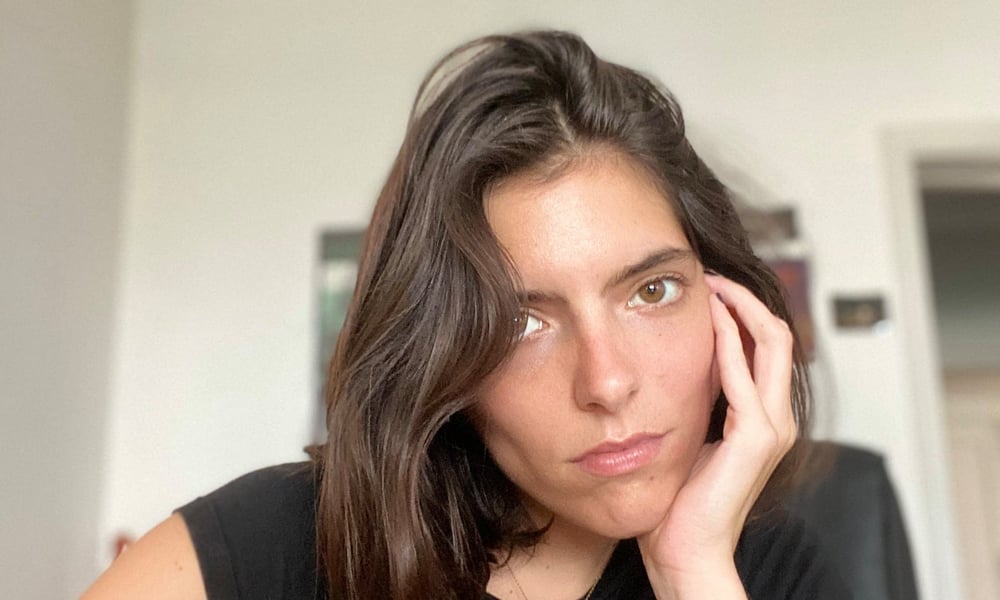
Jacqueline Lentzou. Publicity photograph, credited as PR by The Guardian.
Jacqueline Lentzou built her reputation through shorts including Fox and Hector Malot: The Last Day of the Year. Moon, 66 Questions became her first feature in 2021. Her second, A Day in the Life of Jo: Chapter Phaedra, has now won the Golden Alexander in Thessaloniki’s Arrivals International Competition.
Jacqueline Lentzou’s films often begin with something small: a difficult conversation, a dream, a young person trying to get through the day. Then the ordinary world opens into something stranger.
On 15 November 2026, A Day in the Life of Jo: Chapter Phaedra won the Golden Alexander at the Thessaloniki International Film Festival. It followed Lentzou’s Orizzonti directing award in Venice in September.
Those prizes are the latest chapter in a career developed through small films, close collaborators and a determination to retain a personal way of seeing. The route matters as much as the recognition.
A camera before a career
Born in Athens in 1989, Lentzou grew up in Thessaloniki and later trained at the London Film School. Her attachment to moving images began well before professional training.
In her 2021 conversation with The Upcoming, she remembers insisting on a video camera when she was ten. One of her strongest childhood images was her father filming their home. Taking up a camera herself offered a feeling of security, then gradually became a way of looking at the world.
She told The Guardian that she initially wanted to write. Watching Gus Van Sant’s Elephant as a teenager changed her sense of what cinema could do. Its silences made filmmaking feel like a possible vocation.
Her first professional steps came through short work. The London Film School graduation film Thirteen Blue, completed in 2013, took her to festivals and gave her the experience of entering that world as a director.
Short films became a language of their own
Lentzou described Thirteen Blue as her first film beyond amateur work in a Berlinale Shorts interview. She was already interested in dreams as experiences with their own unsettling texture, rather than decorative departures from reality.
Fox followed in 2016 and Hiwa competed at Berlin in 2017. The decisive Cannes recognition came with Hector Malot: The Last Day of the Year, which received the Leica Cine Discovery Award at Critics’ Week in 2018.
These shorts were a sustained body of work, not simply application material for a feature. The Akbank festival’s career record places The End of Suffering (A Proposal) in 2020, before Moon, 66 Questions. Its movement between a person’s distress and a wider universe anticipates the scale of feeling in her later work.
Try Hector Malot: The Last Day of the Year for the short filmmaking breakthrough, Moon, 66 Questions for the first feature, then A Day in the Life of Jo: Chapter Phaedra for the next expansion of her visual language. Check local screening and distribution listings, since availability varies by territory.
The personal experience behind Moon, 66 Questions
While studying in London, Lentzou returned to Greece after her father became seriously ill. In her Guardian interview, she recalled spending 18 months caring for him and knowing that the experience would eventually inform her first feature.
She resisted turning that connection into the film’s selling point. Instead, she worked on the screenplay while making shorts, developing the language needed to avoid a conventional treatment of an intensely personal subject.
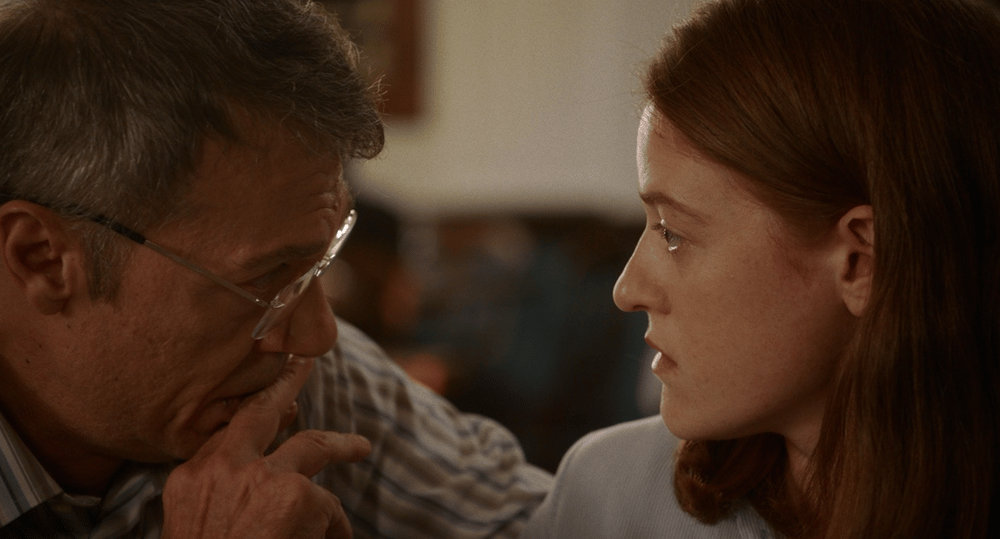
Moon, 66 Questions follows Artemis, played by Sofia Kokkali, as she returns to care for her estranged father Paris, played by Lazaros Georgakopoulos. Physical proximity does not immediately resolve their emotional distance. The film allows awkwardness, anger and play to coexist.
Presented in Berlinale Encounters in 2021, it went on to win the Golden Puffin in Reykjavík. A long gestation had produced a first feature that could carry her concerns beyond the shorter form.
Preparing the history, preserving the encounter
Lentzou’s account of directing the two leads is useful because it distinguishes preparation from rehearsal. In The Upcoming interview, she describes building detailed histories for father and daughter, while keeping their shared scenes unrehearsed.
The aim was to preserve the feeling of people meeting across a gap. Even that choice needed adjustment: scenes inside the house were scheduled late, by which time the performers had become more familiar with each other. The production had to recover the distance the story required.
Her BFI interview adds another view of the collaboration. Moon was her third film with Kokkali. A familiar crew helped Lentzou feel at home on set, while cinematographer Konstantinos Koukoulios gave the feature its distinctive images.
Music also came through an existing relationship. Aris and Lakis Ionas, the brothers behind The Callas, had collaborated with her on a film for their song La Jalousie. Lentzou told the BFI that they later provided music for Moon and its trailer without charging her. Small artistic relationships could become practical support.
Making room for work between features
The feature debut did not end her work in shorter forms. Film Fest Gent’s filmography includes Marble is Cut With Water (or the Crying Game) in 2022 and Pleiades (or Going Home) in 2023.
Pleiades emerged from the festival’s 2x25 project, which paired filmmakers with composers. Gustavo Santaolalla supplied the music; Lentzou made the accompanying film. Music came first, providing the starting point for the images rather than arriving after them.
That exchange sits naturally within a career shaped by changes of duration and form. A feature can take years to develop, while a short offers another space to follow an idea.
A Day in the Life of Jo opens into another world
The second feature centres on fifteen year old Jo, played by Evita Andriopoulou. An ordinary school day changes when she hears Phaedra sing. Eleni Vergeti, Anastasia Gouliamou and Ektoras Lygizos are among the cast listed by the Mannheim Heidelberg festival.
In her Film at Lincoln Center conversation, Lentzou explains that the idea began with the killing of a teenager in Athens in 2008. She wanted to attend to the life before the death. Making the central character a girl allowed her to draw on her own adolescence.
As the writing developed, the film moved beyond that original frame. Lentzou describes the later passage as a different film within the film, requiring another visual language.
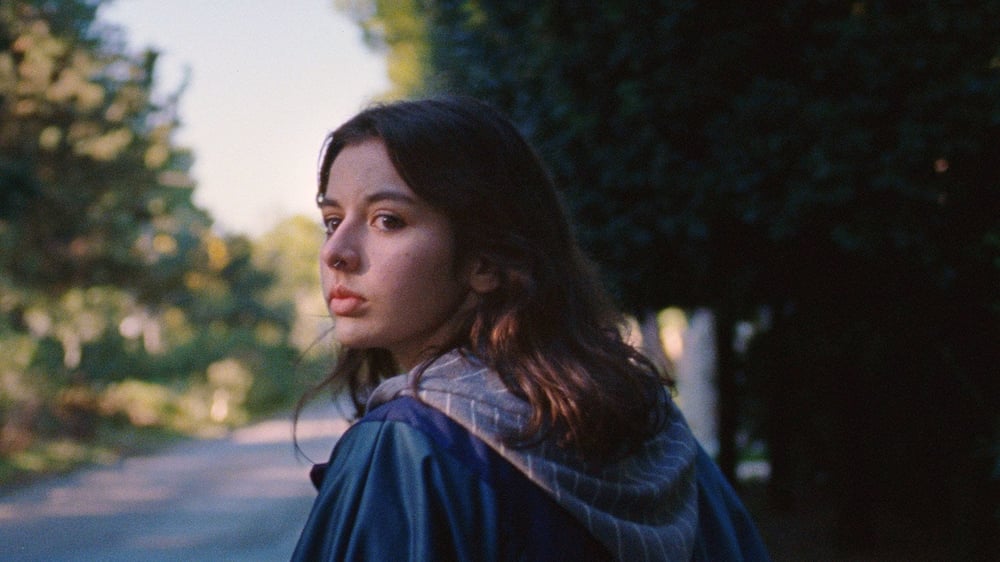
The collaborators helped make that shift tangible. Cinematographer Grimm Vandekerckhove brought a balance between Lentzou’s instinct for close views and wider compositions. Their abstract sequence used a black tube and practical materials to explore light and colour.
Lentzou also describes a singing scene captured in one take. Andriopoulou was hearing the song for the first time; the tear that appeared had not been written into the script. The moment depended on conditions prepared around the performer, with space left for an unexpected response.
Recognition does not finish the funding conversation
Festival success can make the path look smoother from a distance. In her Venice interview with IONCINEMA, Lentzou corrects the suggestion that support from development workshops meant the second feature had received all the financing it needed.
Labs responded to the project, she explains, but it did not secure the budget she wanted. Describing a film driven by unusual sensory ideas could itself become a difficulty when seeking backing.
She says she has already written two more films. That is a statement about scripts and ambition, not a confirmed production timetable. Her hope is to fund the next work more quickly and move beyond the conditions of making everything on very small budgets.
The Golden Alexander is therefore a milestone in an active career. The filmmaker who began with a camcorder is still trying to create the conditions in which the next idea can become a film.
Follow the work
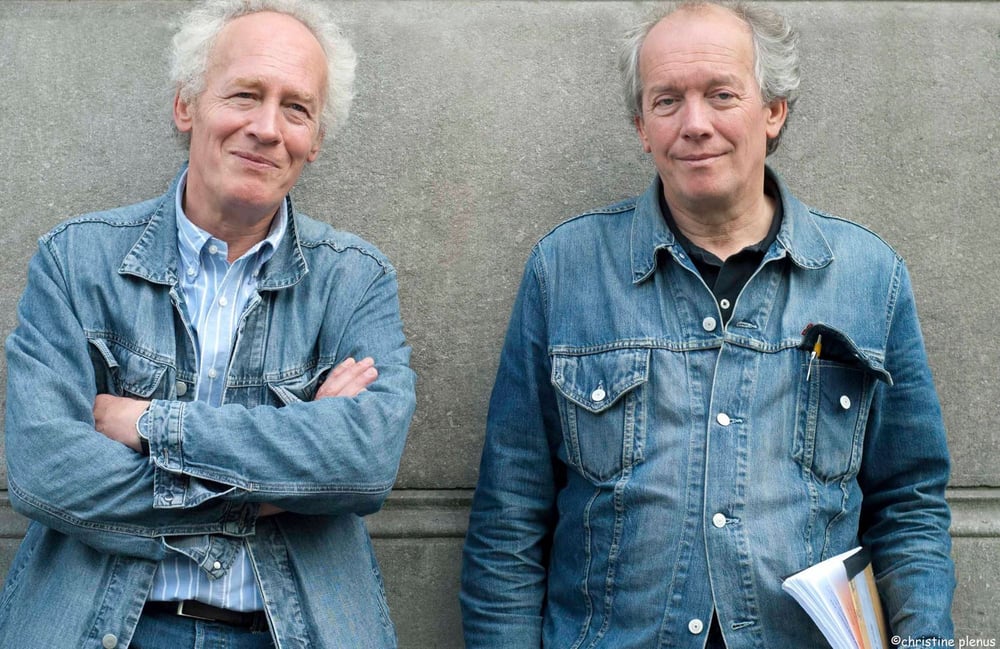
Find Lentzou’s credits on IMDb and her updates on Instagram. For other careers built around a personal film language, explore Mark Jenkin’s story and the Dardenne brothers’ journey.
When you are ready to present your own films on your website, Vidreno Hosting gives you a place to host and embed your work. Start with a free account.