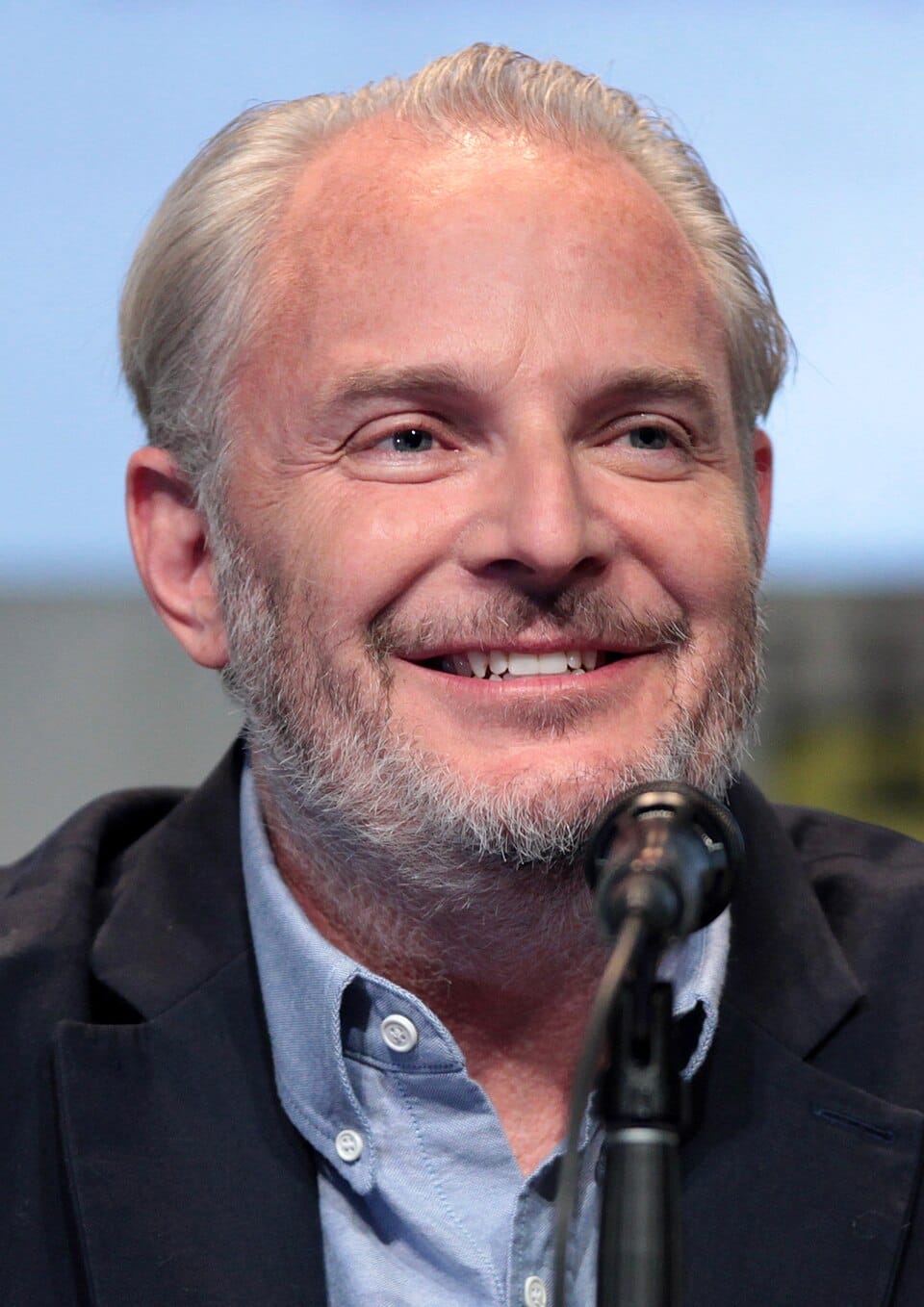
Francis Lawrence at San Diego Comic Con in 2015. Photograph by Gage Skidmore, Creative Commons Attribution ShareAlike 3.0.
When Keanu Reeves was looking for someone to direct Constantine, he had one reservation that seemed to rule out Francis Lawrence. He had seen what music video directors could do with an image. He wanted to know who could carry a film.
Lawrence invited him to a boardroom and covered it with the film he wanted to make. There were faces for the cast, pictures of locations and drawings of what Reeves might see when his character went to hell. Four hours later they still had enough to discuss for a second meeting.
Twenty years on, Lawrence makes a different sort of pitch to a much smaller audience. When Suzanne Collins finishes a Hunger Games manuscript, he sits down with her to work out which scenes will make a film. His fifth visit to Panem, Sunrise on the Reaping, brings that relationship back to cinemas with Joseph Zada as the young Haymitch Abernathy.
In the interview below, Lawrence remembers the images he brought to his first feature pitch. Reeves remembers listening for what the director believed about the character. Watch their accounts together at about 0:35.
A borrowed camera and a first commission
Born in Vienna to American parents, Lawrence grew up in Los Angeles and studied film at Loyola Marymount University. An internship led to assistant directing work on Marching Out of Time. His first chance to direct for a record label came through a friend.
In an interview with his university, Lawrence recalled a budget of $3,000 for an early independent music video. A friend still had a student ID and could borrow equipment. Someone had a band in need of a video, someone had access to a camera, and the job was small enough that they could say yes.
Over the following decade he directed work for artists including Britney Spears, Justin Timberlake and Lady Gaga. He kept making videos after his first feature. Gaga’s Bad Romance, with its white bathhouse and clawed hands, earned him a Grammy in 2011, six years after Constantine opened.
Music videos gave him repeated chances to finish something. In a Directors Guild conversation with cinematographer Jo Willems, Lawrence explains that by his first feature he already knew what bad weather could do to a schedule and what an effects shot demanded of a crew. Those were decisions he could make while still paying attention to an actor.
How Constantine became his first feature
Getting from the first studio meeting to Reeves took about nine months in Lawrence’s recollection. He had to persuade executives and producers before he reached the actor. By the time they met, he had worked out a version of the picture in enough detail that Reeves could question his choices.
The two men describe the meeting with particular affection. Lawrence remembers preparing the boardroom. Reeves remembers trying to understand how the director saw the man he would have to play. A few days later, over several more hours at the Chateau Marmont, they returned to the character and the world around him.
Constantine arrived in 2005. Two years later I Am Legend put Will Smith in a depopulated New York. Scenes of a man going about his routine with a dog had to make an abandoned city feel inhabited by one person. Then Water for Elephants in 2011 gave Lawrence almost the opposite setting, a travelling circus crowded with workers and animals.
Those three films explain something his music video reel could not have shown Reeves. Lawrence could sustain an imagined place long enough for an audience to learn what an ordinary day there felt like.
Learning to hear the trains in Panem
Gary Ross directed the first Hunger Games. Lawrence joined for Catching Fire in 2013, inheriting Jennifer Lawrence’s Katniss at a difficult moment. She has survived the arena and now has to stand before the families of people who did not.
In his Vanity Fair scene breakdown, the director points out what lay just outside the frame of a Victory Tour speech. Production had built part of the district in an Atlanta train yard. Every so often, just as Jennifer Lawrence reached the emotional part of a take, freight traffic drowned her out. The crew hired scouts who could warn them when a train was coming and how long it would take to pass.
On screen, the public square seems to stretch well beyond the stage. The effects team supplied distant countryside and repeated groups from a few hundred extras. The crowd could be enlarged later. The silence the actor needed in front of it had to be found that day.
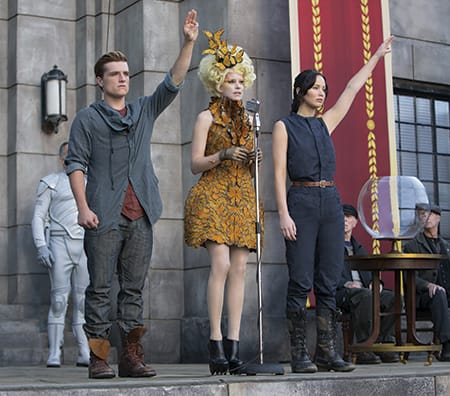
Lawrence stayed for both Mockingjay films. With Willems and camera operator David Thompson, he could plan a shot while giving a performer some freedom to move inside it. Thompson had already worked with him on I Am Legend. The three men could discuss how a scene should feel before deciding where the camera belonged.
What changed between the Hunger Games films
When Jennifer Lawrence joined the director again for Red Sparrow in 2018, she played a former ballerina drawn into espionage. The familiar team changed its habits. Willems and the director held wider compositions for longer and used dollies to make camera movement more formal. In a story about people who watch one another for a living, it matters how long the viewer has to look.
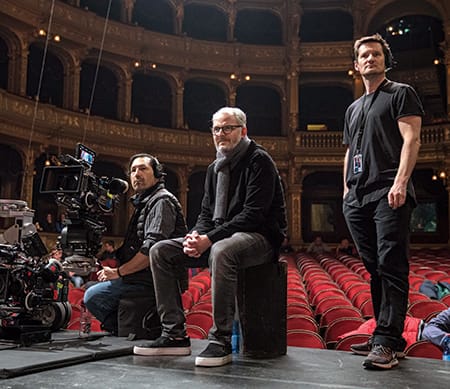
Television gave him other worlds to establish, including the pilots of Touch and See. His 2022 fantasy Slumberland took him somewhere warmer. In his Netflix interview, Lawrence describes a ballroom sequence whose dancers dissolve into butterflies. Toronto’s pandemic restrictions limited the number of actors they could have on set. Imagining the dancers as butterflies gave the team a reason to populate the room digitally.
In 2023, The Ballad of Songbirds & Snakes took him back to Panem before Katniss was born. Then came The Long Walk in 2025. Stephen King’s premise offered an unusually severe directing constraint. The boys have to keep walking, so friendships, arguments and exhaustion have to become legible while their bodies keep moving.
A week at the table with Suzanne Collins
Sunrise on the Reaping centres on the fiftieth Games. Haymitch is sixteen, years away from the wary mentor Katniss will know. Casting him meant finding someone who could carry a love story and still suggest the man he might become.
In their Intermission conversation, Lawrence and producer Nina Jacobson describe casting director Debra Zane bringing Joseph Zada to their attention. A self tape led to callbacks. Lawrence then filmed Zada doing scenes repeatedly on his phone in his office. It was a way to see what else the actor could do once an effective first reading was behind him.
Lawrence also describes the week he spends in New York with Collins. They read through the book page by page and draw up the sequence of dramatic beats for the screenwriter. Jacobson usually joins them towards the end. The discussion for this film turned on Collins’s description of the arena colours. It led Lawrence to psychedelia, then to a Capitol where severe architecture could sit beside the glamour of Studio 54.
The meeting with Reeves and the week with Collins took place at opposite ends of Lawrence’s career. In both, the decisive work happened at a table. An image of hell gave an actor something to question. A few colours in a manuscript gave an author and a director a way into a whole film.
Explore Francis Lawrence’s film and television credits on IMDb or follow Lionsgate on Instagram for releases. For another view of what a director and cinematographer build together, read Greig Fraser’s path from Melbourne to Dune.
To present your own moving image work, you can host a reel with Vidreno and embed it on your website.