Chandrabose pulled his car over to record six lines on his phone. He had just come from a conversation with director S. S. Rajamouli about a party scene in RRR. Two friends are humiliated in front of the guests. What could they sing that would put the room on their side?
One of his answers was a flatbread. As a boy in Telangana he had eaten red jowar roti with chilli paste. Years later, the memory gave him a way to put the friends’ home, appetites and physical energy into a Telugu lyric. Composer M. M. Keeravaani gave those words a pulse that the dancers could keep pushing against.
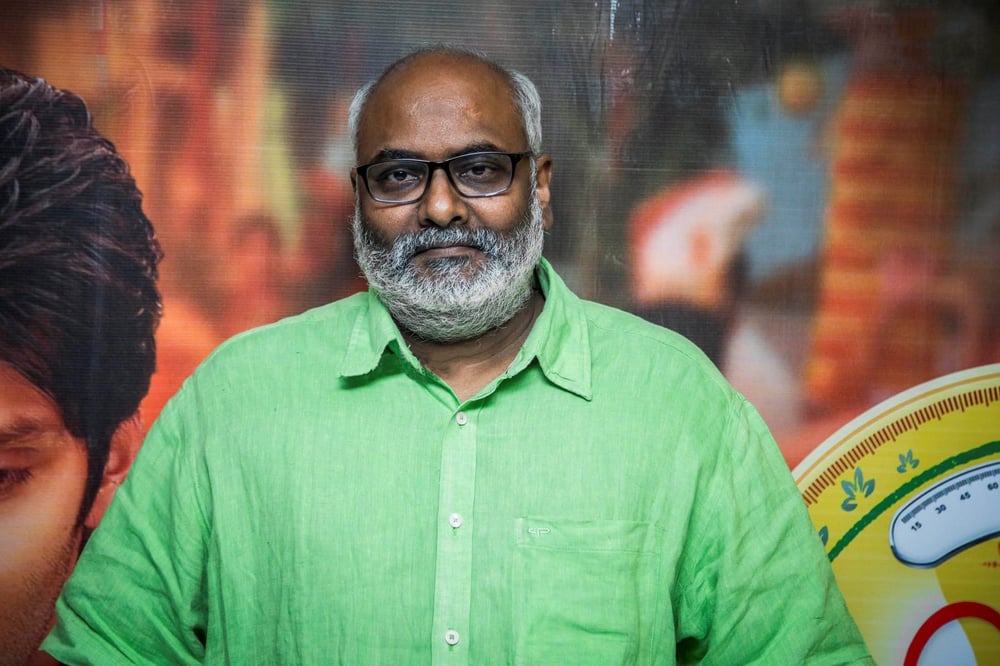
Cover photograph. M. M. Keeravaani at the music launch for Inji Iduppazhagi. Photograph by Silverscreen Media Inc., Creative Commons Attribution ShareAlike 3.0. Image resized.
Tap twice, counting three quick subdivisions to each tap. That is the shape of the song’s 6/8 metre. Keep tapping when the voices get busy and you can hear how much room the singers have inside those two beats.
The words came before the tune
Rajamouli gave Chandrabose a situation and one constraint. The friends could answer the insult, but the lyric should avoid insulting anyone in return. In his interview with The Week, Chandrabose remembers leaving with the word naatu already in mind. To him it carried the sense of something rustic and native to a place.
The food in the lyric came from Challagariga, his own village. A meal remembered in detail could tell the audience something about the people who grew up on it. Even a listener who missed the reference could join in when the title came round again.
At the Songwriters Hall of Fame conversation, he recalled stopping the car to save those first lines and writing most of the song within an hour. Keeravaani wanted a 6/8 feel, so the writer already had a rhythmic shape to work with before he heard a melody.

Why they came back to the first tune
Keeravaani told Screen International that he sketched some fifteen to twenty alternatives. The team tried changing the speed, the metre and the words. Rajamouli eventually chose the first tune the composer had brought him.
That makes the timing of the next part easier to understand. Keeravaani estimated that the basic melody had taken him about fifteen minutes. When the writers describe the song taking nineteen months, they are counting the span of the collaboration, including the gaps between sessions.
In their conversation with Culture Elixir, the writers remember that even a request to change one word could bring them back into the studio months later.
Eight drums and two playback voices
Listen beneath the first sung phrases and there is a remarkably persistent drum pattern. In Keeravaani’s recording interview with Awards Daily, he identifies the instrument as a daf, a frame drum. He describes recording eight and multiplying the parts to give the impression of a much larger group.
Four mandolins, an oud and keyboards gave the arrangers other colours. The mandolins are particularly revealing. The team sliced up part of their rhythmic figure and fragments of the sung lines. A plucked string and a human voice could both supply little attacks inside the larger drum pattern. Keeravaani credits Jeevan Babu and Siddharth with the programming.
The Telugu playback voices belong to Rahul Sipligunj and Kaala Bhairava. Ram Charan and N. T. Rama Rao Jr. perform the contest on camera. Listen to the official Telugu lyric video once with your eyes off the dancers. The repeated title lands squarely enough to sing after one hearing. The much quicker phrases in between are where the singers get to show their stamina.
What the different timings measure
| Stage | What the writers remember |
|---|---|
| Writing | Most of the lyric in roughly an hour. About fifteen minutes for the basic melody. |
| Recording | Keeravaani estimated at least 45 days for vocals, live instruments, programming and processing. |
| Revisions | Nineteen months elapsed across intermittent sessions. Different versions could sit for weeks before a decision. |
What the beat does for the scene
Bheem and Raju have good reason to keep their identities to themselves. Throwing a punch would put them at risk. The song lets them pick a contest they can win in front of exactly the people who have been laughing at them.
In his Vanity Fair scene breakdown, Rajamouli remembers giving choreographer Prem Rakshith the emotional brief for a fight. Watch how the meaning of the shared pulse changes. At first, staying in step is the friends’ show of solidarity. Once the guests try to match them, keeping time becomes a test of endurance. The music gives everyone in the room the same rules.
There is a lovely distinction between the musicians in the picture and the musicians on the track. Rajamouli says he asked for real players in the background because someone holding a violin or clarinet should look as though they know how to play it. The insistent sound that actually drives the party comes from Keeravaani’s layered drums.
The 2023 Academy Award for Original Song went to Keeravaani for the music and Chandrabose for the lyric. For anyone writing a song to picture, it is worth going back to that roti. An audience can feel the exhilaration of the dance immediately. The words also give the two men something particular to bring into that room, the remembered taste of chilli paste and red jowar bread.
Read how the RRR crew built the wider film or follow how the writers of Golden made a pop song carry a secret in KPop Demon Hunters.