A church organ is an unlikely place to begin a journey into deep space. Yet that is where some of Interstellar’s most recognisable music took shape: inside Temple Church in central London, with Roger Sayer at the instrument and Hans Zimmer listening for the right colour.
The story starts earlier, with a much smaller request. Christopher Nolan wanted music that could carry the feelings at the centre of his film. Before discussing spacecraft or the size of the production, he gave Zimmer something personal to work from.
A single page, before the universe
In the making of featurette, Nolan explains that his starting page combined dialogue with ideas behind the film. He deliberately withheld the genre and scale. Zimmer agreed to spend a day writing whatever that page suggested.
Zimmer understood it as a story about a father and son. “I was writing about my son,” he recalls in the featurette, around 1:04.
Only afterwards did he learn that the film centred on a father and daughter. The personal feeling had survived that difference: Nolan heard the relationship he needed in the music.
Then came Nolan’s reveal: this intimate piece belonged to a much larger science fiction film.
He kept listening to it while finishing the script and during production. Music written before Zimmer knew the scale of the project was now helping its director imagine that scale.
Why a pipe organ?
Nolan wanted the organ’s connection with grand religious spaces, even though he was not making a religious film. In the featurette, he describes those instruments and buildings as ways people have tried to express what lies beyond everyday experience.
Zimmer found a human connection in the instrument too. A pipe organ produces sound through moving air. In his 2014 interview with Den of Geek, he talks about hearing that air even when Sayer was not playing. The instrument could suggest enormous scale, but it could also sound intimate and mournful.
That range helps explain the choice. The music needed room for both the immensity of space and the people separated by it. A voice that could move between quietness and overwhelming force gave the score somewhere to go without abandoning its starting feeling.
For the wider journey behind the director, read our Christopher Nolan career story.
Roger Sayer made the possibilities real
Sayer’s own account of the project identifies him as the organ soloist selected by Zimmer in early 2014. The recording used Temple Church’s Harrison and Harrison organ. This was a particular musician playing a particular instrument, rather than a generic organ sound added at the end.
The same page carries Zimmer’s recollection of travelling to London worried that he had written parts nobody could play. Sayer’s performance changed that expectation. Zimmer praises both his precision and the humanity he brought to the music.
Finding the right sound together
The featurette makes that collaboration unusually concrete. Around 2:44, Sayer describes Zimmer playing him a sample, then asking what the real organ could offer.
Sayer tried different stops. One sound might be “too heavy”, another “too bright” or “too harsh”. Those small judgements mattered: an organ part can contain the right notes and still have the wrong character.
As Zimmer heard more possibilities, the exploration grew bolder. Sayer was translating an imagined sound into choices that could actually be played in the room.
- Start with the idea: Zimmer played a sample of the sound he had in mind.
- Try the real instrument: Sayer offered different stops and colours.
- Respond to what you hear: their choices grew more adventurous as new possibilities emerged.
For the organist’s perspective, FutureStops’ interview with Roger Sayer gives the player space to tell his side of the recording story.

Five days at Temple Church
In his interview with Sinfonia Smith Square, Sayer recalls five days recording at Temple Church. He describes a search for colour, gentleness and power in the same instrument.
Keeping the music alive against a click
The soundtrack used six organ parts, recorded individually. Sayer had to follow a click track so the separate performances could fit together, while keeping the playing expressive.
That is a less glamorous part of the story, but a revealing one. The spacious sound heard in the film depended on a player working within a precise pulse.
A recording team across London
The featurette shows the mobile recording setup brought into Temple Church. The instrument stayed in its own acoustic space, with the recording operation assembled around it.
Zimmer’s Den of Geek interview describes sessions happening in different parts of London: organ and strings at the church, with pianos and brass elsewhere. Nolan sometimes ran the church sessions while Zimmer worked at the other location. Their collaboration extended into organising and directing the recording work.
The published soundtrack credits list both Temple Church and AIR Studios’ Lyndhurst Hall. They name Geoff Foster and Alan Meyerson for recording, with Meyerson also credited for mixing. The organ may be the sound many listeners remember first, but the finished score combines performances and recording work from a wider team.
From six recorded parts to one live player
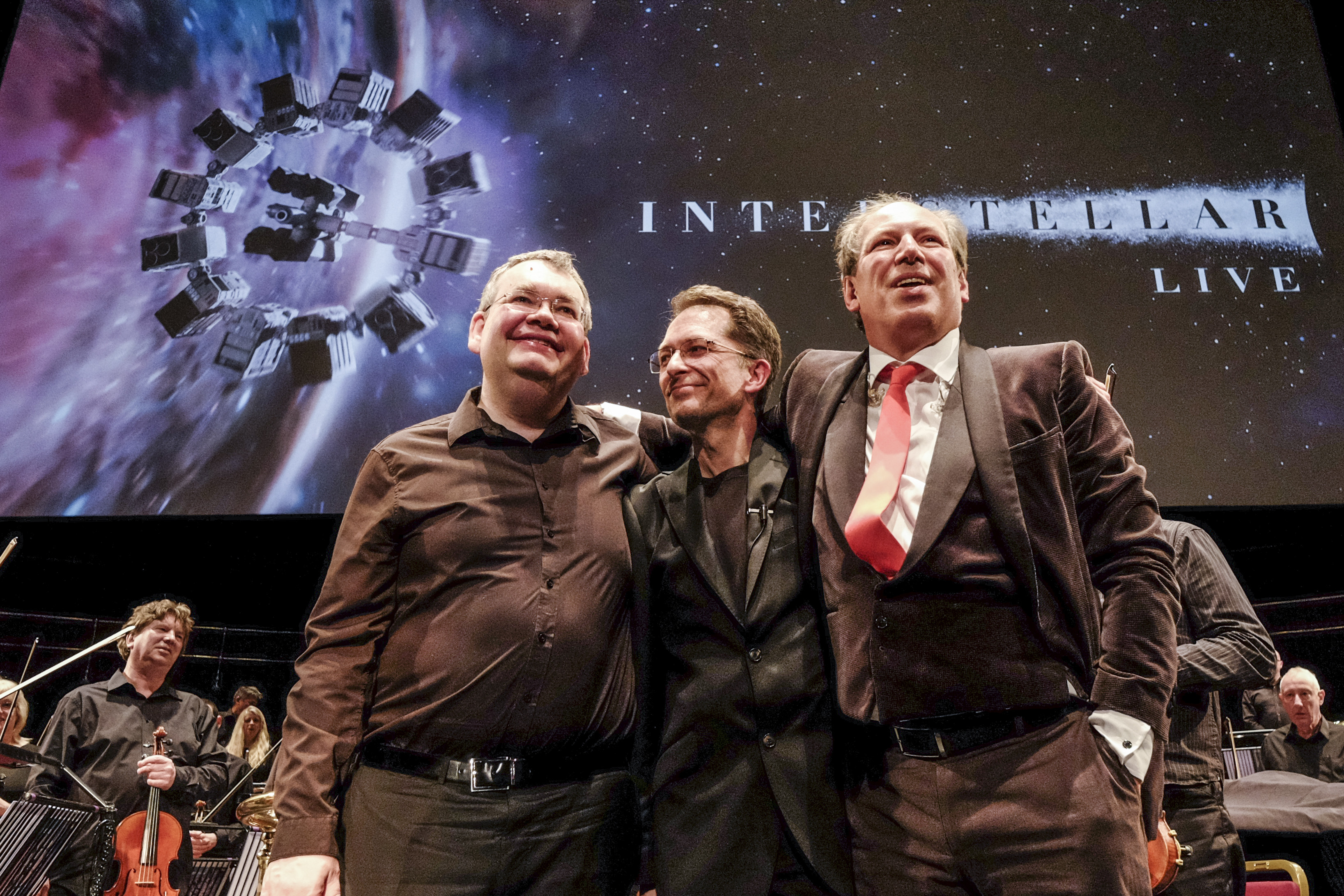
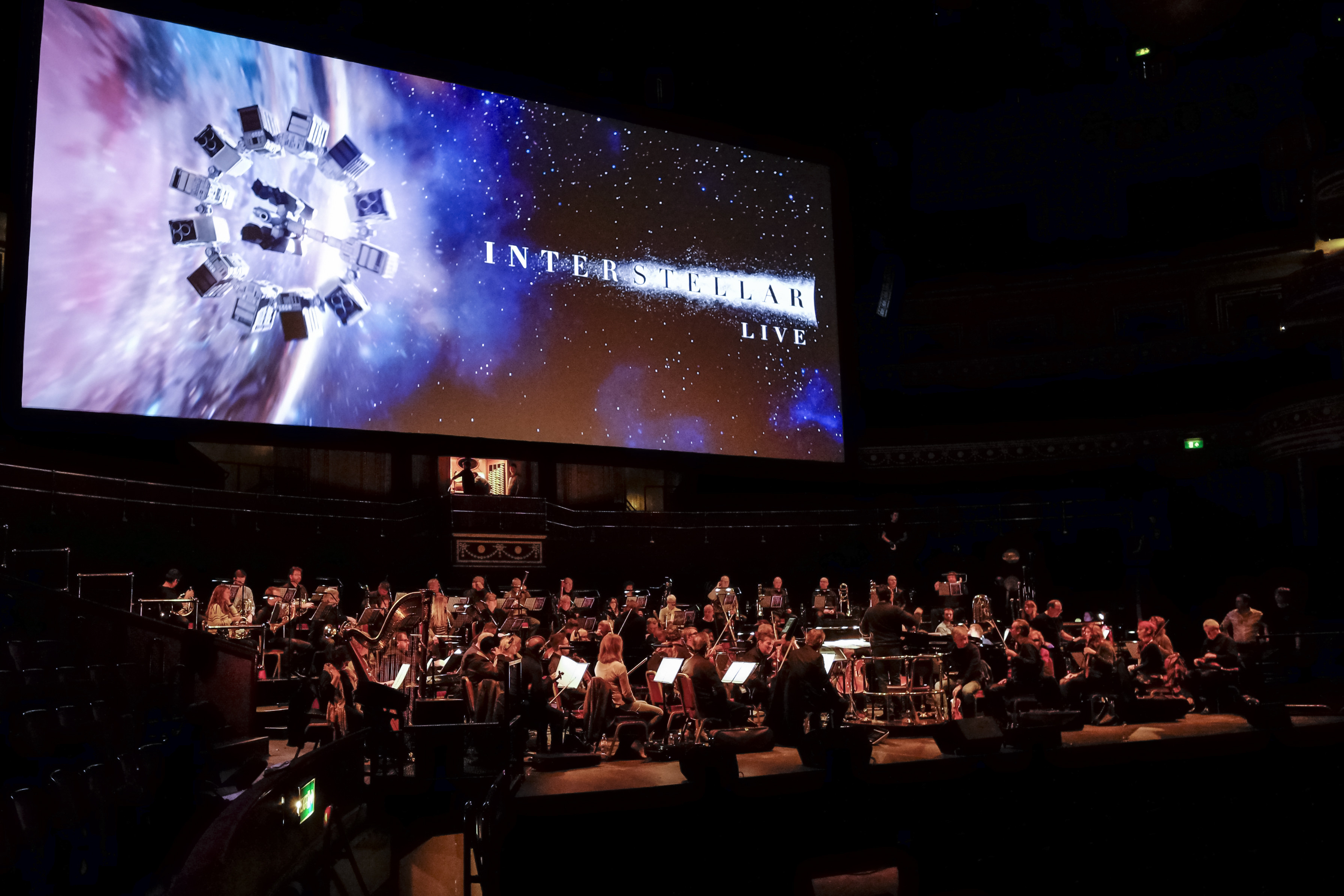
Recording the music was not the final challenge. For the Royal Albert Hall live performance, Sayer says he had to condense the six organ parts into a single playable part, preserving as much of the important thematic material as possible.
The result required another kind of musical judgement: deciding what one person needed to carry when the recorded layers could no longer be performed separately.
Zimmer looks back on the score
Classic FM’s later interview offers another chance to hear the composer discuss Interstellar himself. Pair it with the production featurette above: one shows the work taking shape around the instrument, while the other revisits it with the benefit of distance.
A short listening route through the album
WaterTower Music’s expanded soundtrack was released on 13 November 2020. Its tracklist is helpful if you want to explore the score after the interviews. These are three useful starting points, rather than a ranking of the music.
| Track | How to approach it |
|---|---|
| Day One and Day One (Original Demo) | Compare the separately listed versions. Listen for what feels consistent as the presentation changes. |
| Organ Variation | Return to the instrument at the centre of this story and listen beyond sheer volume. |
| No Time For Caution | Listen for how repetition, layers and changes in intensity carry momentum. |
What can filmmakers take from this?
- Give a composer a relationship to write for. Nolan’s short brief offered an emotional starting point before genre expectations could take over.
- Bring musicians into the exploration. Sayer could demonstrate possibilities that were difficult to discover from a sample alone.
- Leave room to respond. The recording story includes listening, trying another colour and changing direction as the instrument revealed more.
You do not need access to a famous church organ to use those ideas. A clear brief and time to listen to a collaborator are decisions a small production can make too.
Quick answers about the Interstellar score
Who played the organ?
Roger Sayer performed the organ part, working with Hans Zimmer and Christopher Nolan.
Where was it recorded?
The organ was recorded at Temple Church in central London. The soundtrack credits also list AIR Studios’ Lyndhurst Hall for the wider score.
Did Zimmer know he was writing for a space film?
Not when he wrote the initial piece. Nolan’s first page withheld the genre and scale so Zimmer could respond to the relationship at its centre.
When your own film is ready
A finished score is one part of taking a film to its audience. Our guide to selling a short film directly to fans covers the release decisions that follow. Vidreno On Demand supports public film purchases and rentals, separately from hosting video on your own website.