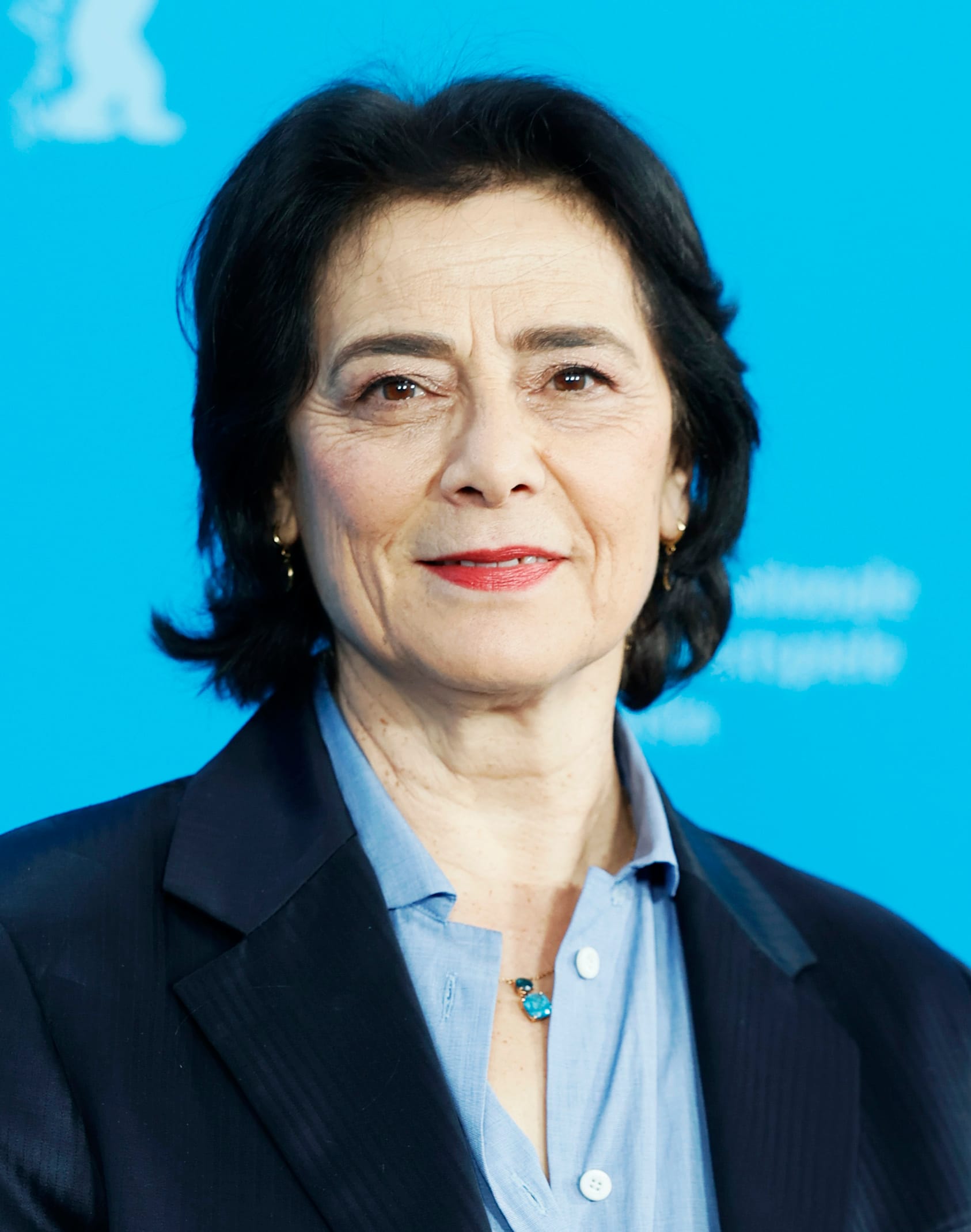
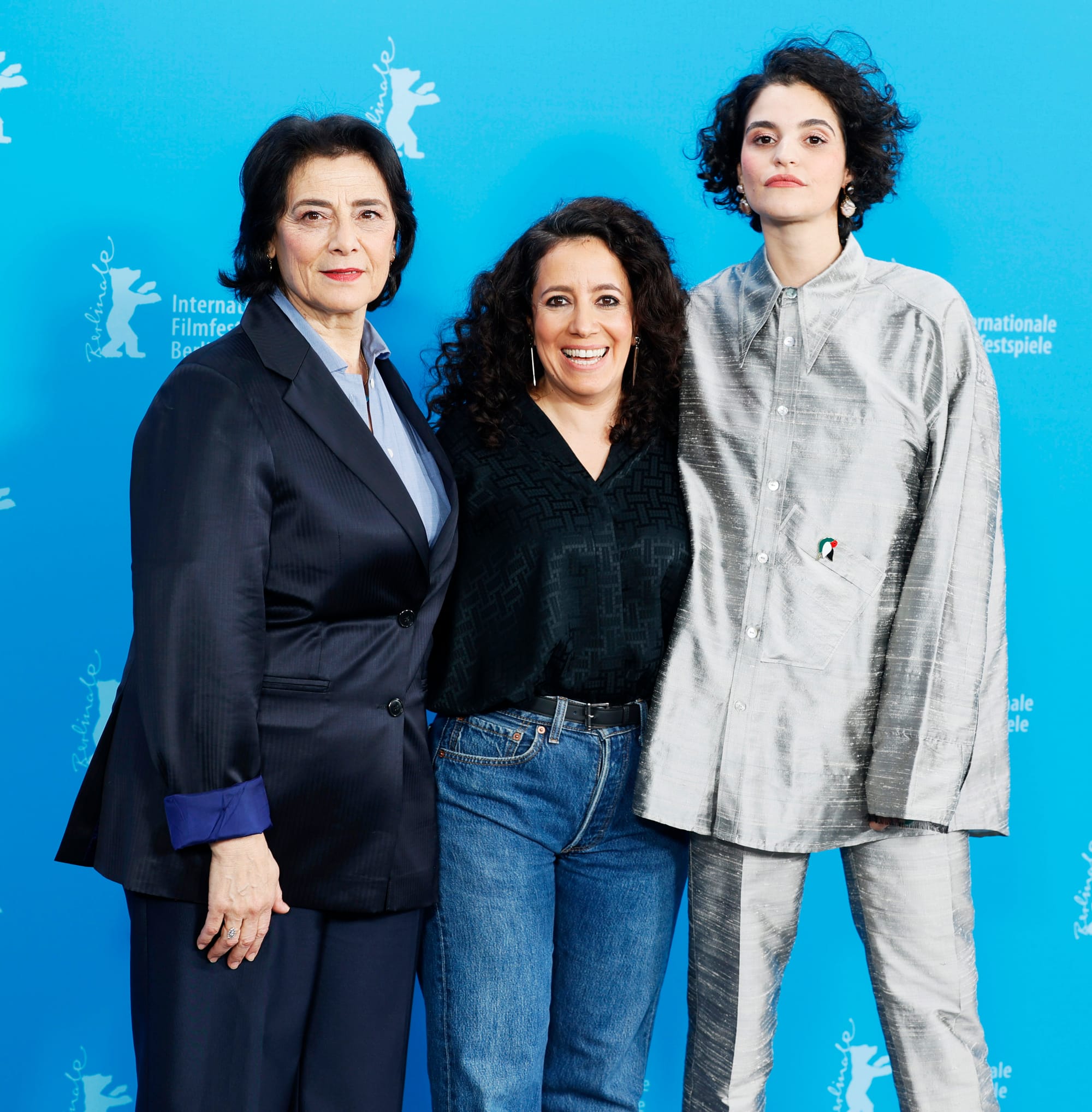
Cover: Hiam Abbass at the In a Whisper photocall in Berlin, 13 February 2026. Photo: Elena Ternovaja, CC BY SA 3.0. Unmodified.
At nine, Hiam Abbass played a mother who had lost her son. The child in her arms was about her own size. When the village performance ended, she looked out and saw the adults crying.
Remembering it at Berlinale Talents in 2026, she described discovering the emotional power of acting before she knew what an artistic career might look like. The route from that stage to Marcia Roy in Succession would take decades, several languages and a move away from home.
Her story also continues beyond the Roy family. A new European Film Academy honour recognises a body of work that includes acting, coaching and directing, while recent films keep bringing her into new collaborations.
Photography opened the theatre door
Abbass was born in Nazareth in 1960 and grew up in Deir Hanna. Her IMDb record confirms the identity and credits behind a career that crosses Palestinian, European and American productions.
In the Berlinale conversation, she recalled choosing photography school partly to escape the professional path her parents imagined for her. Medicine and law were their possibilities; she wanted an artistic life, even before she could name its form.
Photography brought her to El Hakawati, the Palestinian theatre in Jerusalem, and back to performing. Travelling with the company to Lyon gave her a professional stage and a new sense that she could call herself an actress.
She subsequently moved to London and then Paris. The European Film Academy’s career account dates her first leading role to Ariane Mnouchkine’s La Nuit miraculeuse in 1989. Leaving home opened possibilities, but it did not make her family or Palestinian identity disappear from her work.
Satin Rouge changed what came next
Early film work included Rashid Masharawi’s Haifa, opposite Mohammad Bakri. Abbass recalls that experience with the nervousness of someone still learning how another actor works between takes.
The decisive change came with Raja Amari’s Satin Rouge, released in 2002. Its widow discovers belly dancing and a life beyond the role others expect her to occupy. For Abbass, accepting the part meant confronting fears about family expectations and the freedom she wanted as an actress.
At Berlinale Talents, she explains that she and Amari talked extensively before filming. Once shooting began, the decision was made. The film brought her to Berlin, made more filmmakers aware of her and led to further work.
A career across borders and different kinds of films
Yousry Nasrallah’s Gate of the Sun and Hany Abu Assad’s Paradise Now placed Abbass within major Palestinian stories. Eran Riklis became another important collaborator through The Syrian Bride and Lemon Tree.
The latter brought her the 2008 Asia Pacific Screen Award for best actress. The award’s account identifies Riklis choosing her again after their earlier collaboration. A working relationship had developed across two films, with Abbass moving into the central role of Salma in Lemon Tree.
International work did not only mean appearing in front of the camera. She was coaching on the Moroccan section of Alejandro González Iñárritu’s Babel when the invitation to Steven Spielberg’s Munich arrived.
As she tells it in the Berlinale interview, Spielberg’s name was not enough: she wanted to read the screenplay. Tony Kushner’s involvement interested her, and reading the material allowed her to decide whether she could participate.
Once she reached the set, Spielberg invited her observations. Discussions about details she questioned developed into greater responsibility. The episode shows a collaborator bringing cultural knowledge and judgement to a production, alongside her performance.
Tom McCarthy’s The Visitor, Jim Jarmusch’s The Limits of Control and Cherien Dabis’s Amreeka added further kinds of filmmaking to that career. By the time Denis Villeneuve cast her as Freysa in Blade Runner 2049, her experience extended well beyond any single national cinema.
Even that brief science fiction role demanded adjustment. Abbass recalls learning an unusual form of English for the character, then relearning the dialogue when the approach changed. She and Villeneuve also found common ground in French and in conversations about his earlier independent films.
Marcia and Maysa offered different freedoms
Succession made Abbass recognisable to a much wider television audience as Marcia Roy, Logan’s wife. Her 2023 Emmy nomination was for guest actress in a drama series, recognising her work in the episode Honeymoon States.
On Ramy, she played Maysa Hassan, the central character’s mother. In her interview with Gold Derby, Abbass explains how Ramy Youssef’s writing gave her a comic side she had not previously explored in the same way. Maysa speaks with little filter, yet Abbass finds laughter and sadness occupying the same moment.
The contrast is useful when watching the two performances. One character often leaves people guessing; the other may say precisely what everyone wishes she would keep to herself. Neither can be understood by reducing Abbass to the serious authority figure she is sometimes asked to play.
Directing, then becoming her daughter’s subject
Abbass also directed the feature Inheritance, which played Venice Days in 2012. Moving behind the camera gave her another way to shape a story, beyond the contribution of an individual performance.
A different challenge arrived with her daughter Lina Soualem’s documentary Bye Bye Tiberias. In the Berlinale interview, Abbass describes initially fearing that the project would be about her acting career. Understanding that Soualem wanted to explore her as a Palestinian woman within a family changed her response.
She had wanted to honour her mother and grandmother but had not found the way to do it. Her daughter’s film offered that way. The work required her to become a participant in a larger family story, with someone else deciding how to tell it.
For another filmmaker’s approach to memory and personal history, read Carol Morley’s story, including the move between documentary and fiction.
New films and an honour in Athens
Recent credits keep widening the picture. Abbass appears in Annemarie Jacir’s Palestine 36, Leyla Bouzid’s In a Whisper, Danielle Arbid’s Only Rebels Win and Reed Van Dyk’s Atonement. The two Berlinale films were part of the context for her 2026 career conversation, not simply memories from a retrospective.
The European Film Academy has announced its European Achievement in World Cinema Award for Abbass, with the ceremony scheduled for 16 January 2027 in Athens. It is recognition of the whole career, rather than a prize for one recent performance.
That career is easier to understand when the breakthroughs are kept distinct. Theatre made acting a profession. Satin Rouge brought new attention from filmmakers. American television introduced her to another audience. Directing and working with her daughter opened different ways of telling stories.
Her original conversations on the Berlinale’s official YouTube channel are a useful place to hear how she connects those stages herself.
Preparing a film of your own? Create a free Vidreno account to explore sharing your work with an audience.