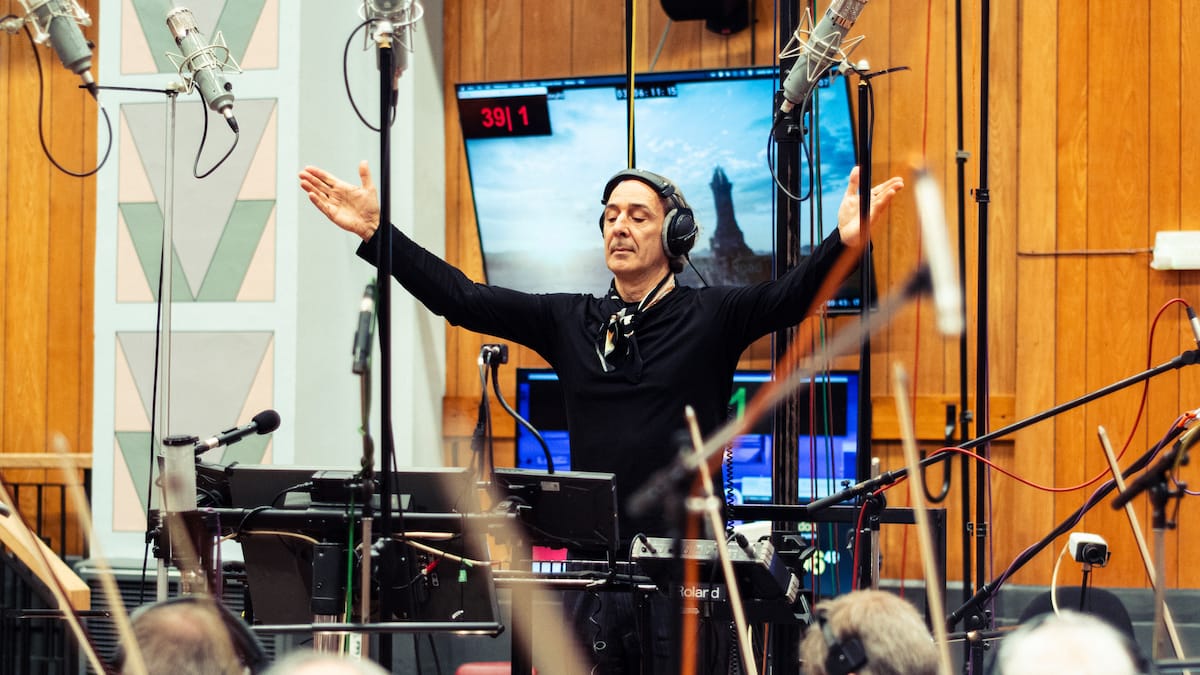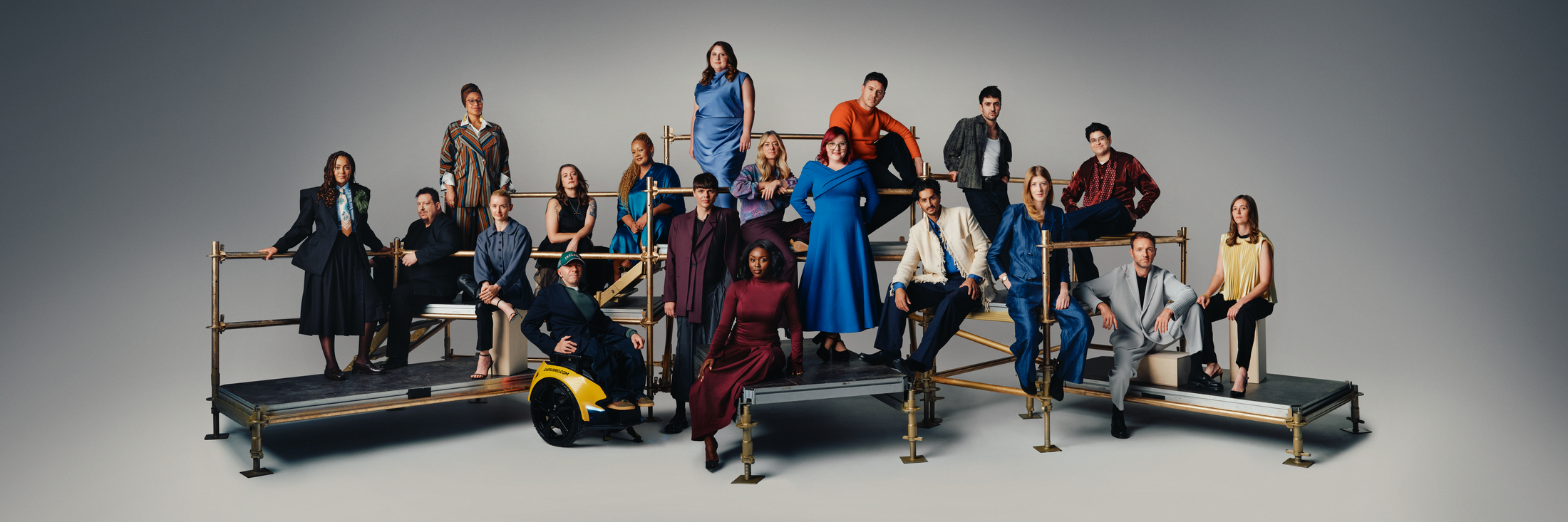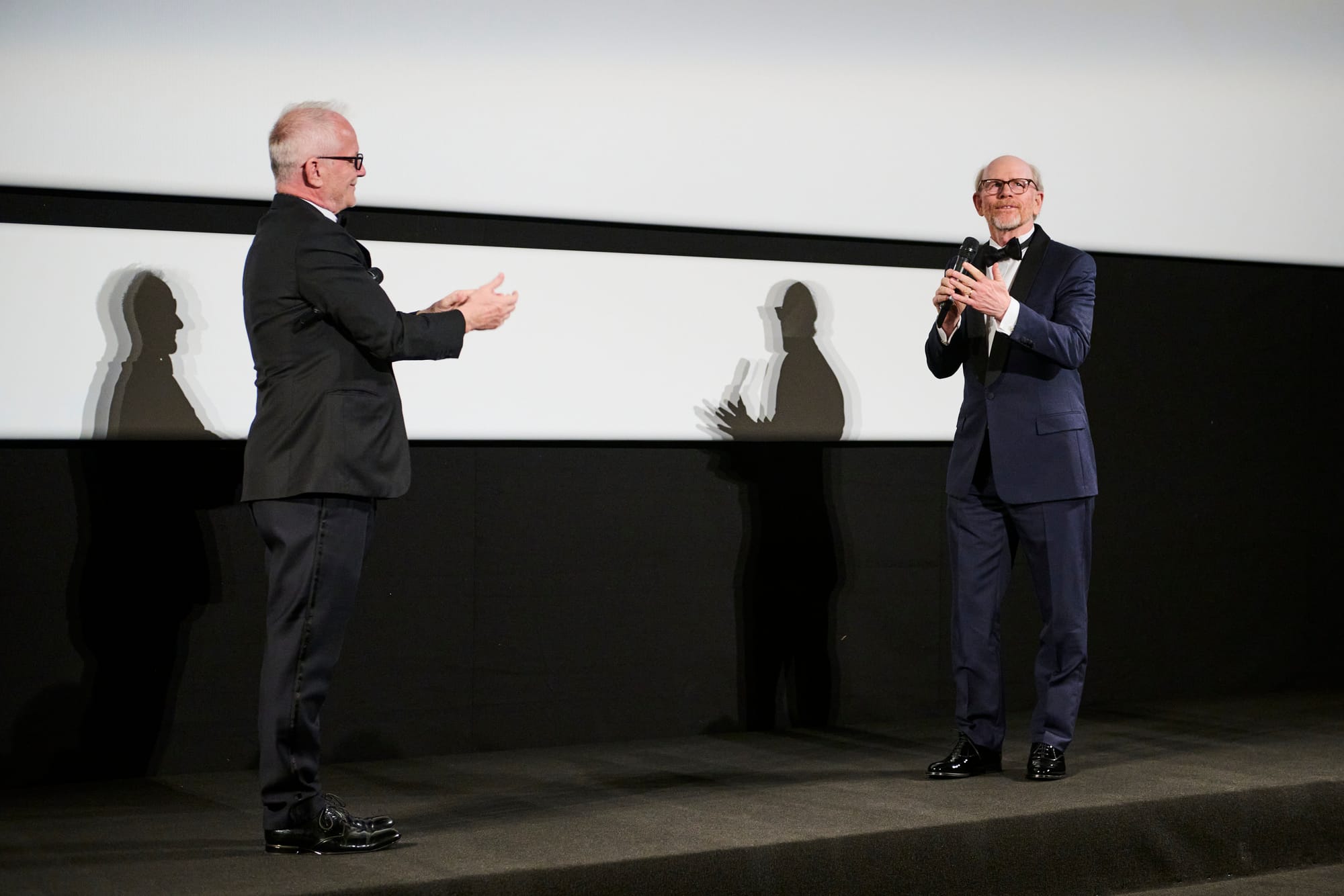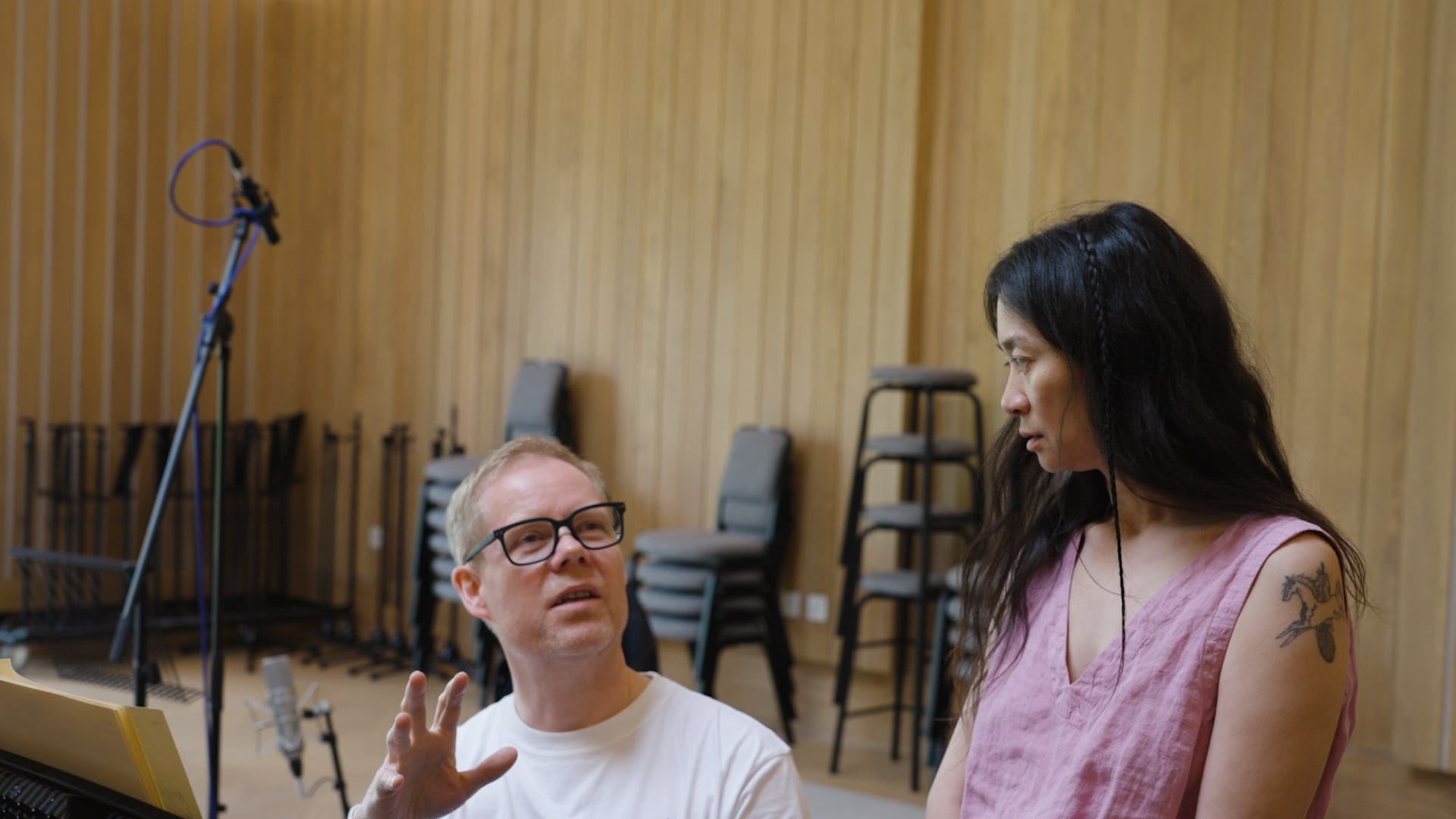
Max Richter began writing for Hamnet before there was a finished film to follow. His early music could enter the rehearsal room, surround the actors and become part of the world Chloé Zhao was making.
That changes the usual picture of a composer arriving after the images have been assembled. Here, the conversation between music and filmmaking began while both were still taking shape.
Cover: Max Richter and Chloé Zhao during a Hamnet scoring session. Courtesy of Focus Features, via Interview.
Writing a world before scoring a scene
In his Focus Features interview, Richter recalls making about half an hour of music after reading the script. Zhao played it during rehearsals on set.
In his own Reflecting on Hamnet film, he describes those early pieces as studies in vocal and string colour. They supplied material that could develop alongside the performances and edit.
The distinction is useful. A sketch need not solve a scene before that scene exists. It can give collaborators a shared sense of atmosphere, helping them hear the world they are trying to create.
An Elizabethan influence that does not become a costume
For Richter, the period offered musical principles as well as instruments. He was interested in the relationships between voices, and in a sound that could suggest something larger than one individual.
His reflection describes using Renaissance string sounds for their physical textures, including contact noises. The result could become an abstract layer rather than an obvious historical performance.
That approach gives a period film more than a label saying when it takes place. A familiar acoustic source can be stretched into something strange, keeping a trace of the physical object while changing its emotional effect.
What to listen for
- Voices: a human presence that can also feel collective or otherworldly.
- Strings: texture as well as melody.
- Space: moments when the score leaves the performance room to carry the scene.
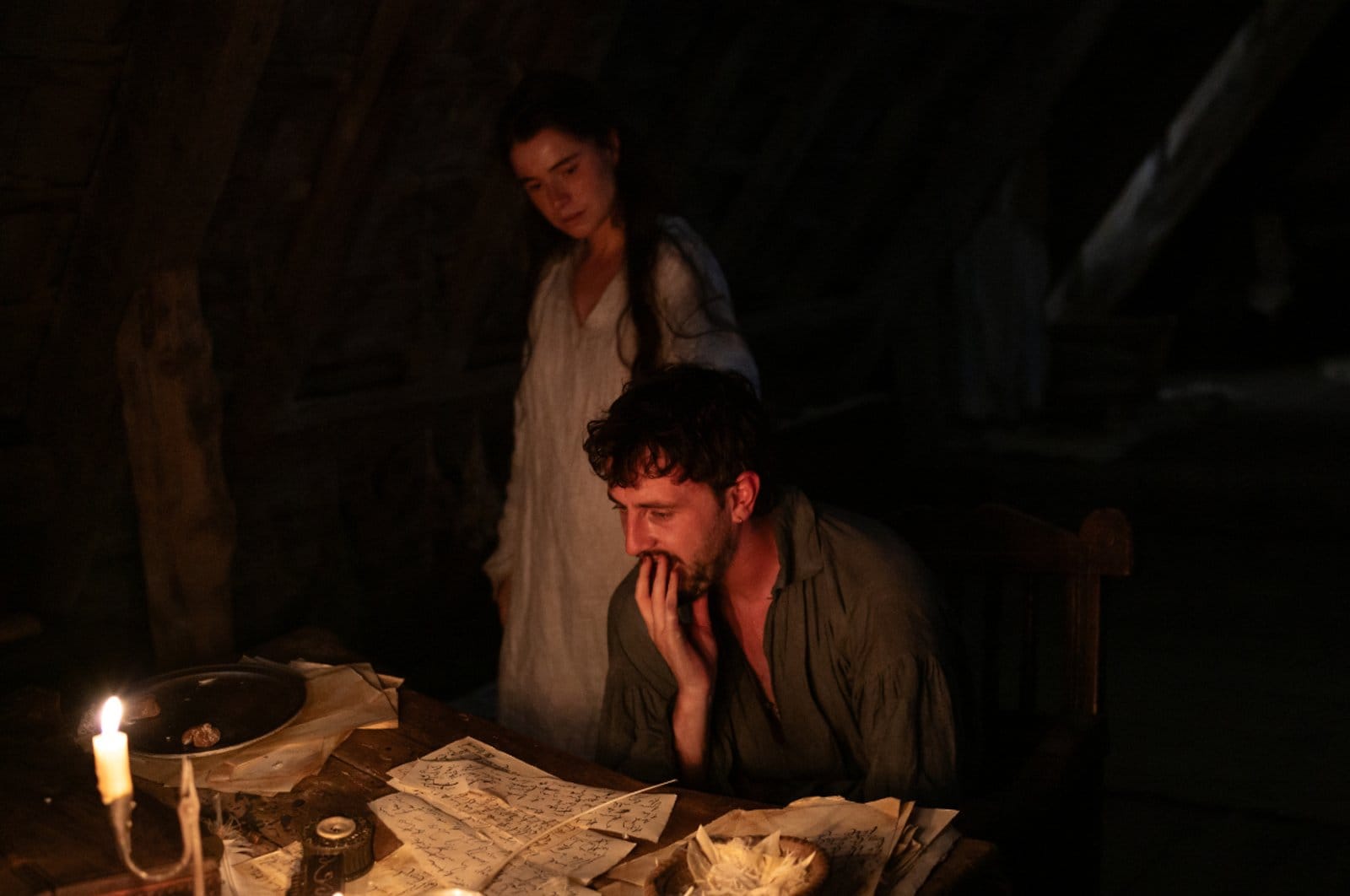
Finding the sound through Agnes
Richter told Focus Features that the predominantly female Renaissance choir reflects Agnes’s perspective. Piano offered a delicate solo voice, while harp accompanied Will’s Orpheus story. Period instruments were also transformed into electronic material.
These are dramatic choices, not just a list of attractive sounds. An instrument earns its place through what it can add to a character or an encounter.
For another example of that thinking, compare Alexandre Desplat’s choice of violin for Frankenstein’s Creature. The interesting question is what the music reveals that the image alone cannot.
Leaving the acting enough room
In his conversation with Finneas for Interview, Richter says the performances were strong enough that the music could often sit back. He also describes moving ideas against the picture and adjusting their intensity, density and texture.
The collaboration helped preserve the music’s own logic while making it serve the film. Those demands are not always identical: a phrase might want more time than an edit allows.
That is where discussion matters. A director and composer need a way to describe what a passage should achieve, rather than simply deciding whether they like a tune.
The older piece that helped change the ending
Ending discussion follows. According to Richter’s Focus Features interview, Jessie Buckley sent Zhao On the Nature of Daylight near the end of filming. Listening to it prompted Zhao to rethink and rewrite the conclusion.
In Reflecting on Hamnet, Richter recalls expecting to supply new music and receiving a lengthy voice message explaining why Zhao wanted the earlier piece. Her reasoning persuaded him.
What makes that story useful is the direction of the influence. The film was responding to music, rather than music merely responding to the film. An existing composition could become an active creative prompt.
Recording is still part of composing
Richter tells Finneas that composition continues through recording. Processing a sound, hearing it in context and discovering a different use for it remain creative decisions.
He is equally pragmatic about rejected material. A piece that does not fit one film can be set aside, dismantled and find a purpose later. Rejection does not necessarily mean that the music itself has failed.
That combination of openness and judgement runs through this score’s story: begin early, let collaborators respond and keep listening to what the film needs.
For another score shaped by an instrument and the people exploring it together, read the story behind Interstellar’s organ music.
Making a film of your own? Create a free Vidreno account to start sharing your work.