Alexandre Desplat gave the Creature in Guillermo del Toro’s Frankenstein a solo violin. The body on screen was powerful enough. What the music needed to reveal was the vulnerable person inside it.
That decision runs through the score for the 2025 film. A waltz can make a gruesome act feel like a moment of invention. A large orchestra can open up the world, then withdraw to leave room for something fragile.
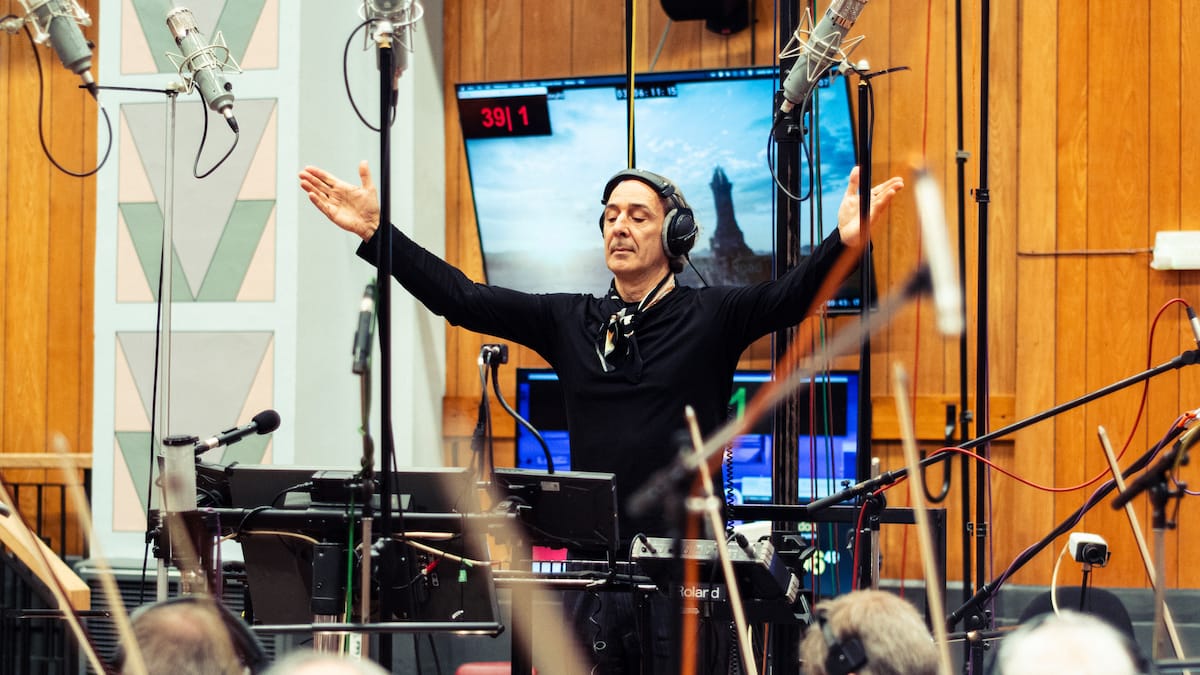
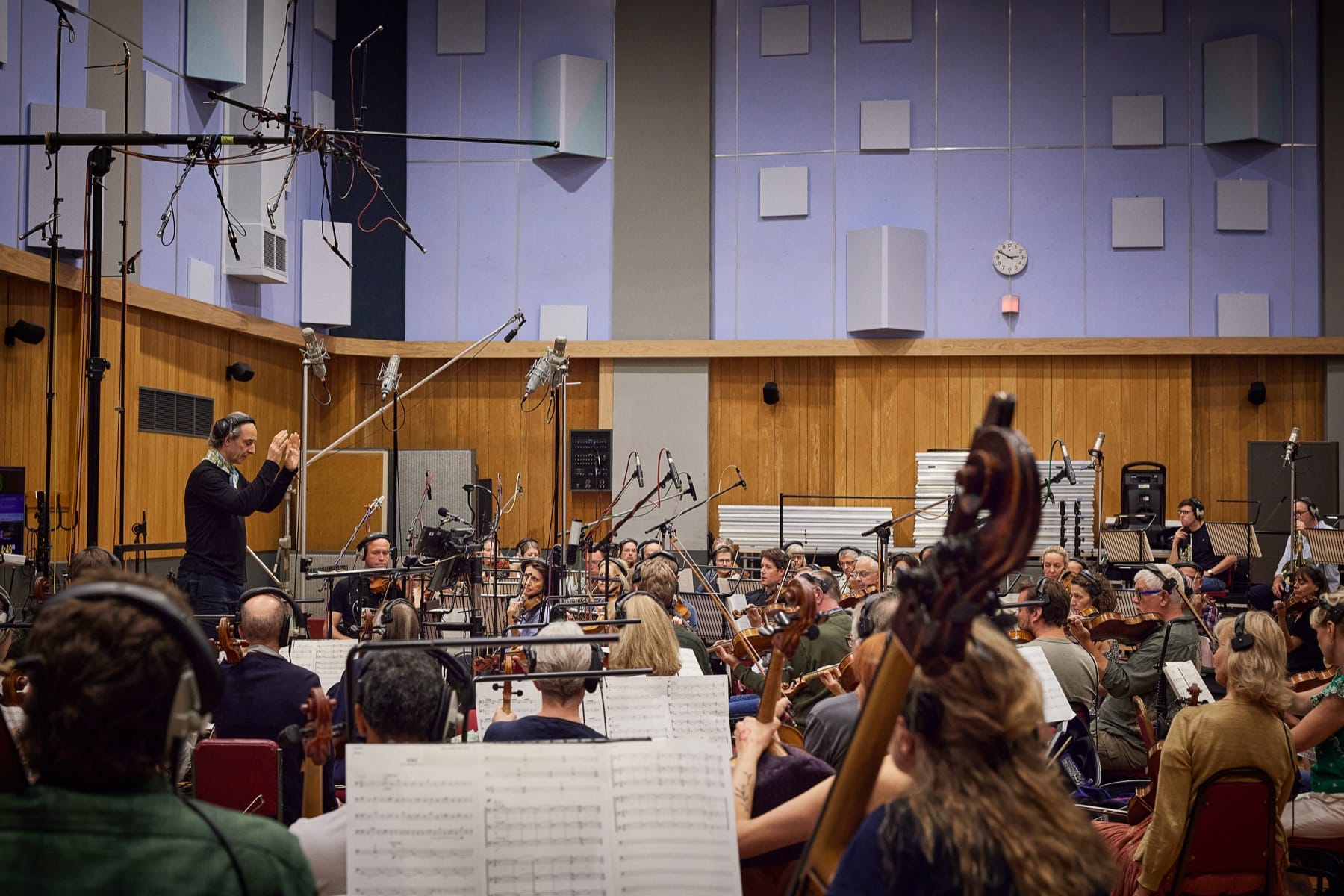
Cover photograph: Desplat conducting the Frankenstein orchestra. Xavier Forcioli / Netflix, via MovieMaker.
Finding the music before there was a finished film
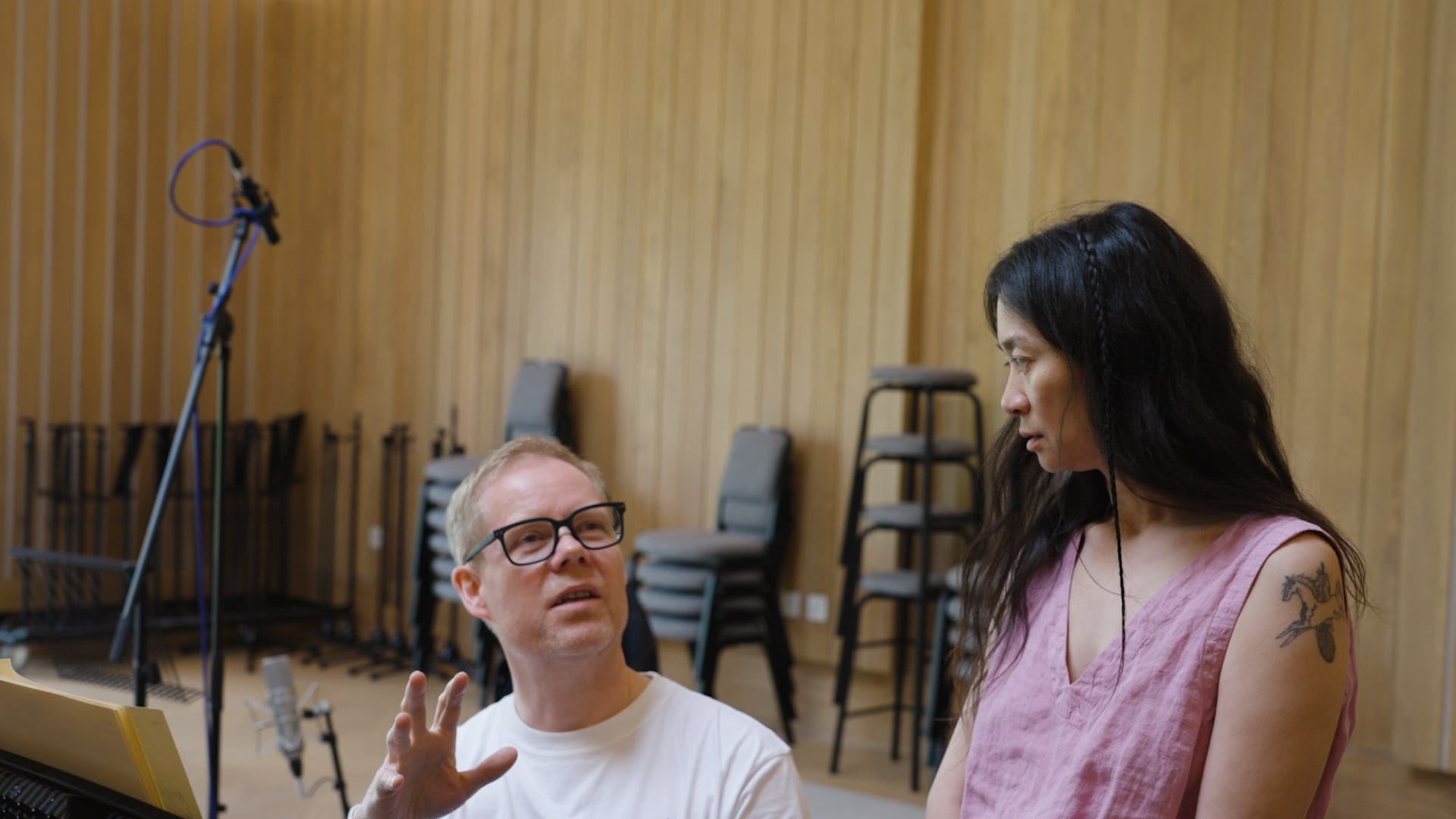
Del Toro and Desplat had already worked together on The Shape of Water and Pinocchio. In his Dolby conversation with Jon Burlingame, Desplat describes Frankenstein as a project they had discussed for years.
The attraction was more than a famous monster. Desplat expected a film with romance, scale and strong emotion, reflecting the director’s longstanding attachment to the character.
Some music arrived before filming. Desplat told TheWrap that he wrote waltzes and lullabies. The waltzes could be played on set, then become part of the dramatic score. The unused lullabies still helped him discover its direction.
That is a useful distinction: music written early does not have to survive unchanged to matter. It can help establish the emotional world in which the later cues belong.
The largest character gets the most delicate voice
In his MovieMaker interview, Desplat recalls trying electronic sounds, bass and cello for the Creature. They felt too predictable. The music was telling the audience what the image had already made clear.
He turned instead to the violin, bringing sensitivity to Jacob Elordi’s imposing physical presence. Eldbjørg Hemsing played the solo part on a Stradivarius. Her contribution is also identified in the opening soundtrack track’s credits.
The choice changes the question we ask about the character. We can see what he might be capable of doing. The violin asks us to consider what he might be feeling.
Why assembling a body became a waltz
Victor Frankenstein’s work could easily have been scored for disgust. Desplat instead followed Victor’s excitement, writing a waltz connected to the earlier dance music.
As he explains to TheWrap, the scene is seen through the eyes of an artist absorbed in making something. The music brings us into Victor’s creative trance, even while the images show the disturbing materials he is using.
This does not make the action harmless. It makes the point of view more unsettling: we briefly share the exhilaration of someone whose ambition has carried him somewhere terrible.
Three decisions worth listening for
- The violin: an inner voice that complicates the Creature’s appearance.
- The waltz: a rhythm that follows Victor’s pleasure in creating.
- The changing scale: a large ensemble that can make room for intimacy.
Making room inside a large score
The orchestra is only part of the palette. In Netflix’s account of the craft behind the film, Desplat describes combining it with choir, church organs, Hemsing’s violin and subtle electronic touches.
That last detail matters. An early electronic approach could be rejected without every electronic sound being removed. The eventual balance serves the film, rather than obeying a rule that everything must come from one musical tradition.
Desplat also talks about creating depth by changing the ensemble’s size. A smaller group can draw attention towards a delicate exchange; a larger one can make the same world feel overwhelming.
With Victor and the Creature each carrying a narrative, the composer had to choose which emotional thread to follow. Giving every incident its own musical underline would not necessarily make the story clearer.
A collaboration measured by its emotional effect
For all the discussion of instruments, Desplat and del Toro’s test was personal. Desplat told MovieMaker that the director’s tears were a sign that the music had reached the emotion they wanted.
Del Toro could also push him towards a more expansive orchestration when restraint was holding a passage back. Their relationship allowed both delicacy and extravagance, depending on what the moment needed.
For another score built around a distinctive instrumental voice, explore how Interstellar’s music grew around the church organ. For a very different approach to musical tension, read how Jonny Greenwood scored One Battle After Another.
Making a film of your own? Create a free Vidreno account to start sharing your work.