A man sitting up in bed has a perfectly reasonable question for Derek Jarman. How is he supposed to get out without exposing himself to the camera crew? Jarman has just explained that the BBC wants everyone to keep their clothes on. There is a short discussion about underwear, then a rather more useful answer. Ian Wilson, the cinematographer, can choose which parts of the room to light.
We can still hear that conversation because a second cameraman, Seamus McGarvey, was allowed to stay in the room. Wilson was making Edward II. McGarvey was recording the decisions that went into it. Thirty five years later his tapes gave another director, Theo Rollason, the beginnings of Queer Edward II.
Getting Marlowe into a studio
The BBC was looking for filmed plays for Screen Two when Jarman took on Christopher Marlowe’s Edward II. The attraction was a king who loved a man and insisted on keeping him at court, even as the nobles turned against him. Steven Waddington played Edward, Andrew Tiernan his lover Gaveston and Tilda Swinton the queen, Isabella.
Jarman, Stephen McBride and Ken Butler share the screenplay credit. Adapting a play that sends armies across England for a film with a budget of roughly £800,000 meant deciding where the struggle for power would actually take place. The writers condensed the two Mortimers of the play into one opponent. The sight of Edward’s supporters facing a line of riot police could do more for this version than an army of medieval extras.
Some of those supporters were members of OutRage!, the British queer rights group. They brought a knowledge of protest that the production could hardly have bought. A viewer could hear Marlowe’s verse and recognise the people and uniforms of a British demonstration in 1991.
How one set became a kingdom
At Bray Studios in Berkshire, production designer Christopher Hobbs gave the company a space whose walls could serve the palace or the prison. In a 1991 interview with Sight and Sound, Jarman explained that it fell to Wilson to make the same set feel like an interior in one scene and the open air in another. A strip of light through slats could suggest an outside space. Letting the walls fall into darkness brought two faces close together and made the words easier to hear.
Sandy Powell’s clothes gave the audience another way to locate people. A business suit tells us immediately who expects to be obeyed. Swinton’s formal gowns and veils let Isabella make an entrance worthy of a royal portrait, even when there was little behind her to suggest a palace. Powell and Jarman had already developed a working shorthand over several films. Our profile of Sandy Powell traces that partnership back to Caravaggio.
When Annie Lennox sings Cole Porter’s Ev’ry Time We Say Goodbye, Wilson suggested putting Edward and Gaveston in a spotlight of their own. Nobody needed to invent a window or a lamp to explain it. For the length of the song the men could dance in a space that belonged to them.
Butler also directed several scenes, including one between Edward and Gaveston. Jarman was ill during the shoot and later credited Butler for taking over on a day when he could not work. Looking back at a shot of Isabella, he could still say exactly how he might have framed it differently. He also thought Butler had done it as well as he could have done himself.
George Akers edited the feature, with music by Simon Fisher Turner. Jarman recalled how funny one of Isabella’s entrances looked at first. In the cut, the sound and Turner’s music made the encounter with Mortimer feel eerie. Swinton went on to win the acting award at Venice in 1991.
Why the second camera kept rolling
Sarah Swords, who had worked with Jarman on The Garden, wanted a record of the shoot and hired McGarvey. He knew the company and they soon paid him little attention. He could follow a rehearsal, turn towards someone listening and carry on into the production office, where the problem of paying for the film looked different again.
McGarvey came back with about thirty hours of Betacam SP tapes. By then the money to finish the accompanying film had run out. As Rollason told Deadline at Venice, the tapes stayed with Ahmad Ahmadzadeh, whose company had supplied the camera. Years later he asked Rollason, who had worked as an archivist, to look at them.
Sometimes he leaves the person speaking to catch someone else’s expression. Decades later that gave the editors a reaction shot recorded at the moment a decision was made.
How the editors found a second film
Rollason initially wondered whether the material would stretch to a short. What persuaded them otherwise was how often the politics of the time entered the room. The crew were making a film about the punishment of two men in love while people they knew were organising protests. McGarvey had caught both conversations.
Rollason and editor Nicole Hálová watched the tapes together, marking both the scenes they wanted to keep and the smaller moments that might connect them. They began with the span of the shoot as their structure. In an interview with Cinema Year Zero, Rollason describes asking activists who else had owned a camera. The answers took the editors beyond material they could find in a broadcaster’s catalogue.
Radio interviews gave them Jarman’s own voice to return to. Finding footage of two occasions when he was arrested changed where they placed events in the cut. The order of scenes could follow what the editors discovered in that material, even after they had mapped out the shoot. The little camera at Bray remained their way back to the people doing the work.
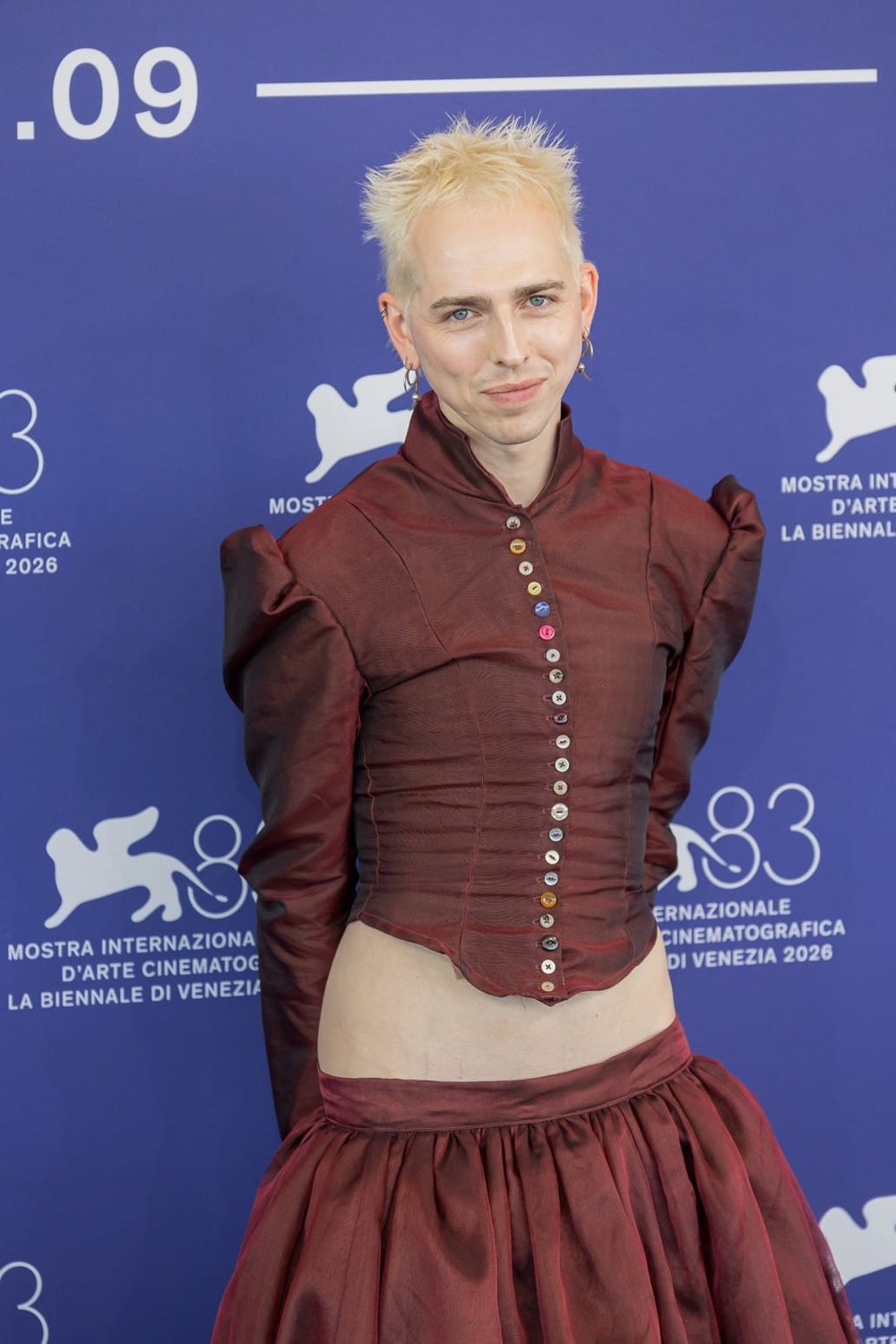
The documentary began without financing. What Rollason had to show collaborators was the footage itself. McGarvey supported the project, Fisher Turner returned to provide music, and Joe Bini served as supervising editor. The documentary’s production credits bring Swords, Powell, Swinton and McGarvey back together on a film about the work they had done a generation earlier.
Queer Edward II screened at Venice in September 2026. In October it received a special mention from the London Film Festival’s documentary jury. One reason to see the two films together is that a moment of effortless darkness in the first becomes a roomful of people talking through a problem in the second. The light falls exactly where it does because somebody asked how to get out of bed.
For an earlier Jarman production built around a small crew, read how the company made Sebastiane in Sardinia.
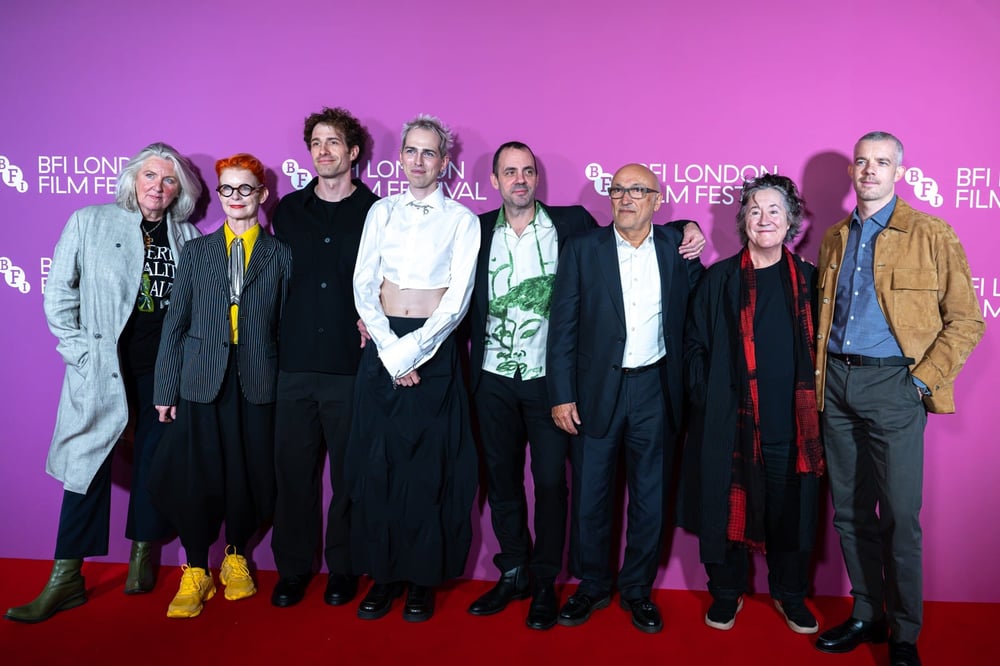
Cover photograph of the documentary team in London by DavidPMaynard.