Carol Morley has built a career by looking again at people whose stories seem to have been settled. A forgotten woman becomes more than a newspaper headline. A schoolgirl becomes more than a symptom. An overlooked artist gets to occupy the centre of a film.
Her own beginnings were far from a straightforward route into directing. She left school at sixteen, returned to education as an adult and made her early reputation by asking other people to remember the years she could not fully reconstruct herself.
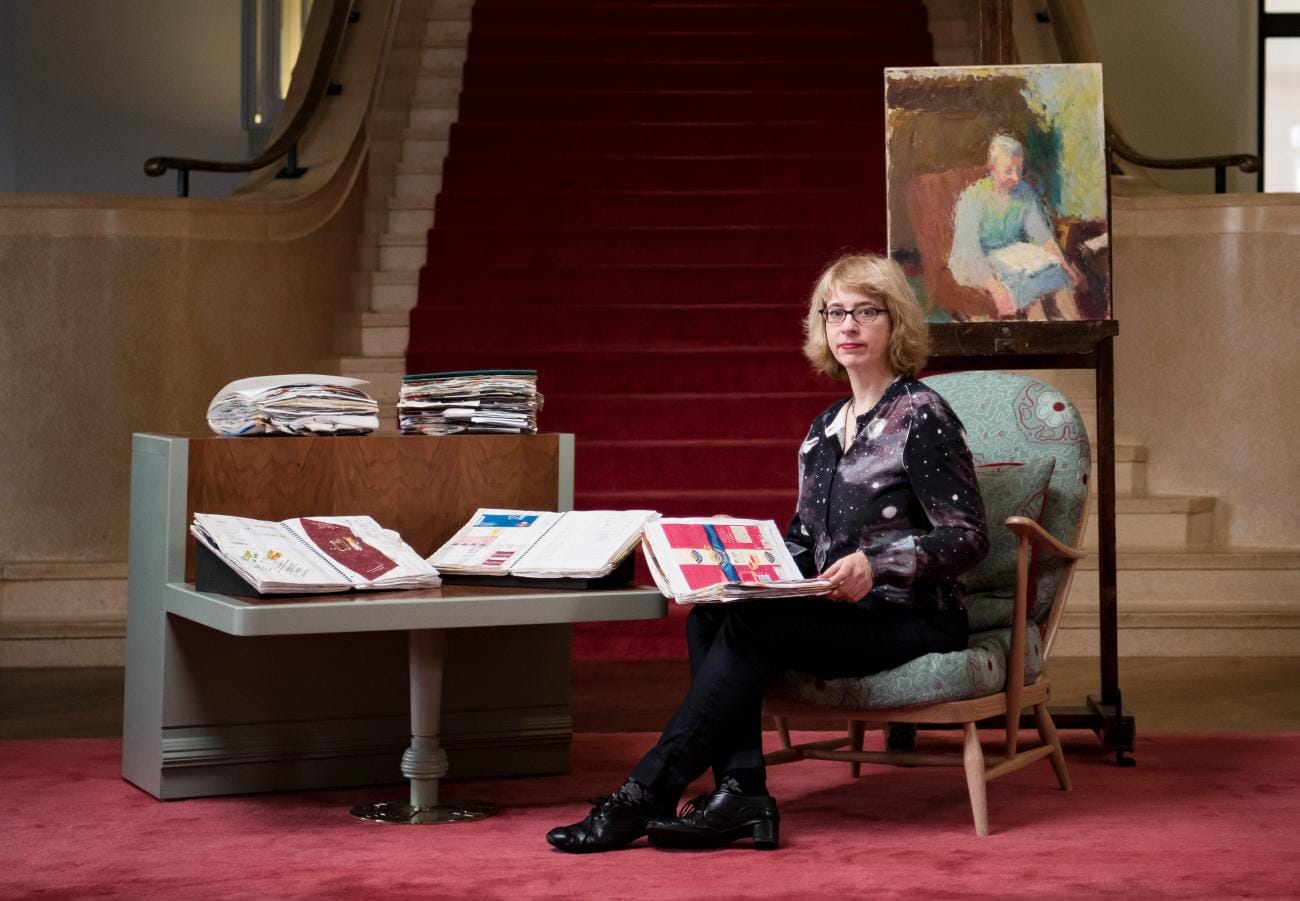
Cover: Carol Morley with material from Audrey Amiss’s archive. Photograph: Wellcome Collection / Thomas Farnetti, via Sight and Sound.
Leaving school, then finding another way in
Morley grew up in Stockport, with Manchester’s music culture close by. The connection between adolescence and music would become material for both her first major documentary and her later novel.
According to her production company biography, she returned to education at twenty four and graduated from Central Saint Martins with a first class degree in fine art film and video.
That background matters. Her route was through art, experiments and watching films, rather than a neat progression from school into the film industry.
In her own account for the BFI, she remembers forming the Flea Pit Film Club with Mark Aerial Waller at college. They rented films, including Jane Campion’s A Girl’s Own Story, on 16mm. Making a place to watch work was part of learning how to make it.
The Alcohol Years: asking others who she had been
The Alcohol Years arrived in 2000. Morley returned to people from her Manchester teenage years and asked what they remembered of her. The subject was personal, but the method made room for other people’s versions of the past.
The film earned a BAFTA nomination. It also established a question that would keep returning in her work: how much of a person can we understand through the memories they leave with others?
Her IMDb filmography connects that documentary to the later fiction work. They are different forms, but the curiosity running through them is recognisable.
The producer who stayed for the journey
Cairo Cannon is central to that continuity. Together they run Cannon and Morley Productions, or CAMP. Cannon’s producing work spans The Alcohol Years, Edge, Dreams of a Life and the films that followed.
Edge, her 2010 fiction feature, gathered an ensemble including Maxine Peake and Paul Hilton in a seaside hotel. It belongs in the story because Morley was already moving between documentary and fiction before her best known breakthrough.
Dreams of a Life: the story beyond the headline
Dreams of a Life followed in 2011. Its starting point was the death of Joyce Vincent, whose body was discovered in her London flat nearly three years after she died.
That fact could have become the entire film. Morley instead tried to restore the life that preceded it, bringing together interviews and dramatised scenes with Zawe Ashton.
The BFI’s account of the film captures the unsettling question at its heart: how could someone with connections to other people become so isolated?
Calling this her breakthrough should not erase what came before. It was the point at which an approach she had been developing became a particularly powerful public story. The mystery drew viewers in; the person mattered more than the puzzle.
The Falling: taking the questions into fiction
With The Falling, which premiered in 2014 before its UK cinema release in 2015, Morley turned to a girls’ school in 1969 and a mysterious outbreak of fainting.
Maisie Williams and newcomer Florence Pugh led the young cast, alongside performers including Maxine Peake. Cinematographer Agnès Godard and musician Tracey Thorn helped shape its atmosphere.
Morley’s BFI essay offers a lovely detail about that collaboration: she dreamed that Thorn had written the music, then pursued the idea. Her influences included Picnic at Hanging Rock and Jane Campion, but the film’s particular combination of music, bodies and uncertainty was her own.
The earlier short The Madness of the Dance, available in the BFI’s Morley collection, also explored mass hysteria. The feature grew within a career of returning to subjects, rather than appearing from nowhere.
Out of Blue, then an artist found in an archive
Out of Blue took her to New Orleans with Patricia Clarkson. Adapted from Martin Amis’s Night Train, the 2018 film brought her interest in identity and uncertainty into a detective story.
The next major turn began somewhere quieter. A Wellcome screenwriting fellowship gave Morley time to explore. In the collection she encountered the archive of Audrey Amiss, an artist whose extensive records included everyday packaging and personal observations.
As she explains in Sight and Sound’s interview, the encounter became a sustained effort to bring Amiss and her work to wider attention.
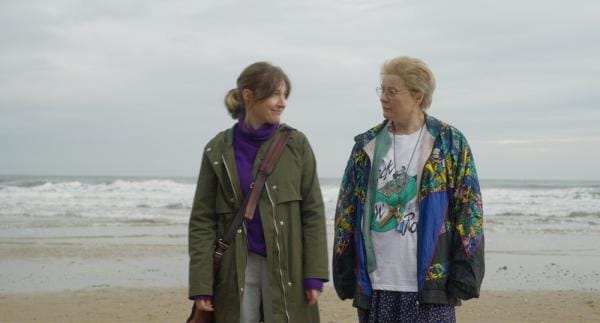
Typist Artist Pirate King, released in UK cinemas in 2023, cast Monica Dolan as Amiss and Kelly Macdonald as the nurse who accompanies her on an imagined journey. It is a fictional road film informed by research, not a claim that every scene happened.
Jane Campion joined as an executive producer. The filmmaker Morley had watched at her student film club was now connected to a film of her own.
7 Miles Out brings the story back to Stockport
Her latest film returns to her own formative years. The 2026 London Film Festival programme lists 7 Miles Out in Official Competition, with Lucy Halliday, Aidan Gillen and Gemma Whelan.
Adapted from Morley’s novel, it follows Ann through grief after her father’s suicide and towards friendship, music and creative discovery in Stockport during the 1970s and 1980s.
In the Watershed interview above, Morley describes her niece helping her see a difference between a novel and a screenplay: a written book can exist as the work itself, while a screenplay still waits to become a film. That observation makes the novel’s eventual journey to the screen especially satisfying.
A career worth following through its changes
- The Alcohol Years: her own past reconstructed through other people.
- Dreams of a Life: another woman’s life recovered from an anonymous headline.
- The Falling: memory, adolescence and uncertainty expressed through fiction.
- Typist Artist Pirate King: an archive transformed into an imagined journey.
- 7 Miles Out: a return to the beginnings, through a novel and then a film.
The films change shape, but Morley keeps making room for lives that resist a quick explanation. Her career is a useful example of persistence without sameness: returning to what matters while finding another way to tell it.
For another unconventional route into directing, read Philip Barantini’s story, from acting to Boiling Point and Adolescence. You can also explore Morley’s work through CAMP, her IMDb credits and the original interviews from Watershed and Kermode and Mayo.
Making your own film? Start sharing your work with a free Vidreno account.