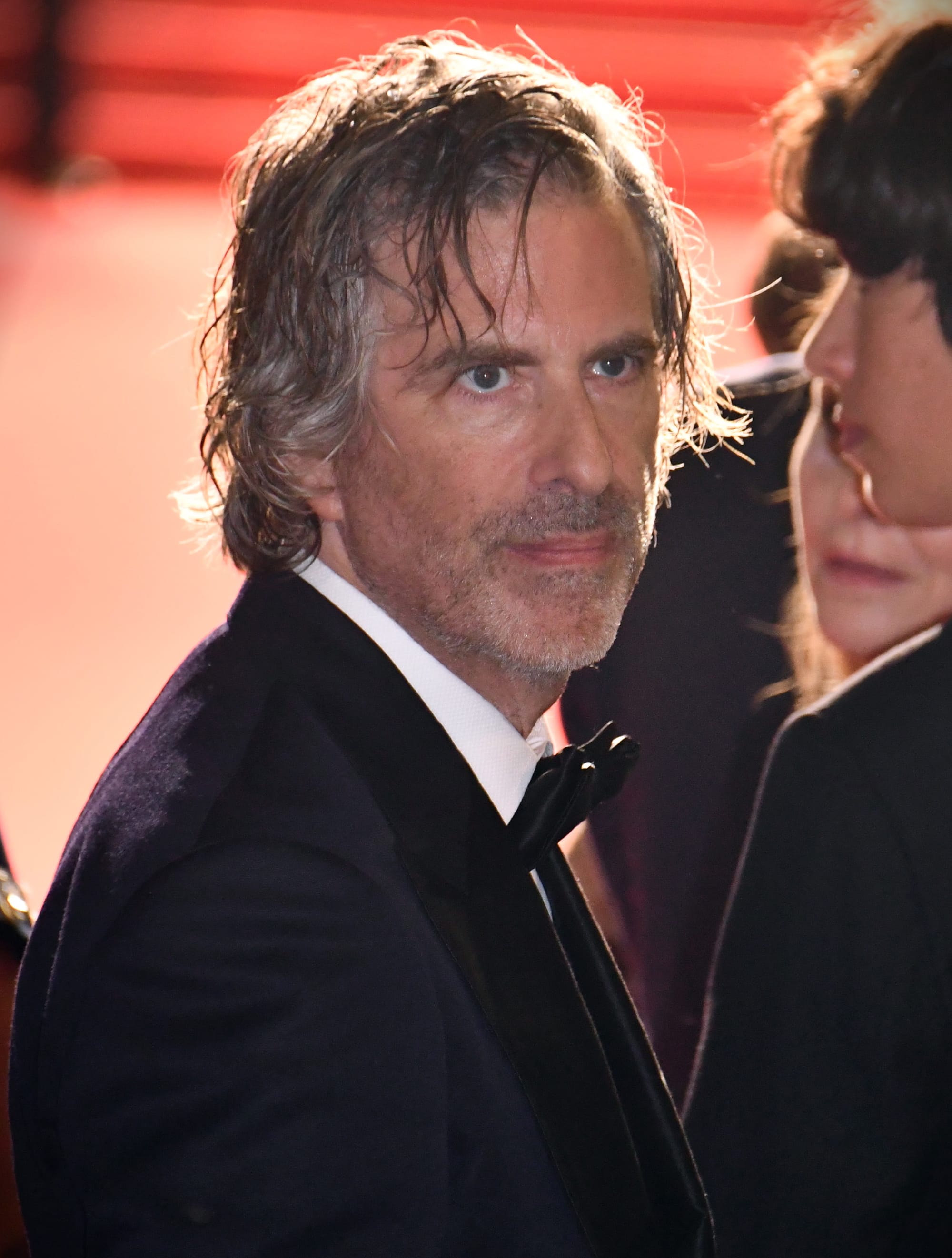
Cover photograph: Brett Morgen at Cannes for Moonage Daydream, 23 May 2022. Photograph: YanRB, CC BY SA 4.0. Existing source crop.
Brett Morgen has spent his career finding different ways to make real lives fill a cinema. A Brooklyn boxing gym brought his first major breakthrough. Robert Evans opened a route into Hollywood memory. Kurt Cobain, Jane Goodall and David Bowie then pushed him towards films in which an archive becomes the material of a new experience.
That journey is still moving. His newly announced David Bowie Stage project takes concert footage into an arena setting. To understand why that feels like a continuation of Morgen’s work, it helps to go back before the rock stars, to a young filmmaker trying to get documentaries onto the big screen.
Born in Los Angeles in 1968, Morgen broke through with On the Ropes, made with Nanette Burstein. His later work ranges from political history and small town sport to musical portraits. Moonage Daydream won the 2024 Grammy for Best Music Film; Stage is his announced next Bowie project.
Los Angeles beginnings and a documentary ambition
Morgen’s IMDb record identifies the director as Brett Morgen, born on 11 October 1968 in Los Angeles. His education took him to Hampshire College and then New York University. Hampshire recognises him among its filmmaking alumni, while TIFF’s career biography places his first feature documentary, Ollie’s Army (1996), at NYU.
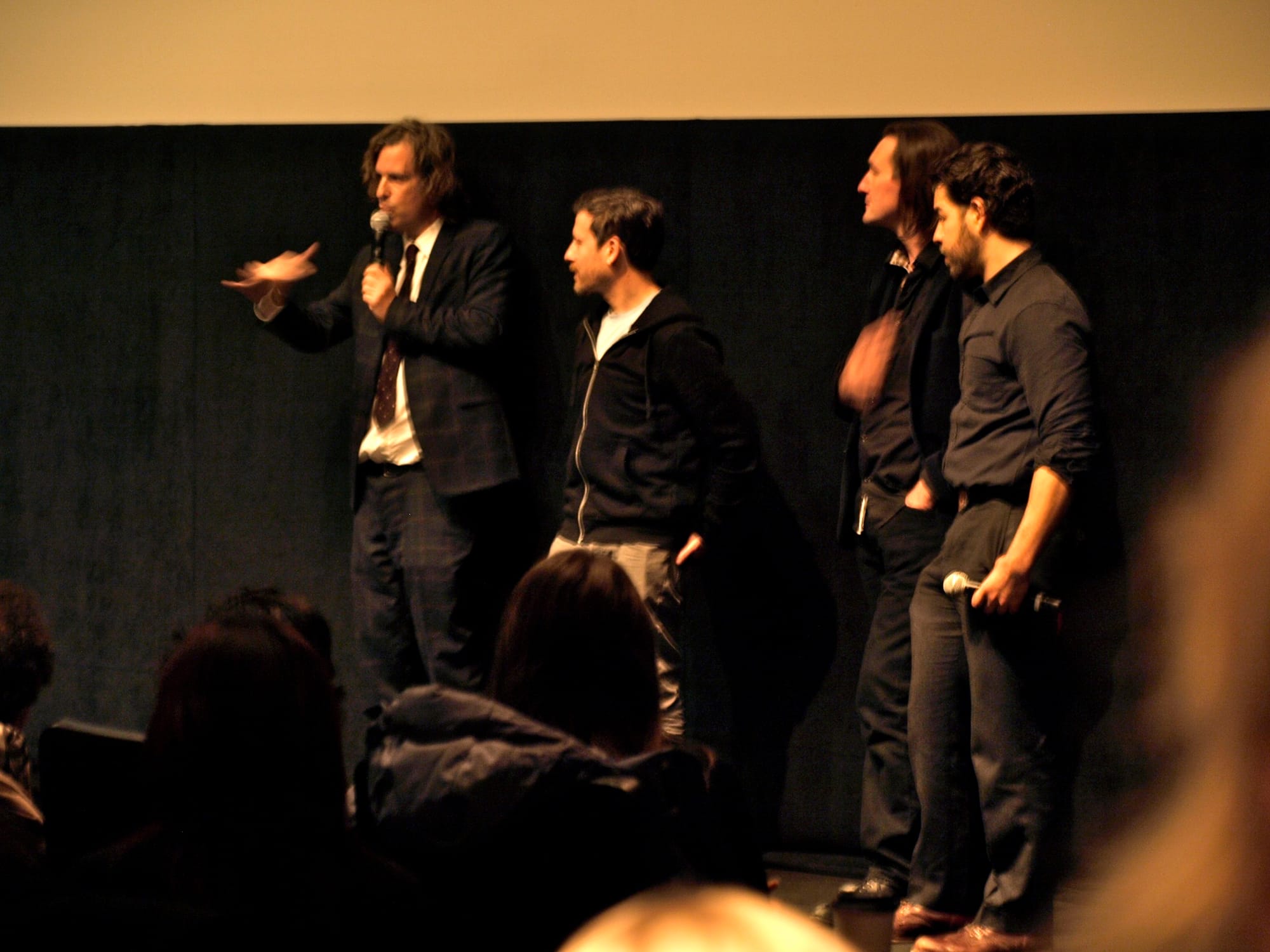
At TIFF in 2022, Morgen recalled deciding in 1989 that he wanted to make nonfiction for cinemas. That ambition matters more than a tidy origin myth: the later films repeatedly ask what sound, scale and an audience sharing a room can add to documentary.
The breakthrough came with Nanette Burstein
On the Ropes (1999) followed three aspiring boxers and their trainer. Morgen made it with Nanette Burstein, a partnership that gave his early career its defining films. The AFI credits name them both as directors and producers, Morgen as cinematographer, and Burstein and Nancy Baker as editors.
Those credits tell a useful story about getting established. The work crossed shooting, shaping scenes and producing rather than sitting inside a single job description. It also depended on collaboration: treating the film as Morgen’s solitary discovery would erase Burstein’s central contribution.
The breakthrough reached the Academy Awards. The Academy’s 2000 record lists Burstein and Morgen as Documentary Feature nominees for On the Ropes. It was a nomination, not an Oscar win, but it gave their work a place on a much larger stage.
Robert Evans and the possibilities of an archive
The pair reunited for The Kid Stays in the Picture (2002), built around Hollywood producer Robert Evans. Instead of following people through an unfolding present, they faced the problem of making a remembered life move.
Evans’s narration became dramatic material. The result helped establish the part of Morgen’s practice that would become increasingly recognisable: recorded voices and existing images could carry a film’s personality rather than merely illustrate an explanation. The Cannes record confirms Evans’s narration and credits editor Jun Diaz and composer Jeff Danna alongside the directors.
There was television and commercial work alongside the features. IMDb records executive producer credits on Kid Notorious (2003), and PBS’s filmmaker biography notes his advertising work. The career was broader than a succession of prestige documentaries, even as those films became its most visible expression.
Chicago 10, small town basketball and a day on television
Chicago 10 (2007) pushed the formal experiments further. Morgen combined archive footage of the 1968 Chicago protests with animated courtroom scenes based on trial transcripts and interviews. PBS’s production credits identify editor Stuart Levy, composer Jeff Danna and the animation team at Curious Pictures among the collaborators who made that combination work.
Animation solved a specific storytelling problem: the courtroom events needed a visual life alongside the filmed events outside it. The technique followed the available evidence and the dramatic situation.
The same year, Nimrod Nation found a different rhythm in Watersmeet, Michigan, watching a community through its high school basketball team. The Peabody citation praises the series’ sense of place and its attention to everyday life across eight instalments. It is a useful reminder that Morgen’s work includes patient observation as well as forceful montage.
For ESPN’s June 17th, 1994 (2010), the organising principle became a single date. As ESPN’s film synopsis explains, major sporting events shared that day with the televised O. J. Simpson car chase. Putting those events together made the date itself a subject.
The Stones, Cobain and the work behind the portraits
Crossfire Hurricane (2012) brought Morgen into the history of the Rolling Stones. Kurt Cobain: Montage of Heck followed in 2015. The progression was not simply from one famous musician to another: the available material changed the way each life could be told.
The SXSW programme for Montage of Heck describes a film drawing on Cobain’s home movies, recordings, artwork, photography and journals. Morgen wrote and directed it, but the credits make the wider creative effort visible: Danielle Renfrew Behrens produced with him, Joe Beshenkovsky shared editing duties, and Stefan Nadelman and Hisko Hulsing supplied animation. Frances Bean Cobain was an executive producer.
That mixture allowed the film to approach a musician through things he had made and kept. For a filmmaker working with personal archives, the practical question is not only what can be licensed. It is what each kind of material can reveal, and which collaborators can give it a form without pretending it is something else.
Jane changed the emotional register
Jane (2017) moved from rock music to Jane Goodall’s research. National Geographic supplied an archive that had been stored for decades; Philip Glass composed the score. The distributor’s account describes a portrait of a woman whose chimpanzee research challenged the scientific assumptions around her.
Hugo van Lawick’s archival photography was fundamental. In an interview with Filmmaker, Morgen explained that the footage was already unusually well preserved. Colour and sound work were therefore ways of bringing viewers into Goodall’s world, rather than simply rescuing damaged images.
The contrast with Cobain is revealing. A consistent interest in archives did not require a consistent emotional temperature. The subject, the footage and the music could pull the filmmaker towards a different kind of intimacy. IMDb also records directing work on Runaways and When the Streetlights Go On in 2017, alongside his documentary career.
Moonage Daydream and the difficulty of writing an experience
With Moonage Daydream (2022), Morgen returned to music on an ambitious scale. His TIFF conversation offers a particularly useful account of the writing problem. After two years screening footage, he struggled for months to organise the material. A change of environment, taking a train from Albuquerque, helped him find a first draft and a structure organised around movement and change.
This was a director discovering that knowing the material was not the same as knowing the film. The practical lesson is to test an organising idea before treating more footage as the answer.
Morgen also described editing on his laptop when the extended production could no longer afford another editor. Sound remained a major collaborative undertaking, with Paul Massey helping build the immersive mix. These are connected pressures: a film may emerge from solitary editorial work while still relying on specialist collaborators for the experience the audience finally receives.
The Recording Academy awarded Moonage Daydream Best Music Film in 2024, crediting Morgen as director and producer. The recognition belongs to a later career in which the cinema experience he wanted as a young filmmaker had become central to the work.
Stage takes Bowie into the arena
Announced on 27 October 2026, David Bowie Stage is scheduled to premiere at Berlin’s Uber Arena on 14 February 2027. The British Council listing identifies Morgen as director and describes a project made from restored footage of Bowie’s 1978 Isolar II tour.
According to promoter PRK DreamHaus, the presentation combines multiple screens with lighting by Patrick Woodroffe and an immersive mix by Paul Massey. It is an announced future presentation, not an event that has already taken place.
The direction of travel makes sense. From boxing subjects observed in the present to archives shaped for a cinema, Morgen has kept changing the relationship between a real person and the audience watching. An arena is another space in which to test that relationship.
Compare what carries the story: shared observation in On the Ropes, a remembered voice in The Kid Stays in the Picture, documents and animation in Montage of Heck, and music and movement in Moonage Daydream. The creative decision begins with the subject and the evidence.
Follow the work
Explore Brett Morgen’s IMDb credits and his public X account, linked by FirstShowing in its interview with him. For another approach to documentary production, read how Everest: The Other Side was made. Our Tony Gilroy career story explores a different route from early ambitions to an individual screen voice.
Making your own film? Create a free Vidreno account to explore publishing your work through Vidreno On Demand.