Ashley Walters was acting before he was famous for music. He was directing television before he made his first feature. In between came a breakthrough in British independent film and a character, Dushane in Top Boy, who would follow him for years.
His story has several turning points. Bullet Boy made people look beyond So Solid Crew. Top Boy gave him a defining role. Directing then meant learning to be the person everyone else turns to for an answer.
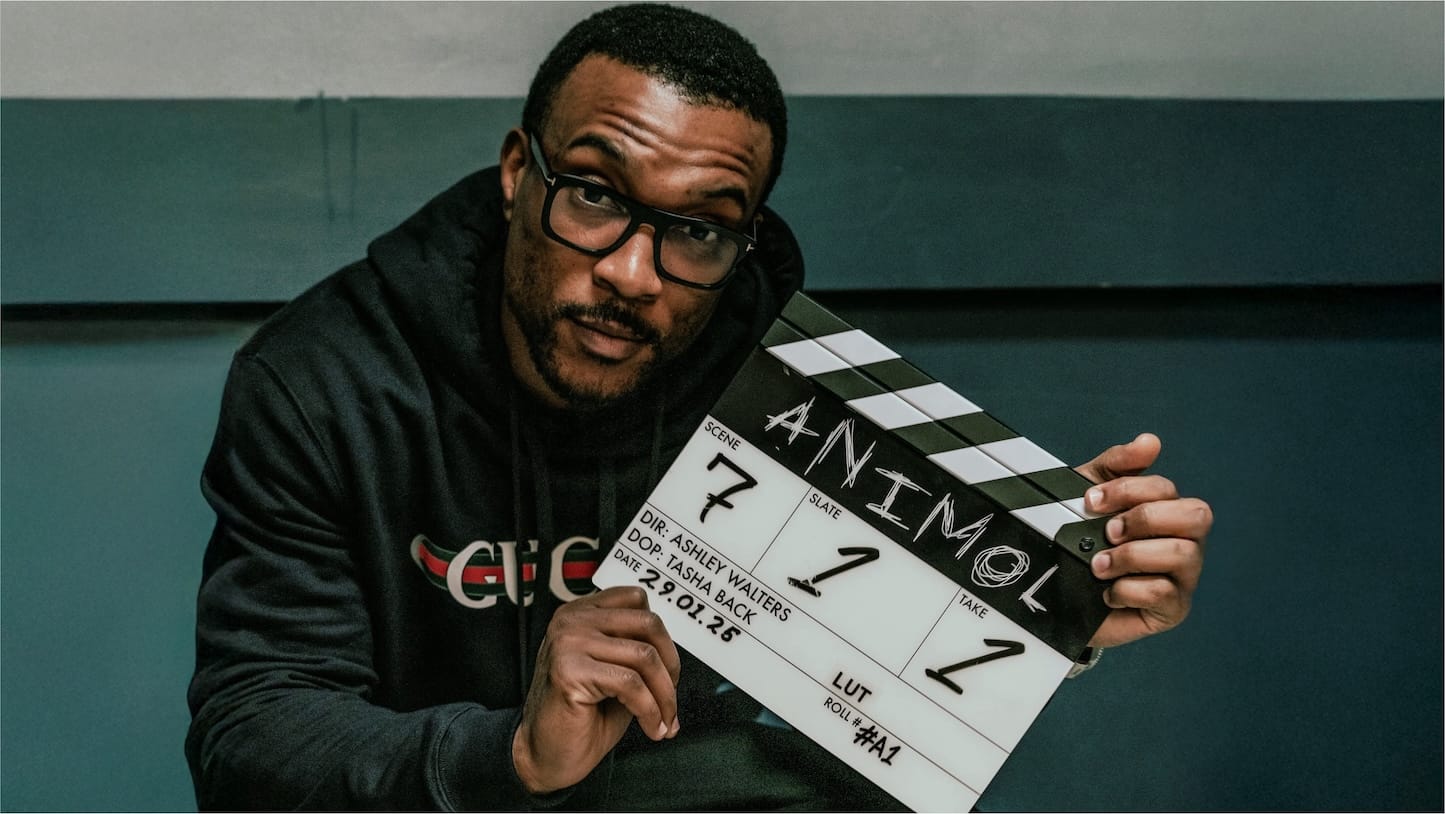
Cover photograph: Ashley Walters with the Animol clapperboard, by Anthony Dickenson, via Sky.
The child actor from Peckham
Born in London in 1982, Walters grew up in Peckham. His route into acting began with an unlikely audition: he had accompanied a cousin, only to be invited to try out himself. He got the job, and his mother enrolled him at the Sylvia Young Theatre School.
In his 2011 Channel 4 interview, he recalled starting there at about seven, studying ballet and appearing in Grange Hill. Performing offered a different world from the neighbourhood outside.
Music became another outlet. As Asher D, he joined So Solid Crew, becoming publicly recognisable before the film career that many viewers now associate with his name.
A difficult turning point
That period also included a prison sentence for a gun offence. Walters spoke about it directly to Channel 4, describing prison as a point at which he reconsidered his choices.
It belongs in his story because he has discussed its consequences himself. It also matters to the work that followed, where experience could inform a performance without making the character a version of his own life.
Bullet Boy made the acting impossible to overlook
Saul Dibb’s Bullet Boy, released in 2004, cast Walters as Ricky, a young man returning to Hackney after time in a young offenders institution. The film follows the pressure around him and its effect on his younger brother.
The role required someone who could make Ricky’s wish to change believable while showing how difficult that change might be. Walters carried that contradiction through the film. His BIFA newcomer award marked a substantial arrival as a screen actor.
The BFI’s retrospective on Bullet Boy places the performance within the film’s wider significance. This was a British independent drama that gave its characters room to be people, rather than reducing them to a headline.
His next films broadened the picture. He played Antwan in Jim Sheridan’s Get Rich or Die Tryin’, alongside 50 Cent, and appeared in Stormbreaker, Life ’n’ Lyrics and Sugarhouse. The Ashley Walters IMDb record and his agency credits trace that expanding body of work.
Top Boy gave him a role that could grow
When Top Boy arrived on Channel 4 in 2011, Walters played Dushane opposite Kane Robinson’s Sully. Walters described Dushane as calculating and ambitious, someone thinking about the business and what might come next.
Director Yann Demange and casting director Des Hamilton helped build an ensemble around them. Walters remembered scenes arriving with little preparation time, requiring the actors to react to what was happening in front of them.
The partnership with Robinson became one of the series’ anchors. When Netflix announced the returning cast in 2019, both actors were back, joined by a new generation including Micheal Ward.
Walters’ relationship with the series extended into executive producing. Elsewhere, Bulletproof gave him another kind of responsibility: he was a creator, writer and executive producer as well as playing Pike. Acting was becoming part of a wider involvement in getting programmes made.
Becoming the person behind the camera
Walters had spoken about wanting to write and direct back in 2011. The practical route included the short film Boys, followed by directing on the fifth series of Ackley Bridge.
In his 2022 GQ interview, he described the adjustment. After years as an experienced actor, he felt like a beginner again. Crew members needed decisions from him, and the working day no longer revolved around getting one performance ready.
That is a revealing detail about his career. Moving into directing did not erase his experience, but it changed what the experience was for. He now had to help other people do their work.
Adolescence asked him to act differently again
In Adolescence, Walters played DI Luke Bascombe for director Philip Barantini. Each episode’s continuous take demanded a different kind of concentration from conventional coverage.
At Netflix’s cast conversation, Walters explained that he had become preoccupied with remembering the words. The useful shift was realising that he knew them already. He needed to listen, respond and find the father within the police officer.
He also described a change in conversations with viewers. People who once recognised Dushane were now talking to him about children and the internet. The performance had opened a different connection.
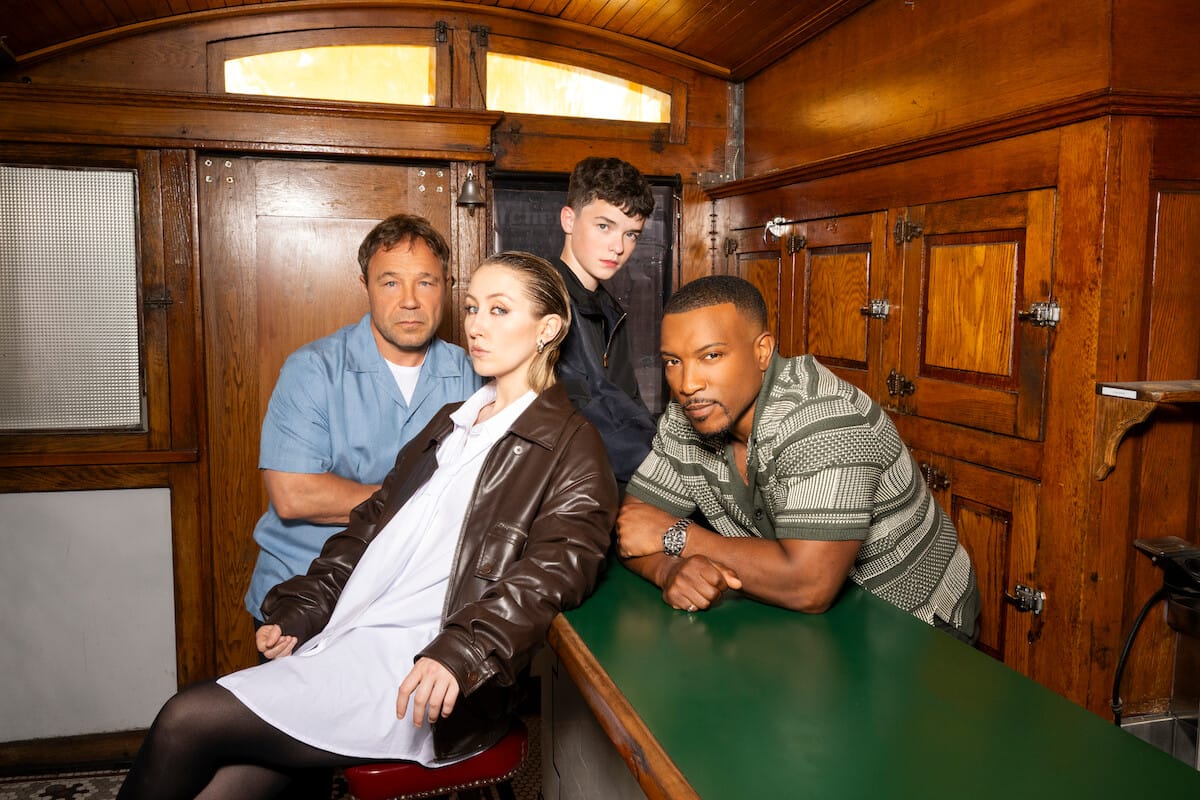
That collaboration connects with another journey from acting into directing, explored in Philip Barantini’s career story. For Walters, it was also a reminder that an established actor could still encounter a new way of working.
Animol brings those experiences together
His debut feature as director, Animol, brings the story into another phase. Written by Nick Love, the film concerns young people in a young offenders institution, with Tut Nyuot and Vladyslav Baliuk among its cast.
According to Sky’s production announcement, Film4 developed the project with Joi Productions over almost six years. Joy Gharoro Akpojotor and Tom Hawkins produced it, with Sky, Film4 and the BFI among its backers.
Stephen Graham plays a welfare officer, while Sharon Duncan Brewster also appears. Walters’ own experience informs his approach, but the production is a collaboration between a writer, actors, producers and a director finding the film together.
From a childhood audition to music, independent cinema and long running television, Walters has repeatedly changed the scale of his involvement. Animol makes that progression tangible: the actor who once needed a chance to carry a film is now helping other performers carry one.
Keep exploring
For Walters in his own words, the official BIFA video interview is a useful place to continue. For another career shaped by the move into directing, read Tony Gilroy’s story.
Making your own film? Explore Vidreno as a place to share your work with an audience.