A documentary and a video course can use the same camera, files and subject. That does not make them the same product. Someone buying an evening's viewing needs a clear route to the film. Someone learning a skill may need a sequence, practice and a way to check their understanding.
This comparison is for creators deciding between those two offers. It uses published product information checked on 7 October 2026, not a claim that we bought or tested a course on every platform. Vidreno Hosting, for embeds on your own website or app, is a separate service.
Are you selling something to watch or something to learn?
Choose the platform around the promised result. “Watch my wildlife documentary” and “Learn to identify local birds in four weeks” need different structures, even if both contain bird footage.
| Your offer | What the customer needs | Where to start |
|---|---|---|
| A complete documentary | The film, a clear purchase or rental choice and understandable access terms | Vidreno On Demand |
| A bird identification course | Organised lessons, field exercises and questions that check recognition | Teachable |
| A recorded talk | Either straightforward viewing or a structured learning product, depending on your promise | Define the offer before choosing |
Those are invented examples, not customer case studies. The important distinction is the work around the video. If you promise a course, the recording alone might not fulfil it. If you promise a film, forcing viewers through a lesson structure may add work they did not ask for.
What does Teachable add around the video?
Teachable organises a course into sections and lessons. Its course structure documentation describes lessons containing video, text, files, images and quizzes. That gives a teaching product a structure beyond a single viewing page.
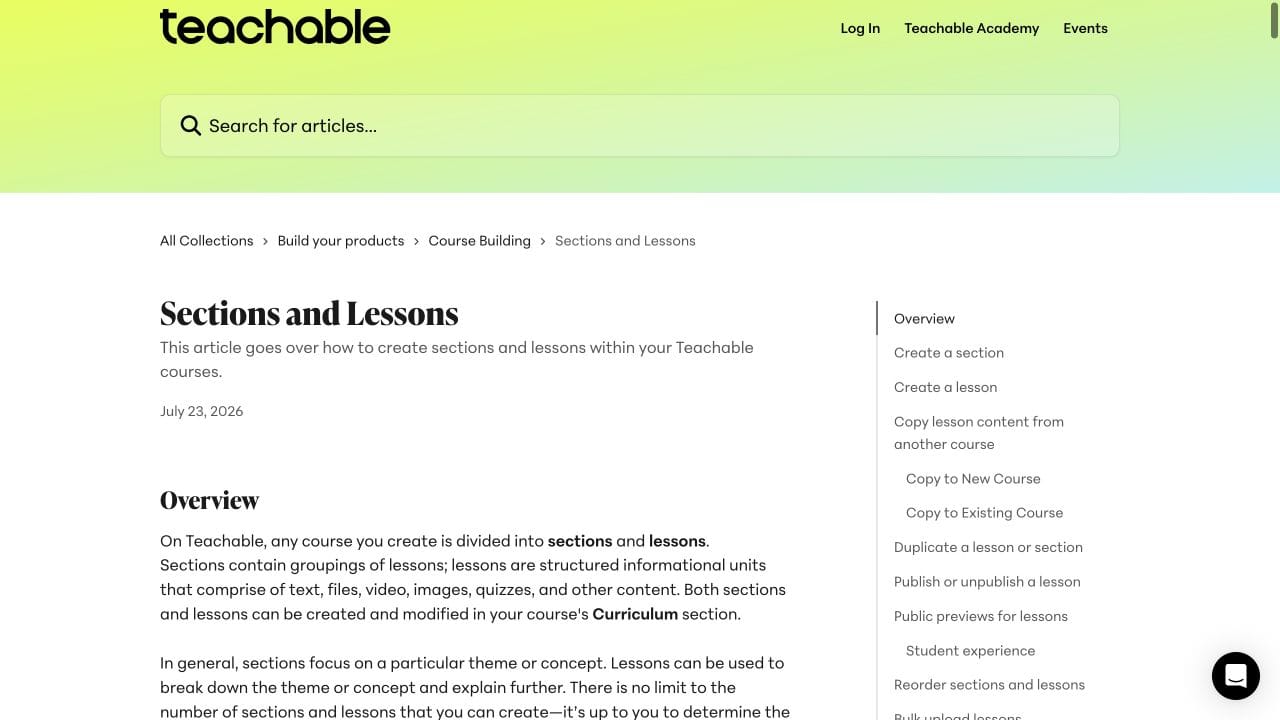
For the bird course, a section might introduce common shapes, followed by a short demonstration, an identification exercise and a quiz. The next section could move to calls and habitat. That is an educational sequence, rather than a long film divided into arbitrary pieces.
Decide which learning features are essential before comparing plans. A certificate, release schedule or assessment requirement needs checking against the current plan that supplies it. Do not assume that every feature mentioned in a platform's marketing is included in its lowest priced plan.
What does Vidreno On Demand offer a film seller?
Vidreno On Demand provides a public film offer with purchases and rentals, without a required subscription to sell. A film can also be free to watch. The appeal for a filmmaker is keeping the offer centred on the work people came to see.
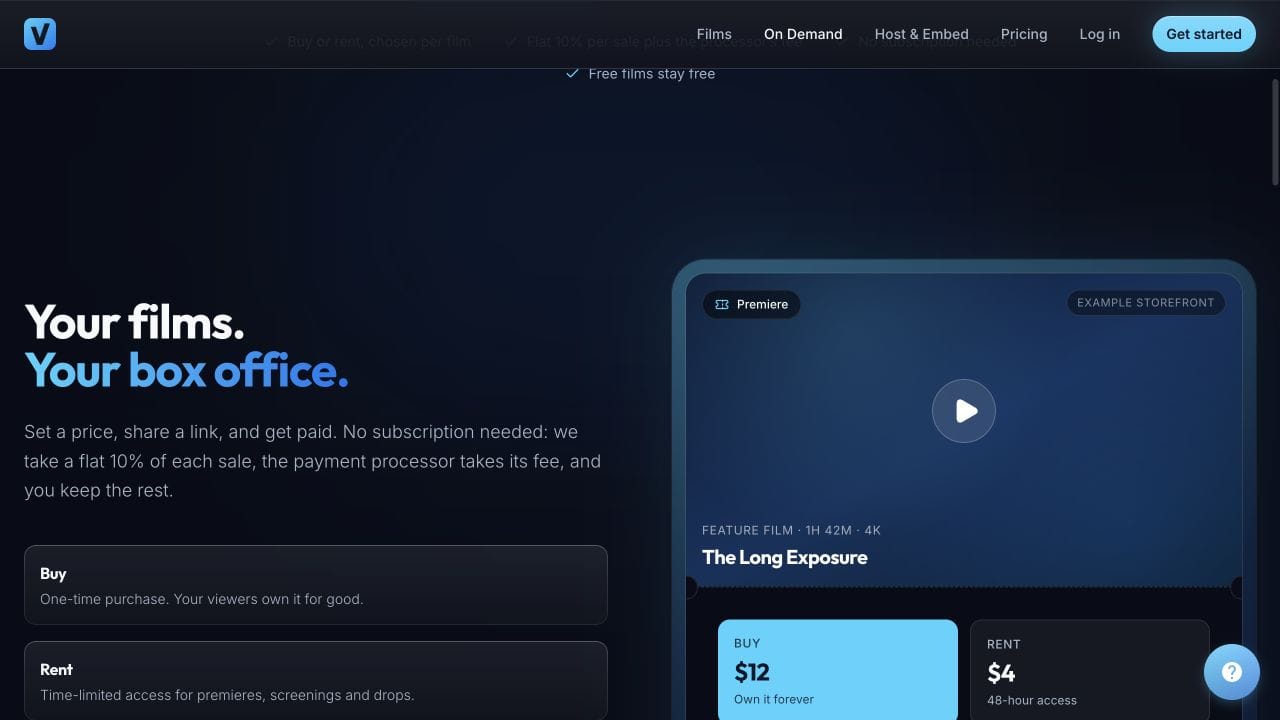
If you are releasing the wildlife documentary, you can focus the page on its subject, trailer and viewing choice. Our film landing page checklist helps you decide which information a new viewer needs before pressing the viewing button.
We would not choose Vidreno On Demand on an assumption that it supplies course assessments or certificates. Those are different requirements from selling access to a film. If they are central to your promise, investigate a course platform and verify the relevant plan.
How do the starting costs compare?
Vidreno On Demand starts without a subscription charge; Teachable's plans add a recurring cost. Compare that fixed commitment with the percentage charged on sales, then add processing and any other applicable charges.
| Option | Monthly plan charge | Platform sales fee | Processing |
|---|---|---|---|
| Vidreno On Demand | None required | 10% | Payment processor's fee is additional |
| Teachable Starter | $39 | 7.5% | Additional processing may apply |
| Teachable Builder | $89 | 0% with Teachable Payments | Additional processing may apply |
Sources: Vidreno's current selling terms and Teachable's pricing and fee conditions. Teachable also offers annual billing at different effective monthly rates. A trial is not a permanent free plan. Check the actual billing option before committing.
When does the monthly charge change the decision?
A fixed plan charge matters most when sales are small or irregular. To see the effect, use three hypothetical monthly sales totals and apply only the rates in the table above.
| Illustrative monthly sales | Vidreno: 10% | Starter: $39 plus 7.5% | Builder: $89 plus 0% |
|---|---|---|---|
| $500 | $50 | $76.50 | $89 |
| $1,000 | $100 | $114 | $89 |
| $2,000 | $200 | $189 | $89 |
These are arithmetic examples, not sales forecasts or total fee comparisons. They assume the stated monthly plans and, for Builder, Teachable Payments. They exclude payment processing, taxes, refunds, currency conversion, optional services and any account specific terms. The platforms do not provide identical products.
At $500 in monthly sales, Vidreno's platform charge is $26.50 below Starter's combined plan and platform charges. At $2,000, Starter's figure is $11 below Vidreno's. The difference changes direction: it would be misleading to say one service is always cheaper.
For a film with uncertain sales, avoiding a recurring plan charge can be useful. For an established course, the teaching tools and a different fee structure may justify the subscription. If you already pay for a suitable Teachable plan for other products, compare the additional cost of the new offer rather than allocating the entire subscription to one film without explanation.
What should you look for in a course demonstration?
Watch how the video fits into the learning sequence, rather than judging only the upload button. Teachable's own introduction below walks through creating a product and building a course. It is an older demonstration; use the current documentation and pricing above for today's controls and terms.
As you watch, write down which parts your customer needs. If your list includes a sequence of lessons and accompanying learning material, that supports investigating a course product. If it is simply “pay, find the film, watch”, a public film page may be enough.
How can you make the choice before building everything?
Write a small delivery brief and check the necessary features against it. You can reject a poor fit before uploading a whole library.
- Name the result: a film to watch, a lesson to practise or a complete course to work through.
- List the required material: video, written exercises, quizzes or other resources. Separate essential items from nice additions.
- Define access: say whether this is a rental, purchase or course enrolment, and confirm the terms before advertising them.
- Model quiet months: include fixed charges when sales are low, not only the month you hope to have.
- Review a representative offer: check its presentation and access journey on a phone before committing the catalogue.
This comparison concerns a film versus a course. If your real plan is recurring access to an expanding film library, read our guide to subscriptions versus individual film sales. That is another decision, with its own ongoing promise to the audience.
Frequently asked questions
Do I need a course platform to sell one video?
No. Start with the viewing or learning experience you are promising. A single film can have a straightforward purchase or rental offer. A single instructional video might still benefit from exercises and assessment if those are part of the product.
Can a documentary also become a course?
Yes, as a separate offer you deliberately design. For example, a wildlife film could accompany a sequence of identification lessons. Explain what the course adds and prepare that material rather than relabelling the film as a complete learning programme.
Is Teachable's zero transaction fee the same as zero selling costs?
No. A qualifying plan can remove the platform transaction percentage while retaining its subscription charge and applicable payment processing costs. Check the payment route and account terms as well as the headline rate.
Does Vidreno's 10% include payment processing?
No. Vidreno On Demand's current selling terms list a flat 10% plus the payment processor's fee. This comparison uses those terms as checked on 7 October 2026.
What if I already have a Teachable school?
Assess the extra cost and suitability of adding the offer there. An existing plan that meets your needs changes the calculation. Still check whether the customer will understand the viewing experience you are offering.
Is Vidreno Hosting the same as Vidreno On Demand?
No. Vidreno Hosting embeds videos inside your own website or app. Vidreno On Demand is the service considered here for public film purchases and rentals. Choose the service around the place and way you want the audience to watch.
If you want to put a film in front of viewers without committing to a course subscription, explore Vidreno On Demand. Start with a clear film offer and a free account, then check the viewing terms before sharing it.