After months of making a film, finding its title next to a suspicious “watch free” result is a horrible prospect. But hiding your work from everyone is not a release strategy either. The useful question is how to protect your film while still making it easy for paying viewers to watch.
Start with the files you share before release. Then check what your selling platform actually protects today, rather than what a feature name seems to promise. Finally, decide who will collect evidence and handle reports if a copy appears.
Protect the full film before you promote it
Keep the full film out of public promotional links and give each recipient only the access they need. A trailer should help someone decide to watch; it should not accidentally lead to a downloadable master.
For a small independent release, a simple file checklist is useful:
- Public materials: the trailer, poster, synopsis, credits and official viewing page.
- Review copies: a separate screener for the people who need to assess the film, with access controls appropriate to your screening service.
- Delivery files: the master and other assets sent only to the people or platforms handling the release.
If your screener service supports expiry or recipient watermarks, consider using them. A watermark can identify a particular review copy; it cannot guarantee that nobody copies it. Check the exported file before sending it, and avoid putting a recipient’s personal details into public promotional material.
This is a release precaution, not a claim that Vidreno currently provides those screener controls. Keep a record of which version went to whom so you can investigate a leak without guessing or accusing the wrong person.
Check what playback protection actually does
Playback protection should restrict unauthorised access without creating unnecessary obstacles for legitimate viewers. Ask what happens on the devices your audience uses, not simply whether a platform has a security badge.
There are different questions to ask. Can an unpaid visitor watch the full film? Is the original file exposed through a public download link? Does any advertised DRM work on the viewer’s browser and device? What happens when that device is unsupported?
Removing a visible download button does not, by itself, answer those questions. Equally, DRM is not a promise that no copy can ever exist. Someone filming a screen with another camera is a different problem from downloading the original video file.
What Vidreno currently says about film DRM
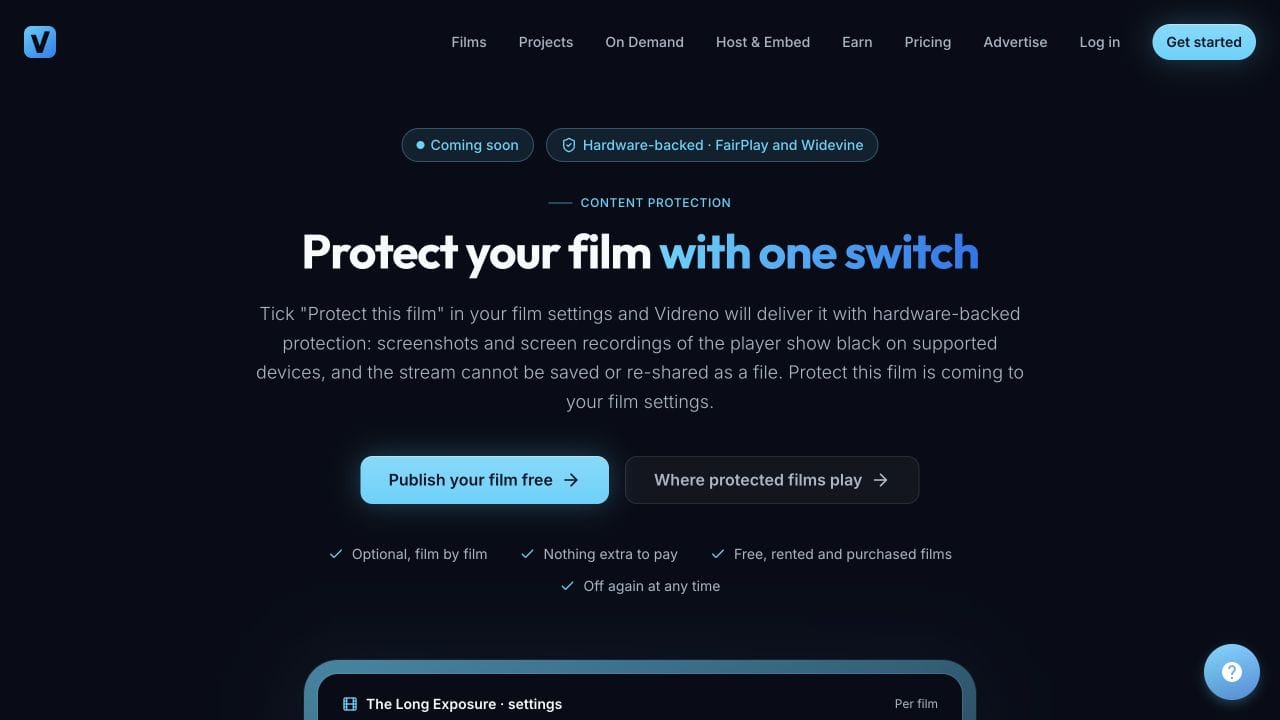
Vidreno’s film DRM announcement is labelled coming soon, as checked on 21 October 2026. Do not plan a release on the assumption that the announced protection is already available.
The announced feature is optional protection for Films, with supported devices required for playback. It is separate from Vidreno Hosting for videos embedded in websites and apps. The published preview describes a limited initial device rollout, so check the live availability details before making it part of your release plan.
Give viewers one clear place to buy or rent
Make your authorised viewing page easy to find in every trailer description, newsletter and social post. A clear official destination helps an interested viewer recognise where the film is actually available.
For a direct release, Vidreno On Demand gives your film a public page where people can buy or rent it. Use that page as the destination for your release campaign, with a clear trailer and viewing offer. That is different from Vidreno Hosting, which is for videos on your own website or app.
A good sales page does not prevent infringement. Its job is to make the legitimate option clear and convenient. Our film landing page checklist covers what a viewer needs before buying, while the guide to pricing a film rental and digital purchase helps you shape the offer.
Check whether a piracy listing contains your film
A page using your title is not automatically evidence that the full film has leaked. Record what you can actually establish before deciding which action to take.
In an Indie Film Hustle conversation, filmmaker Evan Zeisel and host Alex Ferrari describe their experiences of finding apparent piracy listings soon after release. Around 1:20, the discussion distinguishes pages attracting traffic with a film title from pages that actually have the film. That is a useful reason to avoid treating every search result as a confirmed copy.
These are personal accounts, not a measure of how often every film is pirated. Zeisel also discusses a commercial removal service later in the interview; the conversation is not independent legal guidance or an endorsement of that service.
Do not install a player, download an unknown file or enter payment details to investigate a suspicious listing. Where checking would require that, record the uncertainty and use a qualified adviser or the platform’s reporting route.
Save evidence before you send a removal request
Keep an organised record of the exact location and the reason you believe it infringes your rights. This makes a report more useful than a message saying that your film is “somewhere on this website”.
A small spreadsheet or document is enough. Give each suspected copy its own entry:
- Location: the complete page URL and any separately identifiable video URL.
- Observation: the date, a screenshot and what was actually visible. Distinguish a title listing, a trailer and a confirmed full film.
- Rights: the work involved and who owns or is authorised to enforce the relevant rights.
- Action: the recipient, date sent and any report reference number.
- Outcome: a reply, removal, rejection or a date to check again.
Keep the evidence private. Avoid directing your audience towards an unauthorised copy by posting its link in a public complaint. If you have a distributor, agree who handles reports before sending competing requests.
Choose the right removal route
Report the copy to the service responsible for it, and treat search removal as a separate task. Removing a search result does not delete a video hosted on another website.
For a US DMCA notice, follow the required information
The US Copyright Office’s section 512 guidance explains the notice process. A notice generally identifies the copyrighted work and infringing location, provides contact details and a signature, and includes the required good faith and accuracy statements, including authority to act under penalty of perjury.
Only send a notice if you own the relevant rights or are authorised to act. Registration is not required simply to send a takedown notice, but that does not remove the need to assess whether the use is infringing. A recipient can dispute a removal through a counter notification. Get legal advice for disputed rights or contested use rather than treating a template as a verdict.
For Google results, identify the exact URLs
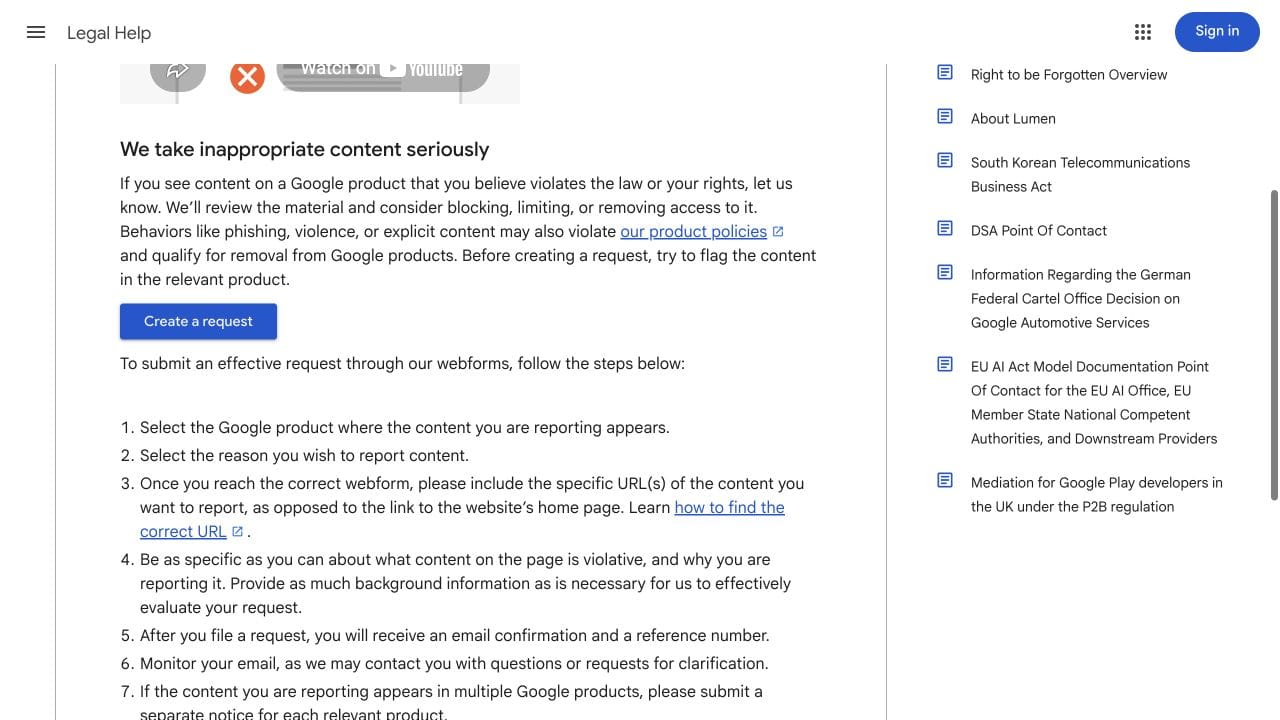
Google’s legal removal guidance asks you to select the relevant product and reason, then provide the specific URLs and an explanation. Keep the confirmation and reference number and monitor replies. Separate Google products may need separate reports.
A successful request concerning Search affects Google’s results. Continue dealing with the hosting service if the underlying copy remains online.
For a UK dispute, check the rights and exceptions first
UK filmmakers should not assume that every situation follows the US process. The UK government’s copyright guidance advises checking permitted uses before challenging someone. Seek advice from an intellectual property professional when ownership, exceptions or enforcement across countries is disputed.
Keep protection proportionate to the release
Choose a response you can sustain alongside selling and promoting the film. Set aside time to check reports, keep your evidence tidy and give paying viewers a straightforward route to watch.
For example, a small release team could assign one person to review suspected copies and another to keep the official viewing page and audience messages current. Record confirmed problems and outcomes rather than treating every search result as a lost sale.
Build the release around what is available today. You can sell or rent your film through Vidreno On Demand while keeping any forthcoming protection feature separate from the promises you make to your audience.
Questions about protecting a film online
Can I stop all piracy of my film?
No. Control access to the full film, assess available playback protection and prepare a removal process, but do not rely on an absolute guarantee against copying.
Does removing a download button protect the whole film?
No. It removes a visible download option, not every possible way of copying a video. Check access controls and any actual protection offered for the release.
Is Vidreno film DRM available now?
Vidreno’s announcement is labelled coming soon as of 21 October 2026. Check the linked announcement for current availability before relying on it.
Does a Google removal request delete the pirated file?
A request concerning Google Search can affect search results. It does not delete a file hosted by another service.
Can a US copyright claim automatically pay $30,000?
No. The Copyright Claims Board is a voluntary US process for eligible disputes, with a total limit of $30,000 per proceeding, not a guaranteed award per copy. Respondents can opt out, and eligibility and registration requirements apply. A removal request is a different process.