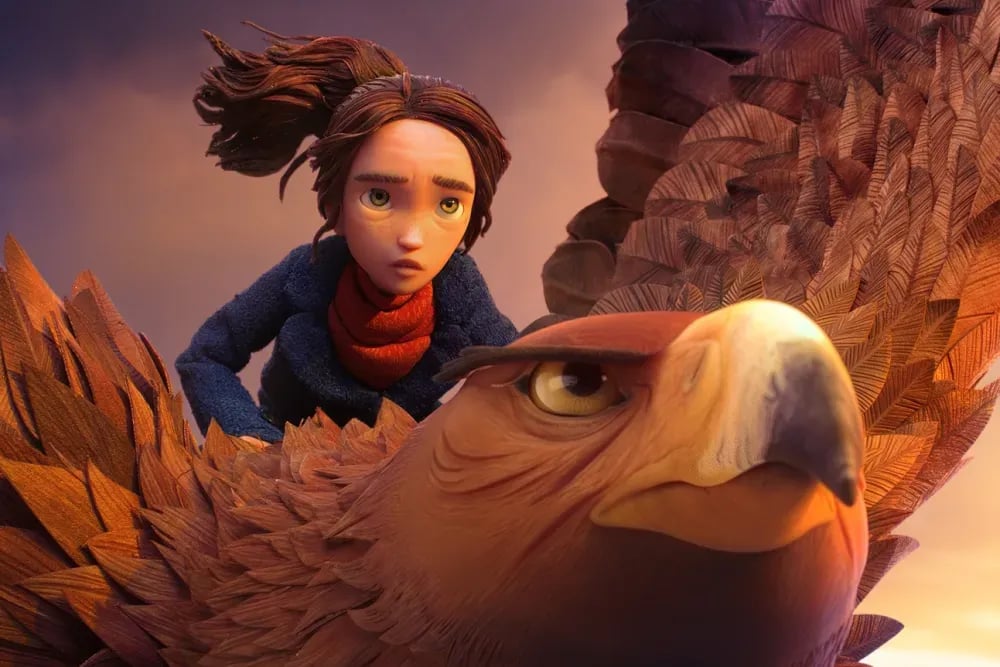
Featured image: Prue and the eagle in Wildwood. LAIKA, via Fathom Entertainment.
Dario Marianelli began with drawings and a simple forest theme. Early demos helped shape the edit, before an orchestra and a distinctive group of soloists brought Wildwood’s music to life.
Asked to play a moment from Wildwood, Dario Marianelli turns to the piano beside him. He chooses the point when Prue and Curtis finally pause after their frantic journey into the forest. For a moment, the characters can look around and recognise its beauty.
The melody he demonstrates in his HeyUGuys interview is simple enough to follow without an orchestra. That is part of its usefulness. Later, he explains, it can accompany flight or return amid the brass and percussion of a battle. The tune carries the memory of that first discovery into very different circumstances.
Marianelli’s account, together with the film editor’s description of their collaboration, shows how the score developed long before the finished animation. Music became material the filmmakers could work with throughout production.
Starting before the puppets had finished performing
Directed by Travis Knight, Wildwood follows a girl into the strange forest beyond Portland after her baby brother is taken. Its source is Colin Meloy’s novel, illustrated by Carson Ellis. The story gives a composer both an adventure to accompany and private feelings that the action cannot explain on its own.
Marianelli already knew LAIKA’s world through The Boxtrolls and Kubo and the Two Strings. He had also worked with Knight on Bumblebee. His professional credits connect those collaborations with films as different as Atonement and Paddington 2.
In the piano interview, he describes starting from animatics: moving storyboards with voices, sometimes still temporary, rather than completed scenes. He also talks about writing from a screenplay. These early materials let him concentrate on feelings beneath the visible action.
His example is a character making a decision that changes their life while appearing almost motionless. Music can give that inner event weight. On a film made with puppets, he sees a kinship between animators giving objects life and performers bringing written notes into the world through their own experience.
A melody with experiences of its own
The forest theme did not need to arrive fully grown. Marianelli describes the pleasure of finding an idea early enough for it to acquire a history across the film. Its later appearances can remind us of where the characters began while revealing how far they have travelled.
That gives the repeated tune a dramatic purpose. The first encounter carries wonder and mystery. The eagle flight offers a different setting for the same musical idea. In battle, a change of instrumental forces can give it another character again.
He also makes a subtler point: a melody can gain meaning even when the notes themselves remain unchanged. By the end, the audience has heard it alongside different experiences. Repetition brings those associations back with it.
For a filmmaker, the useful question is therefore where a theme first belongs. A memorable tune attached to a specific discovery has somewhere to return to. Its later power can depend as much on that original placement as on the size of the final arrangement.
The editor had real music while the film was still drawings
The editor’s Kingdom of Dreams interview reveals how unusually early this relationship became practical. He recalls receiving demos covering roughly 90 per cent of the film while the pictures were still storyboards.
The exact year is uncertain in his recollection, but the important point is clear: he worked with Marianelli’s own material for years. As finished shots arrived from the stages, they entered a cut that already had a substantial musical identity.
Marianelli supplied separated instrumental parts, often called stems. The editor and Knight could rearrange these parts to show the composer what a sequence needed. In one passage involving Prue, Alexandra and the ivy, they reshaped the music and used software to extend sustained notes before sending their version back.
Those revisions gave the discussion something concrete to address. The composer could hear the proposed pacing and respond with new material. The editor describes it as a continuing exchange, with the score and the picture developing together.
Music was present while the film’s timing could still change. Separated instrumental parts let the editor and director demonstrate an idea, then return it to the composer for a musical response.
That freedom also created painstaking work. Small picture changes meant finding a corresponding adjustment in the music, over and over again. The editor recalls the awkwardness of eventually playing back demos that had been repeatedly recut across the long production.
Marianelli understood what those changes were trying to achieve. The editor’s account ends with the composer taking the accumulated revisions and improving them. The early score had remained a working conversation all the way to the final recording.
From the edited demos to AIR Studios
The published music credits identify AIR Studios as the recording and mixing location, with Nick Wollage engineering the score. Marianelli conducted and shared orchestration duties with Geoff Alexander. The credited performers include orchestra leader Jack Liebeck and the London Voices choir.
There are also specific instrumental colours within that larger ensemble: Liebeck on fiddle, Vicki Swan on nyckelharpa, Jonny Dyer on citole, Sam Ng on viola da gamba, Karen Jones on recorder and Roshan Gunga on guitar. These credits help explain the range of human performances behind the finished soundtrack.
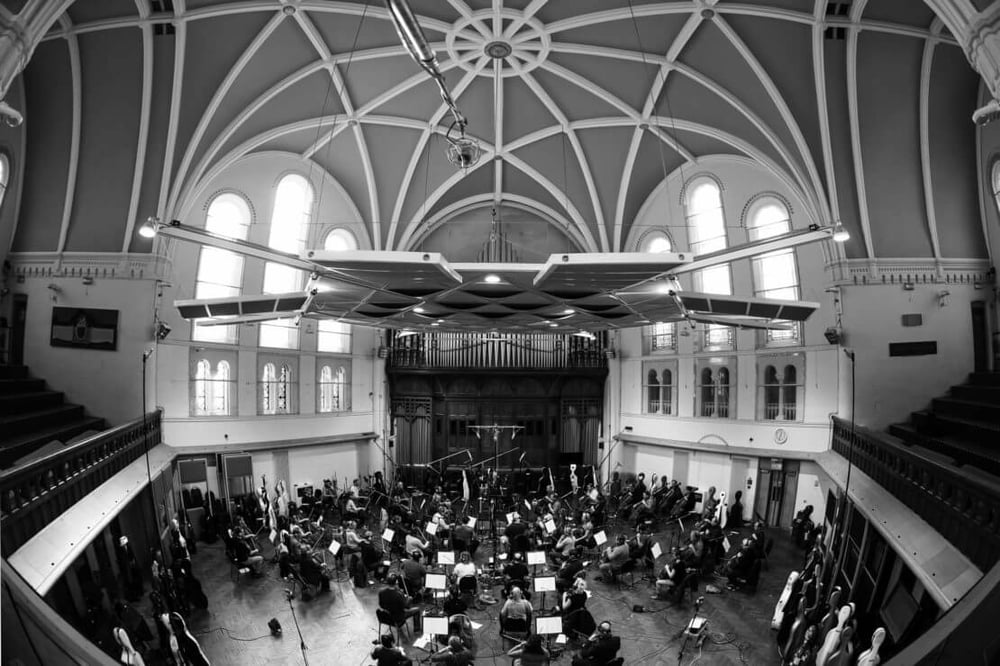
For the editor, the recording session made the difference between knowing the music and experiencing its performance particularly vivid. He recalls an orchestral passage accompanying a revelation about Alexandra’s past, played towards the end of a long day.
The players performed the full arrangement before moving on to separate recording passes. With sunlight coming through the studio’s stained glass, he found the music’s grief overwhelming. A sequence he had handled throughout the edit could still affect him unexpectedly when the musicians performed it together.
AIR’s Lyndhurst Hall can accommodate a full symphony orchestra and choir at once. The room is part of the story here, but so is the change in scale from a composer’s playable idea to many people making decisions together in performance.
The team supporting the score
Air Edel’s project record confirms the music supervision and editing team. These are separate responsibilities from editing the film itself.
| Music role | Credited collaborators |
|---|---|
| Composer | Dario Marianelli |
| Music supervision | Maggie Rodford and Matt Biffa |
| Music editing | Mark Willsher, with additional music editing by Darryl O’Donovan |
| Recording and mixing | Nick Wollage at AIR Studios |
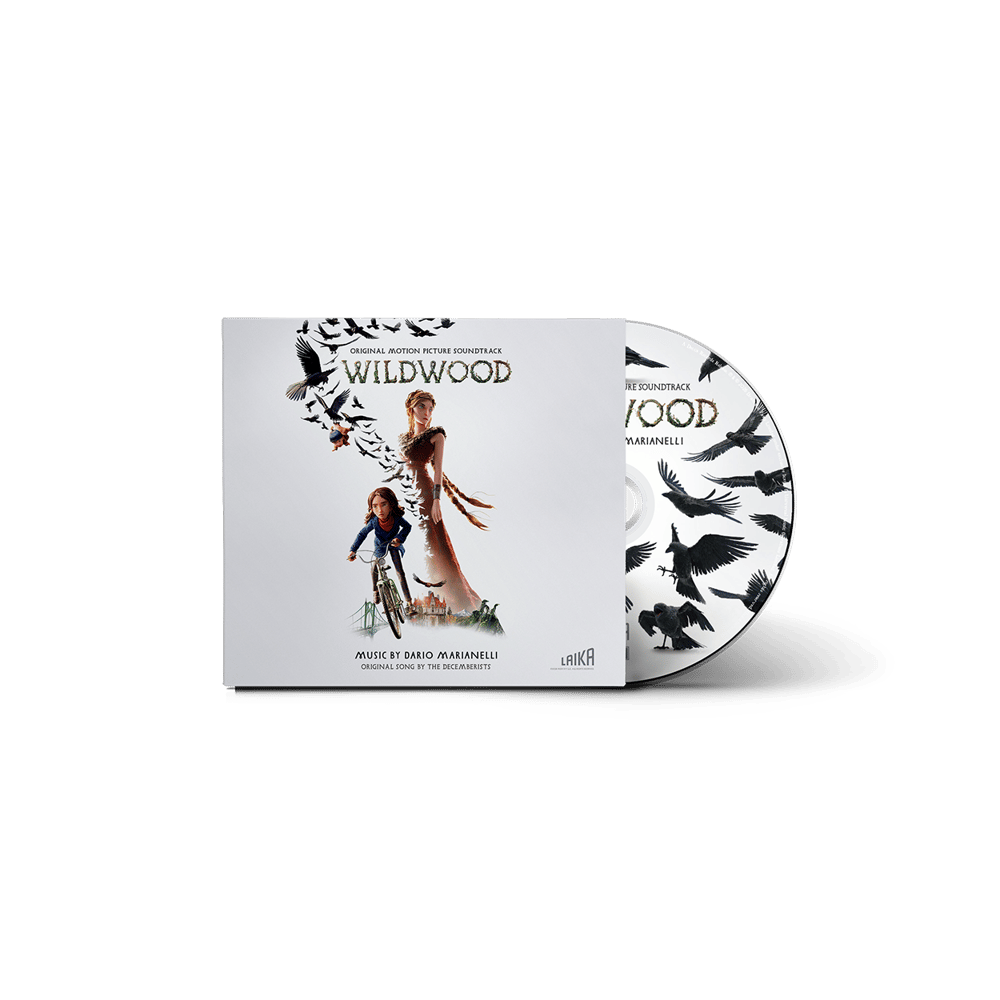
The music can also be heard away from the pictures on the original soundtrack album. Its 26 tracks include Marianelli’s score and The Decemberists’ song The Better Part of Bravery.
Three ways into the music
- Start with the piano demonstration. Hearing Marianelli play makes the theme’s simplicity clear before he explains its later uses.
- Follow the editing conversation. The discussion of separated parts and repeated revisions shows how music and picture can influence each other during production.
- Explore the album’s changing situations. Decca’s track list moves from Into the Wild Wood through A Flight and a Dogfight and Into Battle to Homecoming. Use those titles as listening signposts alongside the composer’s account.
There is a related story of music developing alongside a film in our feature on Max Richter’s Hamnet score. For another account of performers and a recording space shaping a film’s musical identity, read how Interstellar found its voice in a church organ.
Making a film of your own? Vidreno Hosting lets you present video on your website. Create a free Vidreno account to get started.