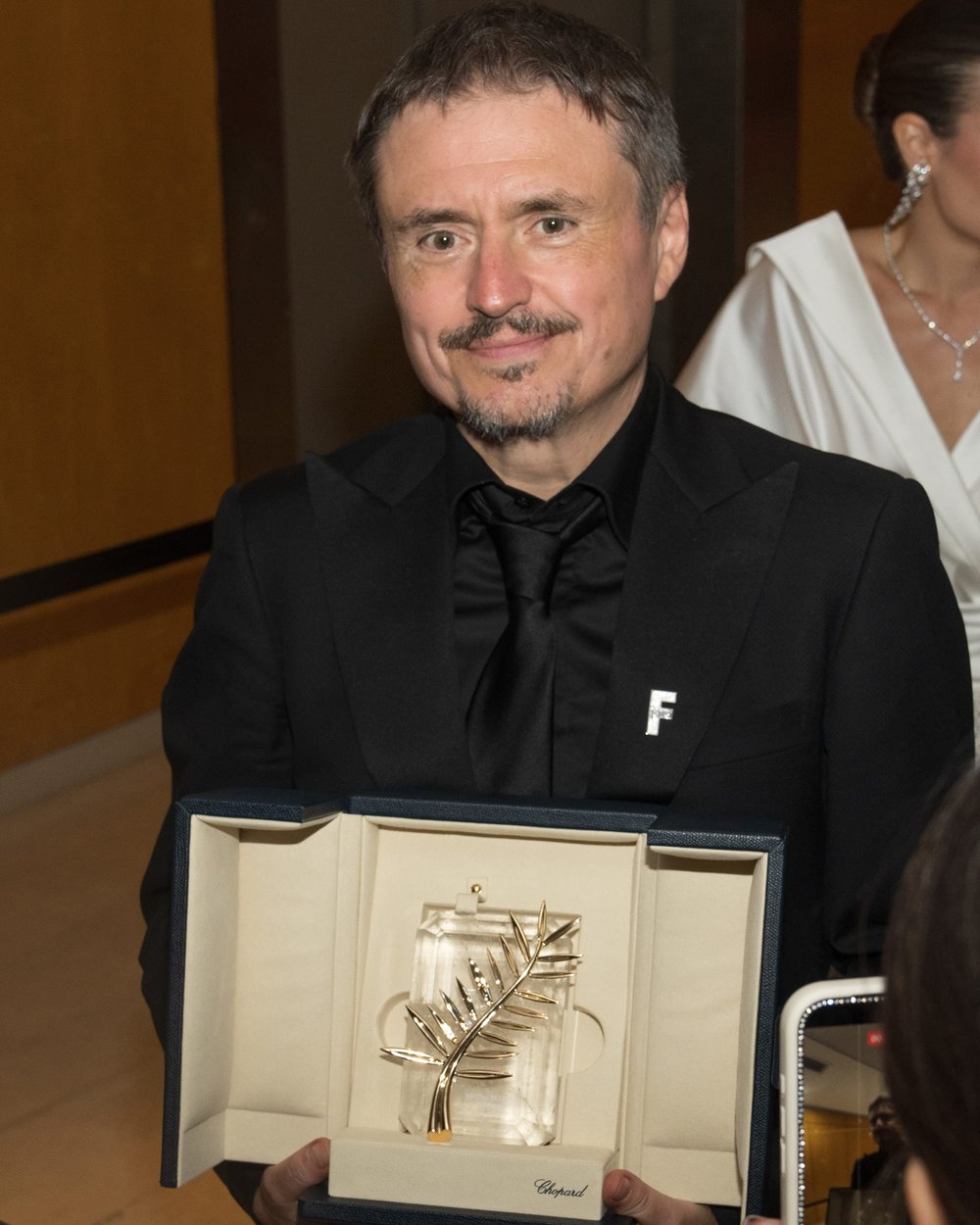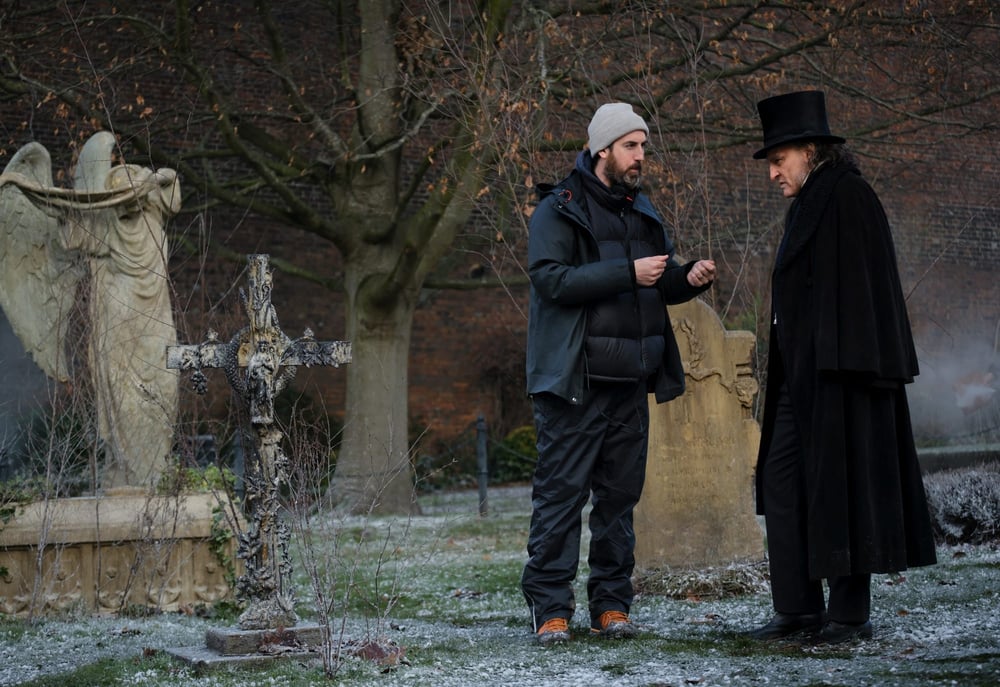
From a small horror debut backed by Larry Fessenden to The House of the Devil, the Mia Goth trilogy and Ebenezer: the people and practical decisions behind Ti West’s progress.
When Larry Fessenden offered Ti West enough money to attempt a feature, West did not have a polished career plan. He had short films that Fessenden liked and an opportunity he could not sensibly let pass. In his Film Connection interview, he remembers agreeing before he really knew how he would manage it. They made the film for $50,000.
That was The Roost, released in 2005. More than twenty years later, West is directing Johnny Depp through a Victorian ghost story for Paramount. The studio reported a $42 million worldwide opening for Ebenezer on 15 November 2026.
The distance between those productions is striking. The route between them is more revealing: minimum wage work alongside early films, a horror breakthrough, a bruising sequel, years of television and a partnership with Mia Goth that turned one film into three.
A Delaware film lover finds his first collaborators
Born in Wilmington, Delaware, in 1980, West grew up renting and recording films. He told Film Threat in 2005 that he was not the child constantly organising neighbourhood productions. He began making films seriously towards the end of school, when he needed something stronger than his grades for college applications.
At New York’s School of Visual Arts, filmmaker Kelly Reichardt became the crucial connection. She knew Larry Fessenden, whose film Habit West admired. West kept asking about meeting him until she gave him Fessenden’s telephone number.
The relationship grew through conversations, small jobs and the shorts West kept showing him. Fessenden was developing inexpensive genre films through Glass Eye Pix. When the chance to make one arrived, West started writing The Roost.
The finished debut sent stranded travellers towards a farm and a particularly unpleasant encounter with bats. Trigger Man followed in 2007. West was building experience as a writer, director and editor, but making films was not yet the same as making a living.
The House of the Devil turned uncertainty into a story
At a 2015 School of Visual Arts conversation, West recalled working at Diesel while making his first films. He had achieved the apparently difficult part, directing a feature, and still did not know how to move his life forward.
That anxiety helped shape The House of the Devil in 2009. Its student protagonist needs money and takes a job she should refuse. West connected that desperation with his fascination with the satanic panic of the early 1980s. The fear begins with a recognisable financial problem before it becomes something much stranger.
Jocelin Donahue’s performance gives the film its centre. The production’s period detail also came from specific collaboration. West told the SVA audience that he sent production designer Jade Healy photographs of real interiors and details, rather than simply supplying frames from other films.
One of his clearest memories concerns Donahue’s dance through the house. He had written the sequence with conviction, but neither of them had really confronted rehearsing it. On the day, he and cinematographer Eliot Rockett sat on the dolly wondering whether the scene would work. Donahue came through the door and the performance immediately reassured him.
The same conversation includes producer Peter Phok’s account of the exhausting night work. The team stayed at the Yankee Pedlar Inn during the shoot. That experience helped generate The Innkeepers, released in 2011, with Sara Paxton and Pat Healy as hotel employees investigating a haunting. A practical accommodation choice had become the starting point for another film.
A difficult sequel, a Western and the television years
His early career was not a smooth sequence of films made on his terms. West has spoken publicly about the difficult experience of Cabin Fever 2: Spring Fever. In his 2022 Reddit conversation with viewers, he said his unfinished cut had been abandoned early. He also identified something lasting from the job: meeting Rockett, who would later photograph X.
Alongside his own features came anthology work on V/H/S and The ABCs of Death, plus acting appearances for other filmmakers. His IMDb credits include Tariq in Adam Wingard’s You’re Next. This was a working community, not a career conducted entirely in isolation.
The Sacrament in 2013 moved into the danger of a closed religious community. In a Valley of Violence in 2016 took West into a Western with Ethan Hawke and John Travolta. The setting changed, while suspense and sudden violence remained central tools.
Television then became an important part of his working life. The Gérardmer festival’s career record includes Scream, The Exorcist and Them. West later explained that repeated days on set improved his technical judgement and his ability to make limited resources count.
He also enjoyed entering a production where the whole structure did not depend on him. Directing television meant helping realise an existing show, rather than carrying the script, financing, production and release himself. It was a different responsibility and useful preparation for the return to features.
Between the earlier features and X, West was directing television. He credits those repeated practical experiences with helping him achieve more on the films that followed.
Mia Goth and the opportunity inside X
X arrived in 2022, following an adult film crew making a movie on a rural Texas property in 1979. Mia Goth played both Maxine, the ambitious young performer, and Pearl, the elderly woman whose life has taken a very different shape.
In his Scream Dreams interview, West describes meeting Goth over Zoom and raising the possibility of the two roles. Her enthusiasm helped convince him she was the person he needed. The collaboration would eventually run through three films and several versions of thwarted ambition.
The pandemic changed the production’s geography. West had expected to shoot in the American South, but the project moved to New Zealand. A location on the North Island could stand in for Texas, and a farm set was built there.
That created a second possibility. With Goth already developing Pearl, why not go back to the character’s youth? West worked on the prequel script during quarantine, discussing it with Goth remotely. Further writing continued afterwards. A24 credits them both as its writers.
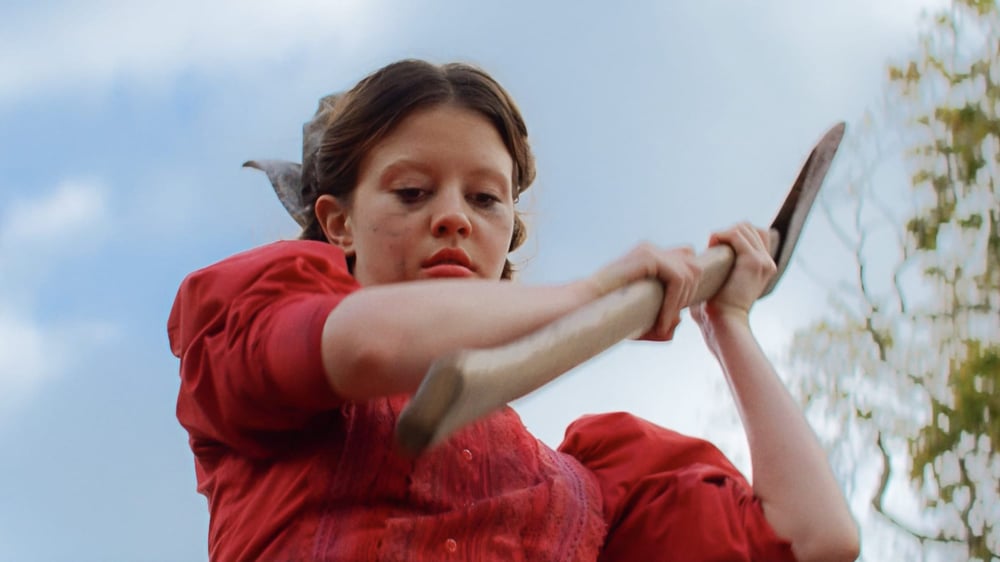
Pearl made the most of a production already in place
The proposal had an artistic reason and a practical one. Pearl could tell a different story using the farm they had already built, with a crew already assembled and Goth already committed to the character.
West’s account of the pitch is precise about timing. Waiting until X was released would mean dismantling the production and losing the savings. A24 still needed a convincing script. The existing infrastructure made the proposal possible; it did not make the writing optional.
Released in 2022, Pearl traded the first film’s period slasher setting for an earlier story of a young woman longing for stardom. MaXXXine, released in 2024, then followed Maxine into the film industry of 1980s Los Angeles. Its cast expanded to include Elizabeth Debicki, Kevin Bacon and Giancarlo Esposito.
West was alert to the danger of repeating himself. In the same interview, he says that ideas which merely replayed the previous films quickly lost their appeal. The continuity came from the characters and their desires, while each film needed its own form.
He also credits A24’s distribution with enlarging his audience. His explanation is refreshingly practical: the films reached many more cinemas than his earlier work. Recognition did not depend only on what he made, but on people being able to see it.
Ebenezer brings the ghost story to a larger stage
Ebenezer makes the change in scale visible. Written by Nathaniel Halpern, it gives West a Dickens adaptation with Depp as Scrooge and a cast including Rupert Grint, Andrea Riseborough and Ian McKellen. Paramount’s opening weekend announcement places it at the top of both the North American and worldwide box office.
The director’s interest in horror still has an obvious place here. Dickens’ story depends on supernatural visitors confronting a man with the life he has made. West’s new setting offers a larger audience without requiring him to abandon ghosts or discomfort.
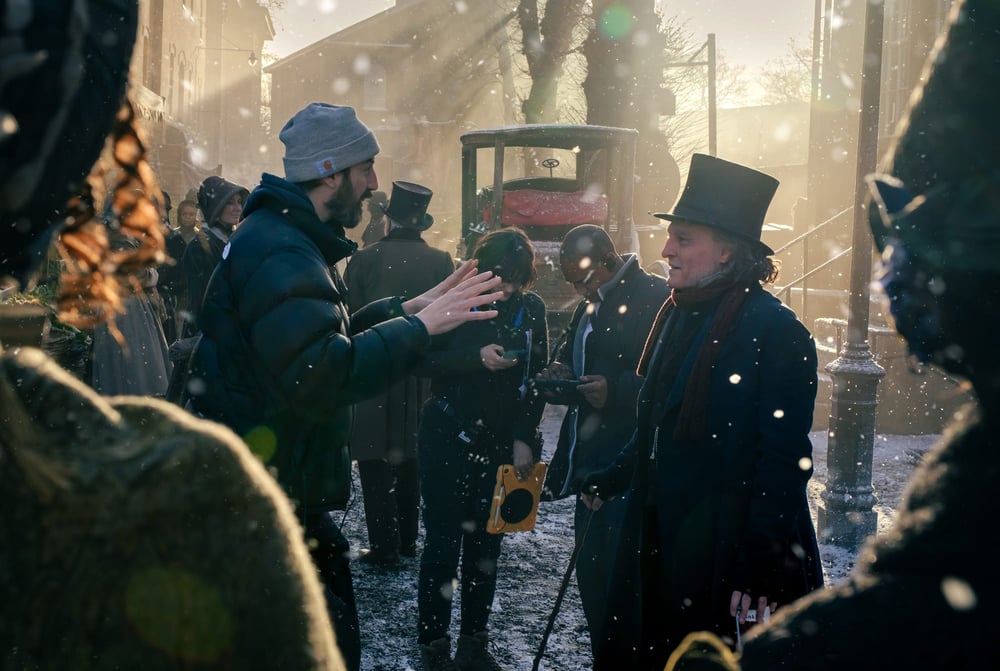
Paramount’s production account also shows the collaborators who make that scale tangible. Eve Stewart’s team built London streets at the Historic Dockyard Chatham, with individually stamped concrete cobblestones. Visual effects extended the city beyond the physical set.
The carols were sung live on the street. Production sound mixer Paul Paragon describes the benefit for the actors of performing amid the snow and fog. These are concrete choices about what people can experience together on set, even within a film that depends on the supernatural.
West’s career now contains both the tiny debut and the studio release. Fessenden’s early backing, Healy and Rockett’s craft, Phok’s producing experience and Goth’s creative commitment all belong in that story. The larger films grew from a succession of working relationships, scripts and productions that had to be completed before the next opportunity arrived.
Where to start with Ti West
- The early breakthrough: The House of the Devil shows his interest in patient suspense and a protagonist under ordinary financial pressure.
- The collaboration: Watch X and Pearl together to see what West and Goth do with the same performer, character history and production setting.
- The change of scale: MaXXXine and Ebenezer take his work into larger public worlds, with different ensembles and ambitions.
The original conversations are available from School of Visual Arts, Film Connection and Scream Dreams. These are the interview publishers’ channels. In the Scream Dreams conversation, West said he no longer used personal social media.
For another route from independent work to a distinctive filmmaking practice, read our Mark Jenkin career story. Our Ron Howard profile follows a different path into directing across genres and scales.
Making films of your own? Vidreno Hosting lets you present video on your website. Create a free Vidreno account to get started.