From translating VHS films and working in journalism to Occident, the 2007 Palme d’Or and Fjord: how Cristian Mungiu built a cinema of difficult choices.
Cristian Mungiu began shooting his first feature with only half its budget secured. When the money ran out, the rescue did not arrive from an international studio. As he recalls in his Barcelona masterclass, he turned to money his parents had put aside and used it to finish the shoot.
That film was Occident. Its journey to Cannes in 2002 gave him an entrance to international cinema, but it also exposed how little he knew about selling a film. Five years later, 4 Months, 3 Weeks and 2 Days won the Palme d’Or. By 2026, Fjord had brought him a second.
The prizes are the visible milestones. Between them is a more interesting continuity: a former literature student and journalist repeatedly finding situations in which people’s principles become difficult to live by.
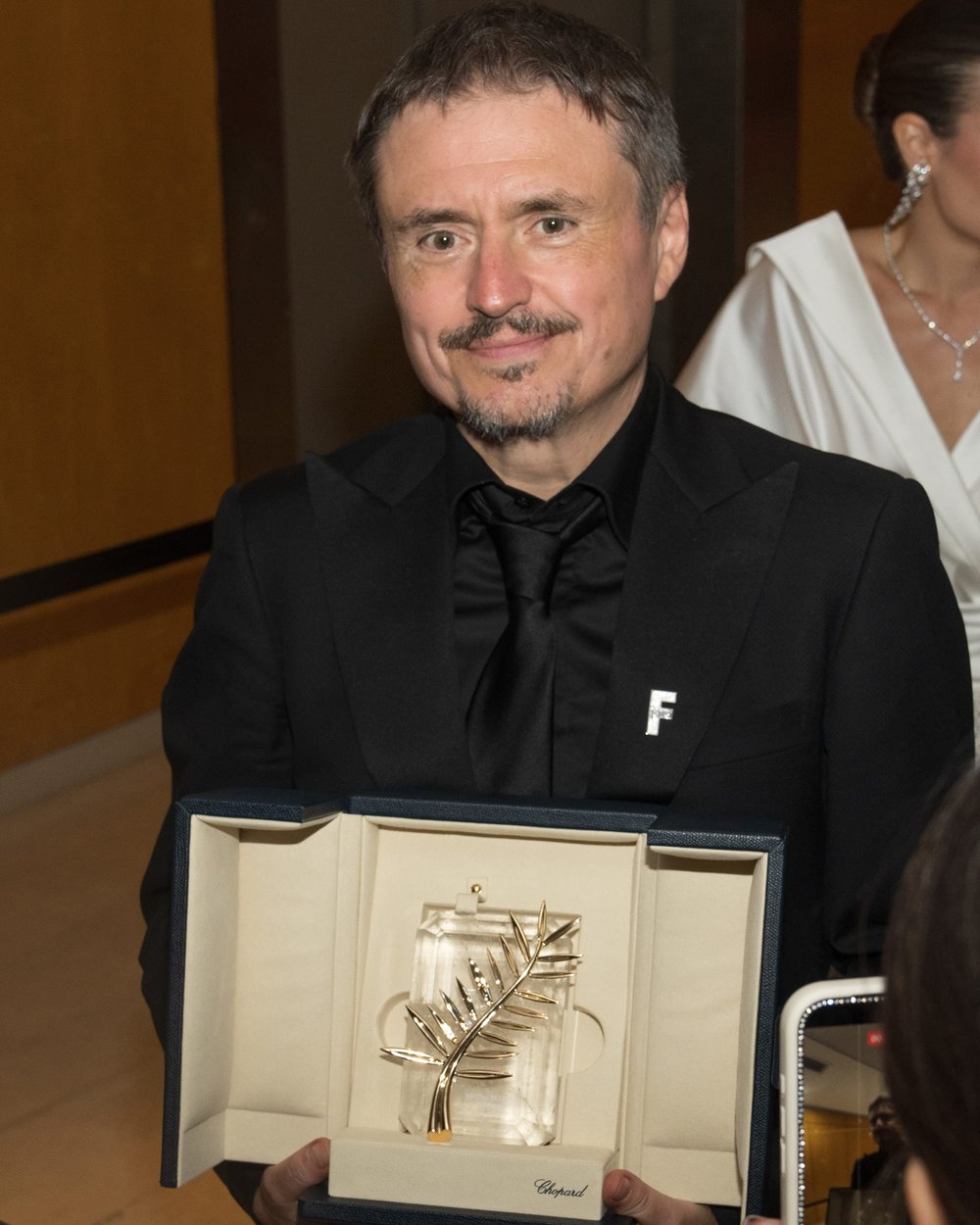
Cristian Mungiu with the Palme d’Or at Cannes in 2026. Photograph: John Sears / WikiPortraits, CC BY SA 4.0. Unmodified.
Literature, newspapers and nights of VHS
Born in Iași, Romania, in 1968, Mungiu studied English literature before working as a teacher and journalist. The Cannes biography traces his route through print, radio and television to the Film and Theatre Academy in Bucharest.
In his masterclass account of growing up, he describes Romanian screen life under communism as narrow and heavily censored. Imported VHS tapes opened a much larger world. He remembers watching several films in a night and earning his first money connected with cinema by translating them.
Writing came first. Work on a student newspaper helped him develop a direct, descriptive style; radio conversations taught him to follow and test an argument. Those experiences are useful context for films whose tension often comes from people explaining themselves, then revealing more than they intended.
Film school also put him on other directors’ sets. The Directors’ Fortnight record lists assistant directing experience on Bertrand Tavernier’s Captain Conan and Radu Mihăileanu’s Train of Life. He made shorts before attempting a feature.
Occident opened the door, but did not make it easy
Occident is a comedy about migration and the people who remain behind. Alexandru Papadopol and Anca Androne were among its cast, with Vivi Drăgan Vasile behind the camera. Its intersecting stories already placed private hopes inside a wider social picture.
Mungiu’s recollection of finishing it is wonderfully specific. After the family money got him through shooting, support connected with Rotterdam helped with editing and sound. The film was still unfinished when a Cannes selector expressed interest. He took her letter to Romania’s film centre and secured help to complete it.
The shorts had mattered in a way he had not fully understood: the selector had seen earlier work and was following his progress. His debut reached the Directors’ Fortnight in 2002.
Getting there was not the same as knowing what to do there. Mungiu remembers that he and his producer did not properly distinguish a distributor from a sales agent. He later arranged screenings in Paris and found representation. Advertising work followed, helping him earn a living before his next feature.
The breakthrough of 4 Months, 3 Weeks and 2 Days
The decisive international breakthrough came in 2007. 4 Months, 3 Weeks and 2 Days follows two students arranging an illegal abortion in communist Romania. Anamaria Marinca plays Otilia, Laura Vasiliu plays Găbița and Vlad Ivanov plays Mr Bebe. Cannes records confirm Mungiu’s writing and directing credits, Oleg Mutu’s cinematography and Dana Bunescu’s editing.
Its Palme d’Or made Mungiu the first Romanian director to win the festival’s top prize. This was a different scale of recognition from the debut: a film built around an intensely local situation had reached the centre of international film culture.
In the masterclass, Mungiu describes questioning familiar directing habits as he made it. Why put the camera in a particular place? What should it show? Those questions help explain a style in which remaining with a person can be more uncomfortable than cutting away.
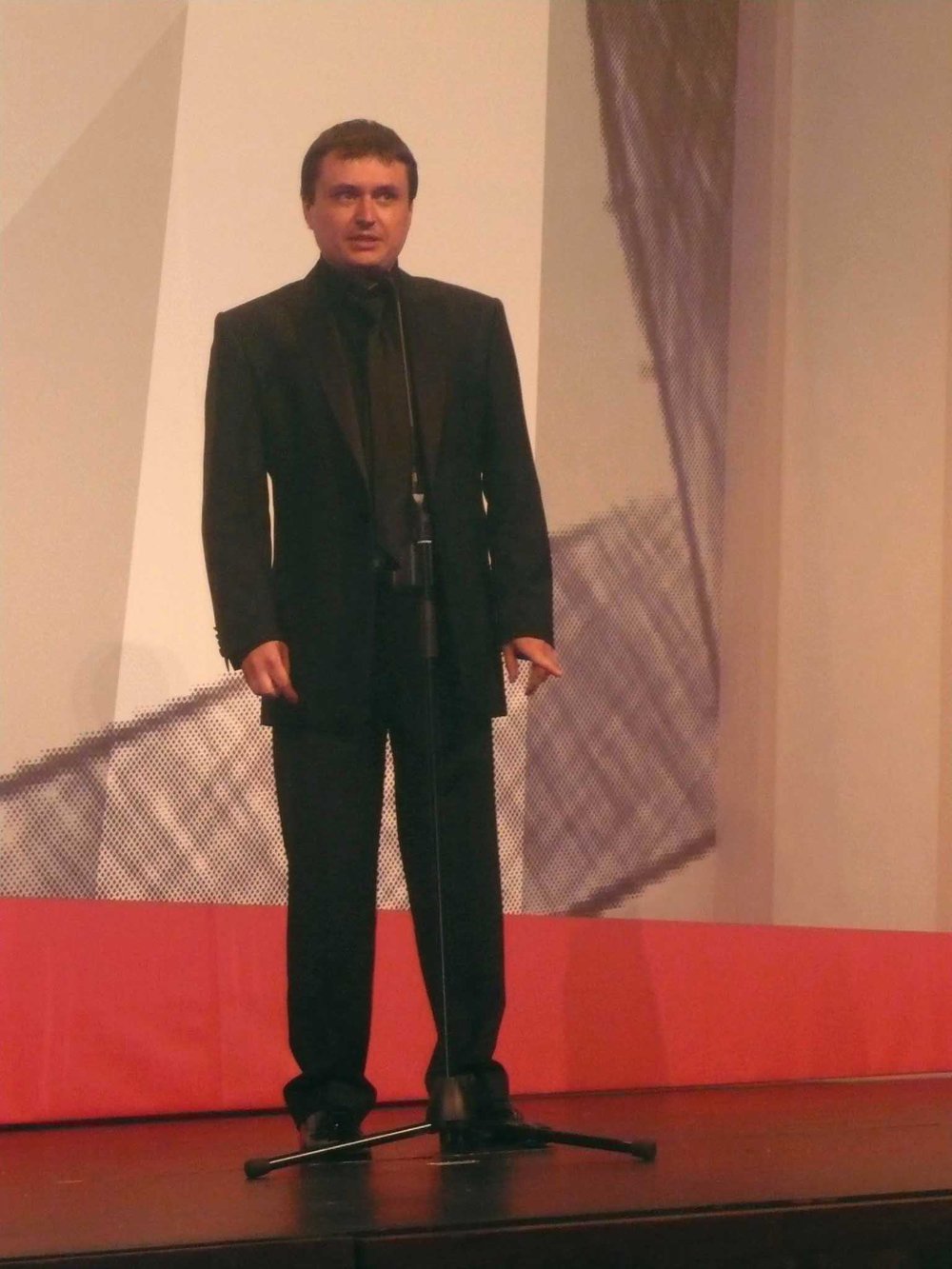
After the Palme: humour, faith and family compromises
He did not simply repeat the breakthrough. Tales from the Golden Age in 2009 returned to the communist period through a collective film of darkly comic stories, with Mungiu working as writer, producer and one of its directors.
Beyond the Hills in 2012 narrowed its attention to two young women whose connection is tested by life in a religious community. Cristina Flutur and Cosmina Stratan shared the Cannes acting prize, while Mungiu won for his screenplay. Mutu returned as cinematographer; Mircea Olteanu edited. The official credits and awards make the collaborators visible alongside the director.
Graduation in 2016 shifted the pressure into a family. A father’s plans for his daughter’s education become entangled with compromises that contradict what he has taught her. Adrian Titieni and Maria Drăguș lead the cast; Mungiu received a shared Cannes directing award.
These are different dramatic worlds, but each gives conviction a practical test. Love, faith and parental ambition can sound admirable until the person holding them must decide what they permit.
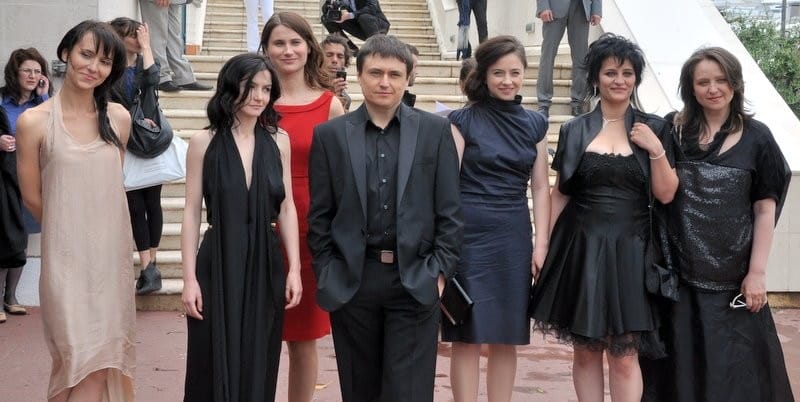
R.M.N. and the work behind an unbroken scene
R.M.N., selected for Cannes in 2022, widened the frame to a Transylvanian community unsettled by the arrival of new workers. Marin Grigore and Judith State lead the cast. Personal anxiety and collective hostility share the same space.
Mungiu’s account of its long community meeting shows how much construction sits behind apparent observation. In the masterclass’s final section, he explains that dialogue written sequentially needed to overlap when performed. He combined passages, arranged the speakers and worked on the timing of the crowd’s reactions.
The resulting scene was not simply a camera left running. Actors had to listen, interrupt and remain involved even when they were outside the frame. The method depends on preparation precisely because the shot gives so little room to hide a loss of rhythm.
His working life also extends beyond his own directing. The IMDb credits include producing Lemonade, The Father Who Moves Mountains and Traffic, alongside an associate producer credit on The Sisters Brothers. The career is broader than the intervals between films bearing his directing credit.
Fjord takes the questions to Norway
In Fjord, Sebastian Stan and Renate Reinsve play a couple whose life in Norway leads into a dispute involving children, neighbours and competing beliefs. The film won the 2026 Palme d’Or. Its credited team includes cinematographer Tudor Vladimir Panduru, editor Mircea Olteanu and production designer Simona Pădurețu.
At TIFF, Mungiu explained that the project grew from several stories he had read years earlier. He was interested in the friction between different values, rather than treating one real case as a script to reproduce. The move abroad enlarged the setting while keeping his attention on people trying to justify their choices.
The same conversation reveals how a lasting collaboration works. Panduru had been an assistant on Beyond the Hills, Mungiu recalled. For Fjord, they made short videos while scouting: Mungiu acted out the parts and Panduru filmed him. These sketches helped them explain the choreography to the actors later.
Stan faced scenes with children and animals as well as the demands of sustained takes. Mungiu describes the actor’s challenge as retaining freshness after repetition. The finished scene must feel as though events are unfolding now, however carefully everyone has prepared.
Mungiu’s long takes are a directing method, not an absence of craft. Blocking, performance, sound and the choice of take all shape what feels immediate.
Where to begin with Mungiu’s films
- For the breakthrough: 4 Months, 3 Weeks and 2 Days places his observational style under extraordinary pressure.
- For family and compromise: Graduation offers a concentrated way into his interest in the gap between stated principles and decisions.
- For ensemble staging: R.M.N. is especially revealing alongside his explanation of the community meeting.
- For the latest chapter: Fjord brings Stan and Reinsve into that continuing investigation of belief and responsibility.
For original conversations, follow the verified TIFF YouTube channel and Europa Creativa Desk MEDIA Catalunya. These are institutional sources for his interviews, not personal Mungiu accounts.
For another filmmaker who built a distinctive method over years, read our Mark Jenkin career story. Our Steve Yedlin profile follows a cinematographer’s route through sustained creative partnerships.
Making work of your own? Vidreno Hosting lets you present video on your own website. Create a free Vidreno account to get started.