The difficult part is rarely one payment. It is the next deadline, the festival a friend recommends and the temptation to give a finished film one more chance. A written budget turns those separate decisions into a plan you can review.
This guide compares published fees for three 2027 festivals, then works through an illustrative short film budget. All dollar amounts are US dollars. Festival information was checked on 8 November 2026; the examples are planning exercises, not spending recommendations or results from our own festival run.
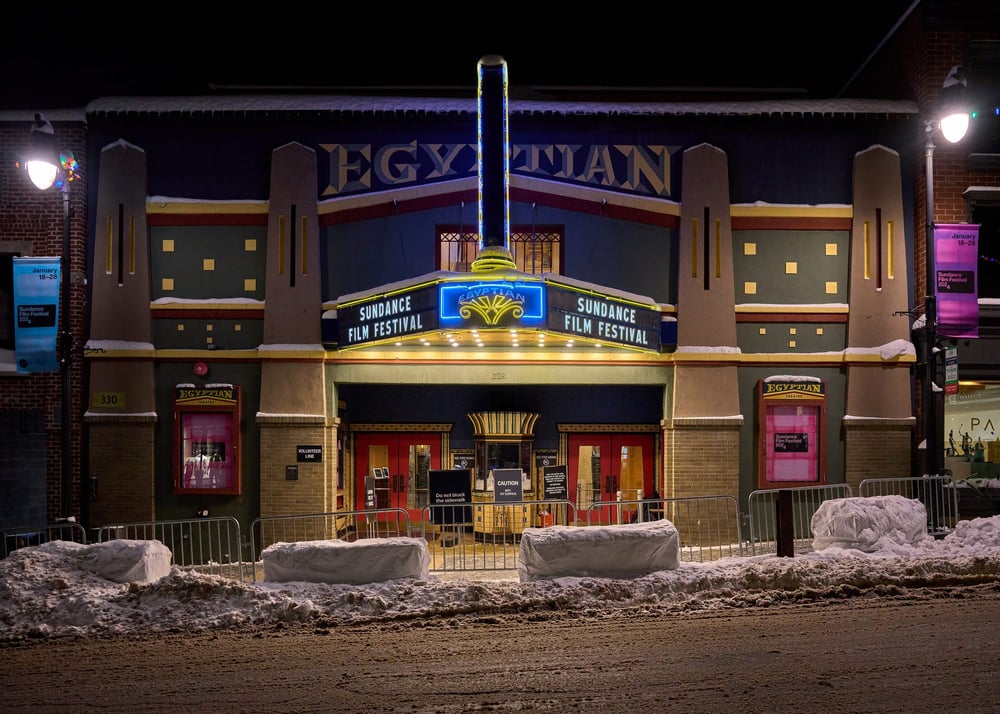

How much does a film festival submission cost?
The price depends on the festival, category and deadline. In Stephen Follows' September 2025 study of 4,631 festivals, average short film fees ranged from $30 to $55 across deadline stages; the corresponding feature averages ranged from $47 to $87.
Those are averages from a particular dataset, not the minimum and maximum you will encounter. Use them to understand the scale, then replace them with the actual fee for each eligible entry on your shortlist.
| Festival and fee stages | Short films | Features |
|---|---|---|
| Sundance Early / official / late | $55 / $75 / $95 | $80 / $100 / $125 |
| Tribeca Early / official / extended | $50 / $70 / $80 | $70 / $90 / $115 |
| Slamdance Early / regular / late / extended | $50 / $60 / $70 / $90 | $70 / $90 / $110 / $130 |
The table covers standard short and feature fees, not every special category or discount. Check the festival's own runtime and eligibility definitions before comparing prices.
- Sundance 2027 submissions have closed. The final short film deadline was 31 August 2026; features closed on 21 September.
- Tribeca 2027 still has deadlines ahead. Shorts have a $70 official deadline on 2 December 2026 and an $80 extended deadline on 3 February 2027. Features have a $90 official deadline on 18 November and a $115 extended deadline on 16 December 2026. Tribeca lists these deadlines at 11:59pm Eastern Time.
- Slamdance 2027 submissions have closed. Its extended deadline was 6 October 2026.
Does submitting early save money?
An early deadline can reduce the fee, provided your film and application are ready. Sundance's 2027 short film fee rose from $55 early to $95 late, a $40 difference for the same entry.
Sundance explicitly says it handles submissions identically across its deadline stages. That makes the saving a scheduling benefit, not evidence that paying more purchases better consideration.
Put the completion date beside the deadline before counting a saving. If meeting the early date means sending an unsuitable version, first check whether that festival accepts unfinished work and how replacements are handled. A lower fee is little help if the application cannot be considered.
How do you build a festival budget you can keep?
Choose a total spending limit first, then divide it between submissions and the costs of taking part. Here is an invented $600 plan for a short film whose maker wants a small, focused first round.
| Budget line | Assumption | Total |
|---|---|---|
| First submission round | 6 entries averaging $40 | $240 |
| Later decisions | 3 entries averaging $50 | $150 |
| Delivery reserve | Files, captions or required screening materials | $120 |
| Contingency | Unplanned costs within the limit | $90 |
| Total allocation | Before travel and accommodation | $600 |
The first round commits $240, not all $600. Keep the later allocation unspent until you have a reason to use it. Replace the averages with your shortlist's real prices, including currency conversion or payment charges that apply to you.
The $120 reserve may not cover your deliverables. Get actual quotes for anything you cannot make and check yourself, such as a Digital Cinema Package, subtitles or accessibility materials. If a required item costs more, reduce the entry list or consciously revise the total.
Travel needs its own decision. Price transport, accommodation, meals, local journeys and any additional passes before committing to attendance. Ask what an invitation includes; do not assume selection pays those bills.
What are you hoping the festival spend will achieve?
Decide whether you mainly want an audience screening, useful professional connections or a particular route for the film. These goals can overlap, but they give you different reasons to choose an event and pay to attend.
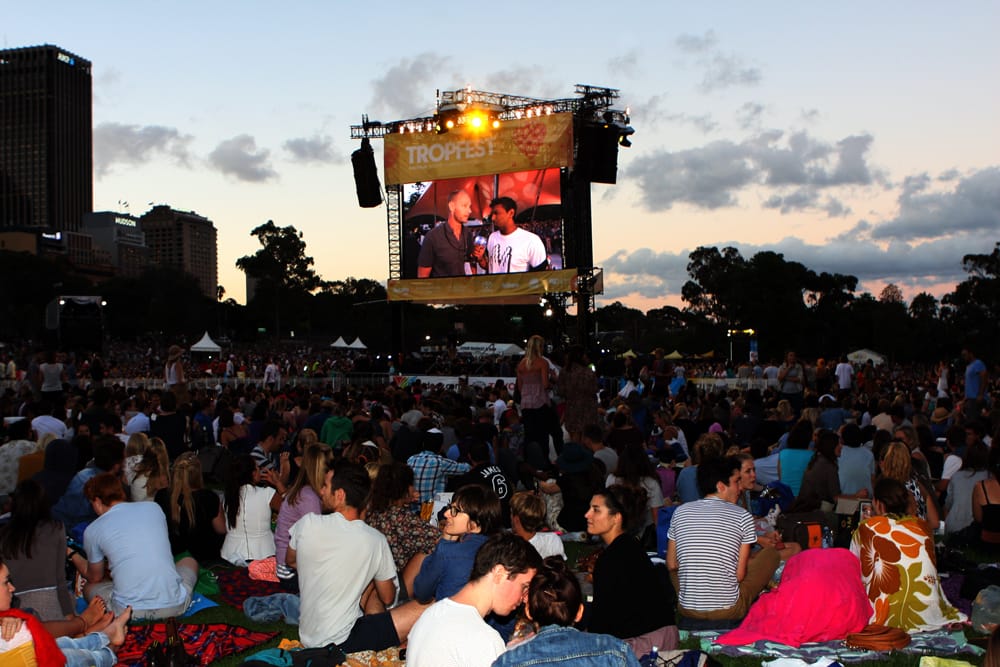

An audience gathered around a screen, as in the Tropfest photograph, is a different outcome from a selection email alone. If that shared experience is your priority, examine the event's actual screenings, location and attendance arrangements before paying for an entry.
For each shortlisted festival, write a sentence explaining why its programme suits this film. Our guide to what film festival programmers look for covers that separate creative question. Here, use the answer to decide whether an entry deserves part of your budget.
What can one filmmaker's $1,000 experience teach you?
Matthew Gomez's account shows why festival funding belongs in the plan before the submissions begin. In the video below, he says a premiere event raised more than $1,000 for his festival run, after he had already spent more than $3,000 making the film.
This is one filmmaker's experience, not a typical return or a verdict on every festival. A fundraising screening also has its own costs and may affect festival eligibility. Check those conditions before copying the event idea.
Can film sales recover your festival costs?
Sales can contribute, but you cannot budget on the assumption that they will happen. Start with the amount you want to recover and the net amount actually retained per transaction.
For a simple illustration, recovering a $600 festival allocation would require 200 transactions if each left $3 after all applicable deductions. At $4 retained, the count would be 150. These are hypothetical net receipts, not Vidreno prices, fee calculations or forecasts; additional release spending would increase the amount to recover.
Vidreno On Demand lets you set purchase and rental prices without a required subscription. Your public film page brings the film, trailer, artwork and crew credits together, giving interested viewers a clear destination when your rights and festival commitments permit a public release.
Keep that release separate from the festival's submission process. Vidreno On Demand is for your viewing audience; Vidreno Hosting is the separate service for videos embedded in your own website or app.
Use current transaction terms and actual receipts to track recovery, rather than treating the ticket price as profit. Our film landing page checklist can help you explain the film and its offer clearly. A page makes purchasing possible; reaching a suitable audience still takes work.
Questions about festival entry fees
Is the entry fee the same as a screening fee?
No. An entry fee is money you pay to submit. A screening fee is money a festival may agree to pay for showing a selected film. Keep them as separate budget lines and count a screening payment only when it has been agreed.
Do students get cheaper festival submissions?
Some categories offer a discount. Tribeca's 2027 rules provide one for eligible student shorts directed by a student and produced through an accredited educational institution. Follow its official verification process before paying; do not assume the discount applies to features or every student project.
Will a festival refund a rejected or ineligible entry?
Do not assume so. Tribeca's 2027 entry rules state that fees are not refundable, including when eligibility requirements are not met. Read each festival's own policy before spending.
How many festivals should I pay to enter?
Use the number of suitable entries your budget can support, rather than a target chosen in advance. A longer list is not automatically a stronger campaign. Reserve money for the opportunities you could actually use if selected, and stop when further entries no longer have a clear purpose.