
Quick answer
The best way to sell a short film directly to fans is to give a specific audience a clear reason to watch, send them to one public purchase or rental page, and make the next step easy to understand. Vidreno On Demand provides that selling page without a required subscription, with a flat 10% fee per sale including payment processing. You still need an audience plan: putting a film online does not create demand for it.
You don't need to persuade everyone who likes films. Start with the people most likely to care about this one. A twelve minute documentary about a local music venue has a different first audience from a science fiction short, even if both were made on the same budget.
This guide concentrates on finding those people and giving them a useful invitation. For a wider platform shortlist, see our comparison of services for selling individual films.
Who is most likely to pay to watch your short?
Write down three groups you can actually reach. “People who enjoy cinema” is too broad to help you decide where to spend Tuesday afternoon. Be specific about the connection between a person and your film.
| Audience | Reason to care | A useful invitation |
|---|---|---|
| People who asked for updates during production | They already know the project and want to see the finished film. | A personal release note with the trailer and viewing link. |
| The venue's community | They recognise the place, its history or the musicians. | A still and short introduction the venue can choose to share. |
| Readers of a local music publication | The story connects to music they follow. | A concise editorial pitch with a relevant scene or interview angle. |
These are possible routes, not promised partnerships or sales. Replace them with groups connected to your own film. A horror short might begin with a particular subgenre community and the cast's interested followers. A nature documentary might have a clear connection to a place or activity.
For each group, note who can reach it, what you can share and why the invitation belongs there. If you cannot answer the last question, leave that group off the first round. A smaller, relevant list gives you more useful feedback than a long list of strangers.
What are you asking the viewer to buy?
Make the promise small enough to understand at a glance: the complete film, its runtime, the price and the viewing terms. Don't hide a short runtime or suggest that a purchase includes downloads, extra films or group screening rights unless those are part of the actual offer.
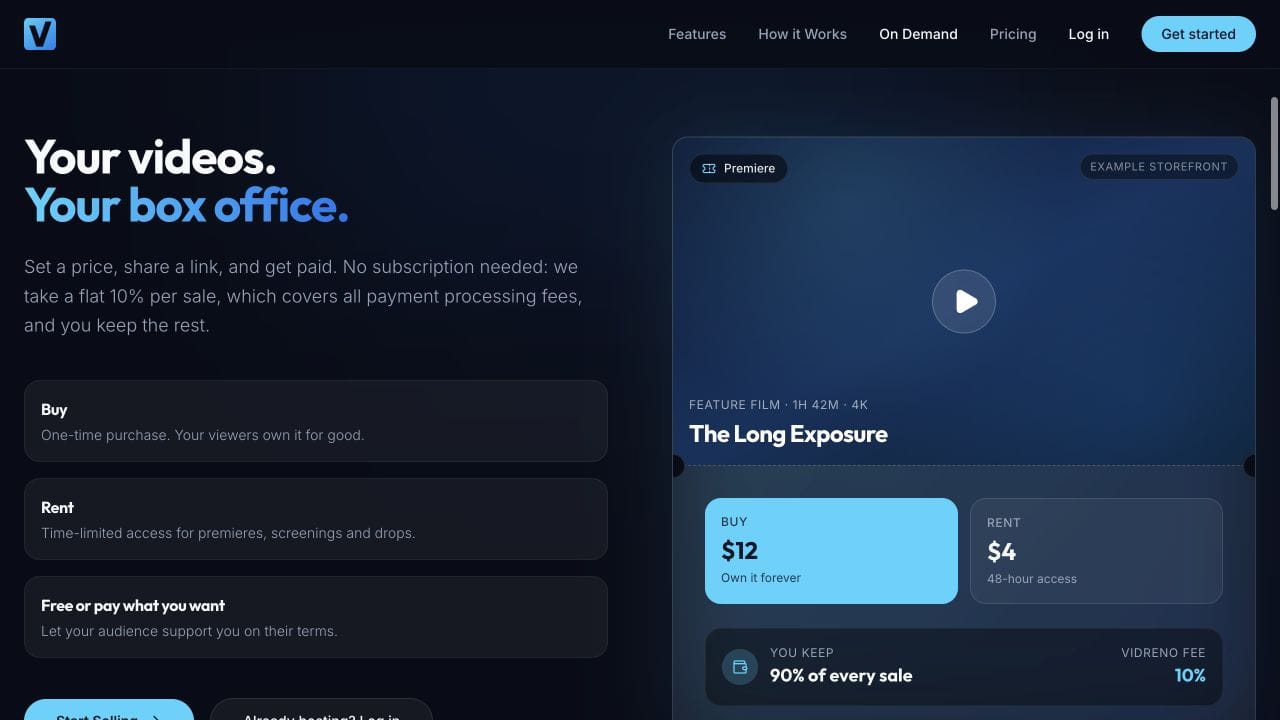
Vidreno On Demand gives your film a public page where viewers can buy or rent it. It is separate from Vidreno Hosting, which delivers videos inside customers' own websites and apps. For direct film sales, On Demand is the relevant service.
Choose a price using comparable offers and your release goal, rather than charging by the minute. Our film rental and purchase pricing guide has the worksheet for that decision. Keep the same offer across your initial invitations so the results are easier to interpret.
| Item | Published fee or illustration |
|---|---|
| Required subscription | None |
| Selling fee | Flat 10% per sale, including payment processing |
| Illustrative $5 sale | $0.50 selling fee and $4.50 left after that fee |
That $4.50 is not profit. Production, promotion and any other applicable costs or adjustments still matter. Starting without a recurring platform subscription keeps one fixed cost out of an uncertain first release. If you're weighing individual sales against a subscription service, our Vidreno and Vimeo OTT comparison covers those different models.
How do you invite fans without sounding like an advert?
Lead with the film's reason to exist. Then tell the reader what is available and where to watch it. You can be proud of finishing a film without making the entire invitation about the work it took you to make it.
Here is an invented example for the music venue documentary. Replace the details with facts about your own release:
Remember the little room above the record shop where everyone played their first gig? Our twelve minute film follows the people who kept it going. You can watch the trailer and rent the finished film for $5 at [film link]. The viewing period and access details are beside the price.
The subject comes first. The runtime and price help someone decide. The single link gives them somewhere to go. A different audience may need a different opening sentence, but the film and offer should stay consistent.
Send the announcement through channels where people expect to hear from you. For a community or publication, approach the organiser or editor with the relevant angle and let them decide whether to share it. Repeatedly dropping a sales link into unrelated conversations is unlikely to tell you much about demand for your film.
What should you give someone who wants to share the film?
Make a compact sharing pack: a strong still, a short synopsis, the trailer link, the viewing link and a contact address. Include the correct credits and a plain explanation of the offer. Give people enough to write their own introduction instead of asking everyone to copy the same post.
For the fictional venue film, the venue could share a recognisable still and a note about its history. A local editor might prefer the story of one musician. Your production supporters might care most about seeing how the finished film developed. Those are three invitations into the same film, not three different products.
StudioBinder's film marketing guide explains how trailers, artwork and audience selection fit into a campaign. Its video below provides broader context. Use it to think about your own materials, rather than treating a studio campaign as a budget you need to copy.
Watch StudioBinder's film marketing video on YouTube if the player does not load. It is general filmmaking education, not a Vidreno demonstration or a source for current platform fees.
Should you sell the film or release it free?
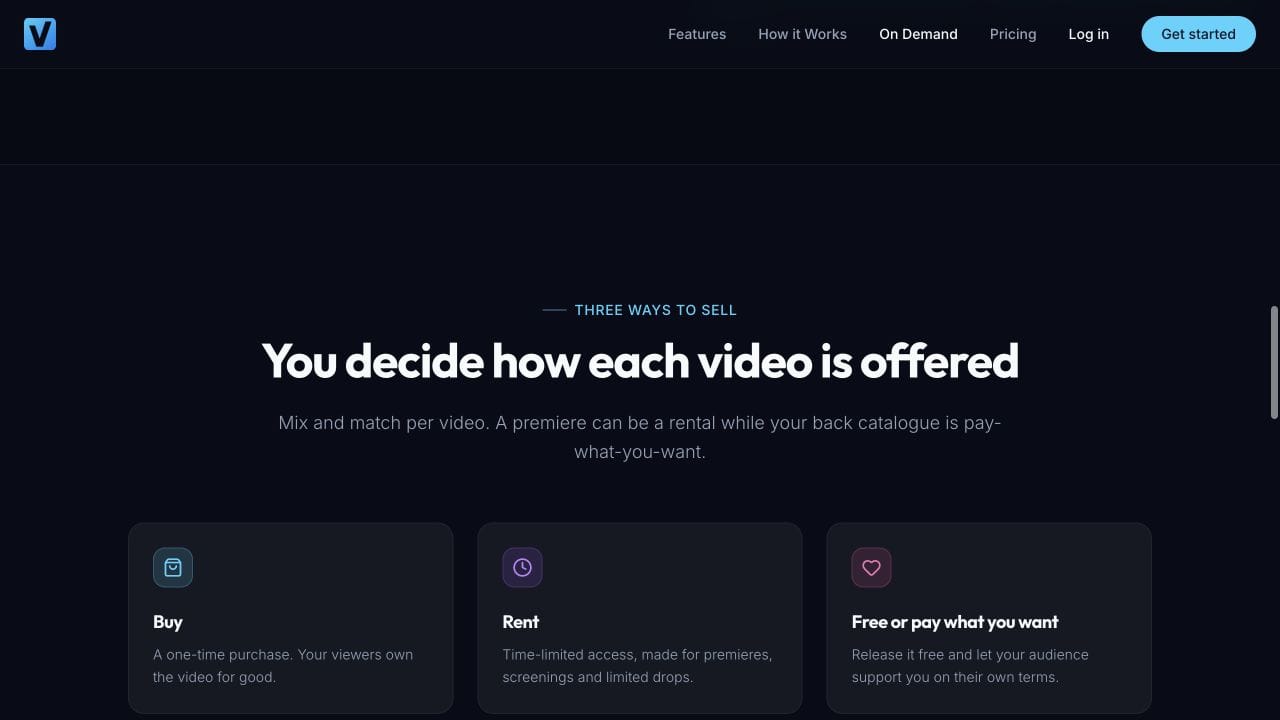
Decide what success means for this particular release. If the priority is receipts from an audience already interested in the film, a clear paid offer is a reasonable place to start. If the priority is helping as many people as possible see the work, free access with optional support may fit better.
A trailer or selected scene can introduce a paid film without giving away the whole viewing experience. If the complete film is already freely available elsewhere, explain the additional value of the paid offer honestly. Don't rely on viewers failing to find the free version.
You can also give a release a shared occasion. If a weekend event suits your audience, our rental premiere guide covers the timing and access questions. A normal ongoing film page doesn't need an artificial deadline.
How do you know whether your approach is working?
Keep a simple release log outside the selling platform. Record the date, audience group, message, link destination and the results you can actually observe. Page visits and completed transactions are different measures. A popular trailer is encouraging, but it is not a sales total.
| What you observe | What to investigate next |
|---|---|
| Few people reach the film page | Whether the invitation reached a relevant audience and whether the link was easy to find. |
| People visit but ask what they receive | Whether runtime, price, access and language are understandable before payment. |
| Viewers want to share it but cannot find the link | Whether your film title and public viewing link appear clearly in your announcements. |
| One group responds and another does not | Whether the connection to the film is stronger for the first group. Try a more relevant invitation before changing everything. |
Use whatever measurements your tools actually provide. Don't assume that Vidreno supplies a particular referral report or that you can attribute every purchase to a post. A small number of sales is useful feedback, but it does not prove a channel or price is best.
Before spending on promotion, set a budget you can afford to test. At the illustrative $5 price above, the receipt after the platform fee is $4.50. Spending more than that to acquire each sale would exceed those receipts even before other costs. That is a limit to consider, not a prediction of advertising performance.
Frequently asked questions
Can I sell a short film without a large following?
Yes, but a selling page does not supply a ready audience. Start with a small group that has a clear connection to the film and learn from its response. There is no follower count that guarantees sales.
Do I need my own website?
Not for the public selling page described here. Vidreno On Demand provides a page you can share. Your own website can still be useful as a lasting home for the film, its credits and future updates.
Should I pay for adverts straight away?
First make sure that interested people understand the offer and can reach the film. Then consider a small, bounded test if you have the budget and a way to measure useful results. More traffic will not explain an unclear offer for you.
What if the short is still being considered by festivals?
Read the current conditions of the festivals and release arrangements that matter to your film before making it publicly available. Do not assume that a paid page and a free upload are treated differently.
Can cast and crew help promote it?
Ask whether they would like to share it, and provide a still, accurate credits and the viewing link. Let them use their own voice. Participation in the film does not mean they have promised to run its marketing.
What if I am moving an existing film from Vimeo On Demand?
Separate the move from your new audience campaign. Use our Vimeo On Demand migration overview to prepare the transition, and explain any previous buyer access questions before inviting new sales.
Start with one short, one clear offer and three audiences you can name. Explore Vidreno On Demand, prepare your public film page and give the people most likely to care a good reason to watch.