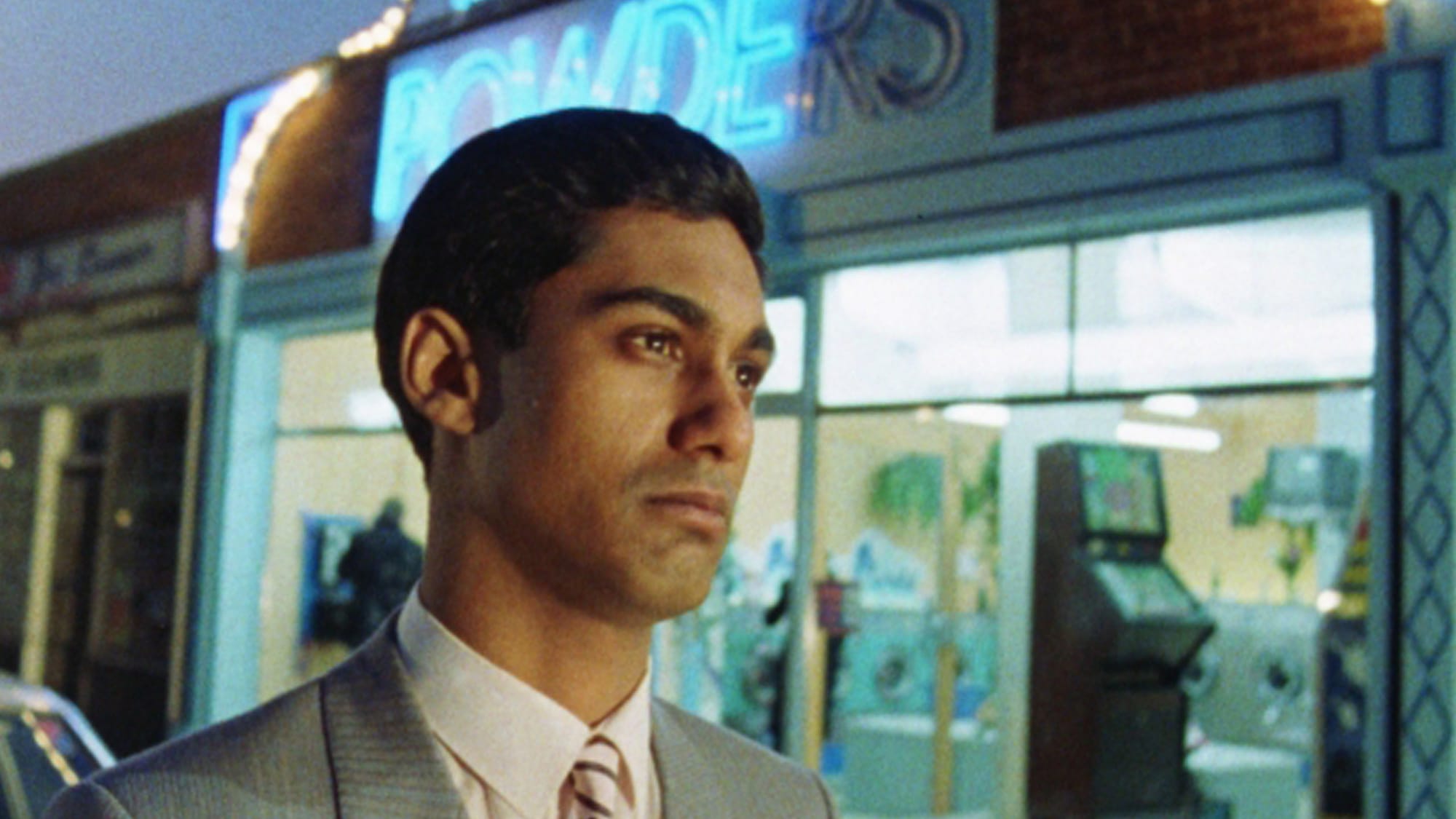
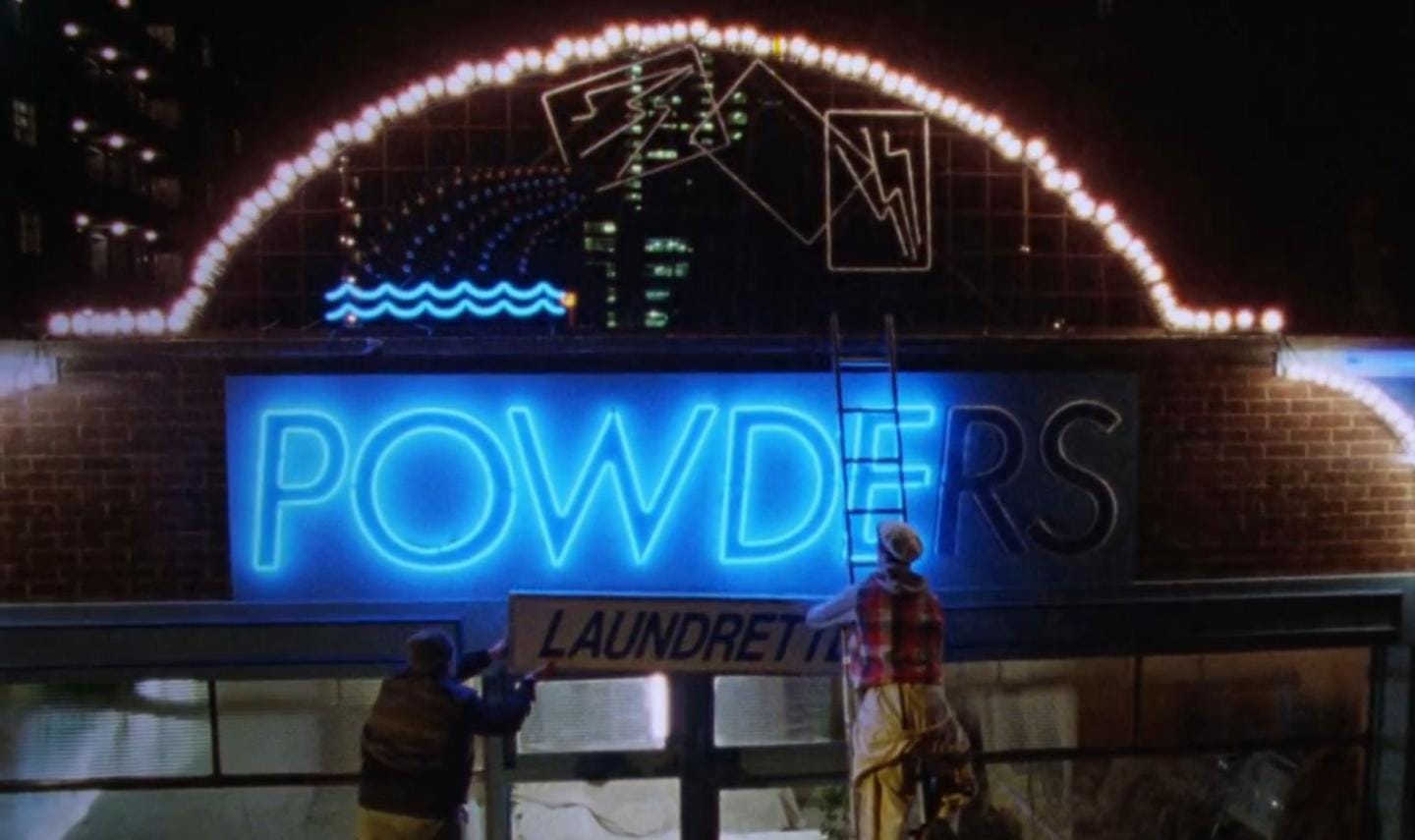
There is nothing modest about the blue glow above Powders. The laundrette promises that an ordinary shop can become somewhere glamorous, profitable and full of possibility. It is a business venture, a meeting place and a stage for a love story.
In My Beautiful Laundrette, Omar, a young British Pakistani man, takes on the business and reconnects with Johnny, a white former racist. Money, desire and family loyalty pull at their relationship.
The film’s route to the screen was just as particular. A playwright learning cinema worked with a director who initially expected a television audience. Their collaborators gave that intimate story a world you could feel beyond the shop window.
A screenplay that travelled through Karachi
In his own introduction to the screenplay, Kureishi remembers writing at night in his uncle’s Karachi home. Back in England, he continued while also adapting Brecht’s Mother Courage for a production starring Judi Dench.
The two jobs sat side by side, sometimes literally on separate writing pads in an orchard. But the methods could not stay the same. His early film scenes were crowded with dialogue, shaped by his experience of theatre.
He began cutting speech and making things happen: people moving, driving and running. That is a revealing part of the origin story. The writer was learning how action could carry a scene before an actor explained it.
Film on Four’s Karin Bamborough commissioned the script. Television offered a substantial audience for a story Kureishi wanted to tell seriously, with all its awkwardness and contradictions intact.
In the interview, Kureishi describes a family friend who owned laundrettes and introduced him to that business world. Pakistani entrepreneurship gave him material beyond the familiar story of exclusion and hardship.
He also remembers the romance as central to the film: two people falling in love and kissing. Frears asked him for a happy ending. The political tensions could remain complicated while the lovers were allowed tenderness.
The script in Frears’s letterbox
Frears recalls expecting a worthy social problem film when the script arrived. Then he read it and laughed. Its humour changed his expectations, and the television commission became a collaboration with Kureishi and Working Title producers Sarah Radclyffe and Tim Bevan.
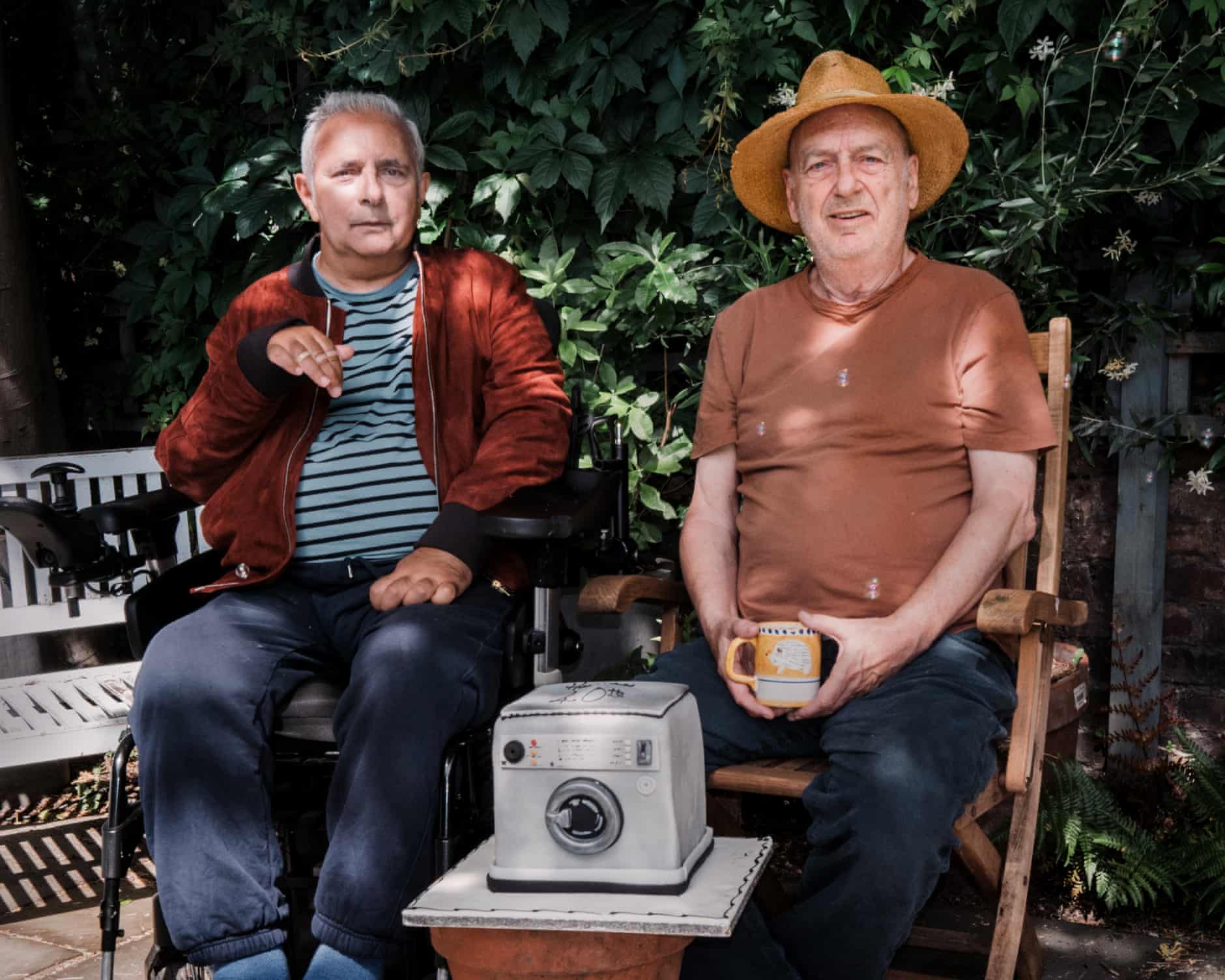
In his interview with Colin MacCabe, Frears discusses choosing the two leads together. Gordon Warnecke became Omar; Daniel Day Lewis became Johnny. Casting a relationship meant looking at what happened between the actors.
Giving Rachel more to do
Collaboration also changed the writing. In Criterion producer Kim Hendrickson’s production notes, Shirley Anne Field pushed for a more substantial part as Rachel. Kureishi developed the character further.
The film’s visual references were equally specific. Hendrickson traces the laundrette’s mirror idea to Paris, Texas, and its final doorway and water play to The Searchers.
Those references suggest a useful way to watch the film: its small rooms contain ideas borrowed from a much bigger cinema. The romance and the business do not have to look small simply because they occupy one shop.
Building Powders in south London
The laundrette stood at 25 to 27 Wilcox Road in Vauxhall. The BFI’s location investigation identifies the shop and the surrounding streets, along with the Queenstown Road building used for Omar’s father’s home.
The Powders frontage has since disappeared. The film preserves a version of the street that a visit today cannot recreate.
Look at the still below: a bright blue name, a row of bulbs and a ladder against the sign. The transformation of the shop is visible work. We can see the enterprise being assembled before it is ready to welcome anyone.
Oliver Stapleton brought bold colour to the street
Cinematographer Oliver Stapleton had been shooting music videos. In his interview below, he explains how strong colour contrasts carried into his approach to this film, including blue moonlight against amber street lighting.
His memories make the lighting feel like a response to the screenplay’s energy. Colour could be assertive while the actors remained at the centre of a scene.
Frears stood beside the lens
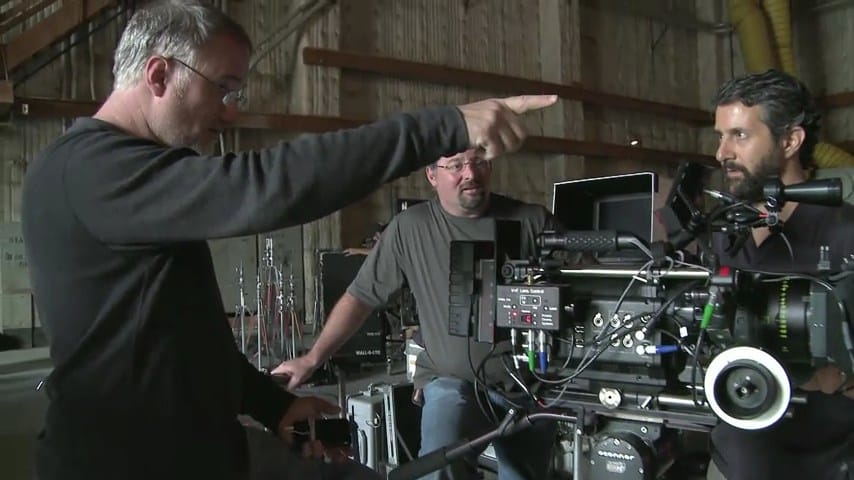
Stapleton remembers rehearsing before deciding the shots, rather than following a storyboard. With no video monitor available on their 16mm setup, Frears stayed beside the camera and watched the performance directly.
For a different approach to responding to performers and locations, read Adolpho Veloso’s story, including his collaboration with Clint Bentley.
The team beyond the two leads
The film’s credits show the wider collaboration behind its rooms, clothes, rhythm and sound.
| Work | Collaborator |
|---|---|
| Production design | Hugo Luczyc Wyhowski |
| Costume design | Lindy Hemming |
| Editing | Mick Audsley |
| Casting | Debbie McWilliams |
| Music | Ludus Tonalis |
From 16mm television film to cinema release
Frears explains that 16mm suited the television destination. The team was not setting out with the expectations attached to a major cinema release.
That changed at Edinburgh. Graham Fuller’s Criterion essay records the film’s move to 35mm for its August 1985 festival showing. A UK cinema release followed that November, then a US release in March 1986.
Accounts of the production figures differ. Frears’s Guardian account gives £600,000 and six months; Fuller records $900,000 and six weeks. Those figures should remain attributed.
What is clear is the change in scale of its audience. A film conceived for television found a cinema life through the work itself and the response at a festival.
Its latest return offers another chance to hear from someone who was there. Kiln’s 16 October 2026 screening includes a Q&A with Gordon Warnecke, hosted by Debika Ray.
A few useful details
Was My Beautiful Laundrette made for television?
Yes. Channel 4 commissioned it, but its festival reception helped take it into cinemas before its television life.
Was Powders a studio set?
The exterior was a shop on Wilcox Road in Vauxhall. The BFI’s location research identifies the original address and documents how the area has changed.
Who wrote and directed the film?
Hanif Kureishi wrote the screenplay and Stephen Frears directed. Sarah Radclyffe and Tim Bevan produced it.
Which interview explains the camerawork?
Oliver Stapleton’s conversation above covers colour, rehearsal and filming without a video monitor. It is especially useful alongside the night scenes.
For another production story that connects writing with visual decisions, read how The Social Network was made.
Making a film of your own? Create a free Vidreno account to explore the platform.