John Wilson grew up on Long Island, making his friends laugh with family camera films he called the Johnny Show.
That habit eventually became a television career. But the distance between a homemade video and an HBO commission was filled with study, paid editing work and short films that already sounded like him.
His story is worth following beyond the breakthrough. After three seasons of How To with John Wilson, he had to work out what came next: another film, a small cinema and a different relationship with the audience.
Learning to notice the moments between performances
At Binghamton University, Wilson found an experimental cinema programme rather than a conventional production training course. In his account for the university, he names teachers Monteith McCollum and Ariana Gerstein as important influences.
McCollum’s documentary class changed his direction. Wilson had been interested in fiction; nonfiction showed him a way to make worthwhile work without much money. He graduated in 2008.
His student documentary Looner explored a balloon community. Gerstein remembered a filmmaker prepared to approach strangers and pursue an idea carefully, even when it took him outside comfortable situations.
Looking back with MoMA, Wilson describes another shift in his early twenties. The staged performances in his childhood tapes became less interesting than the moments between them: relatives sitting together, a gesture, life continuing after the planned scene.
The jobs and little films before HBO
One early job involved working for a private investigator. Wilson told the Television Academy that he searched through hours of surveillance footage for tiny revealing moments. It was unusual preparation for a filmmaker who would become so attentive to apparently uneventful images.
He also shot infomercials. Alongside paid work, he began posting his own tutorial films online in 2011. The instructional title gave him somewhere to begin, while leaving room to wander.
In the CBS interview below, he explains that How to Clean a Cast Iron Pan was a portrait of an untidy friend.
A spare seat and a David Byrne film
In 2015, an extra place in a van let Wilson tag along during the making of David Byrne’s Contemporary Color. His own film became Temporary Color, which IMDb dates to 2016.
Byrne liked Wilson’s film enough to include it on the DVD. A small opening had given him somewhere new to take his camera.
Other early films show that voice developing:
- How to Walk to Manhattan and How to Live with Bed Bugs, both from 2013.
- Los Angeles Plays New York, from 2016.
- The Road to Magnasanti, from 2017.
His IMDb filmography records those credits. Vimeo also commissioned Escape from Park City, publishing its Sundance film and interview in April 2017. These were individual films with their own audiences before the television series existed.
The big break: Nathan Fielder and How To
The decisive meeting came in a restaurant in 2018. Nathan Fielder had seen Wilson’s work. They connected, developed a more ambitious version of the shorts and took the pitch to networks. HBO commissioned a pilot, then the series.
Fielder helped turn an existing body of work into television. Wilson’s style had been developing for years.
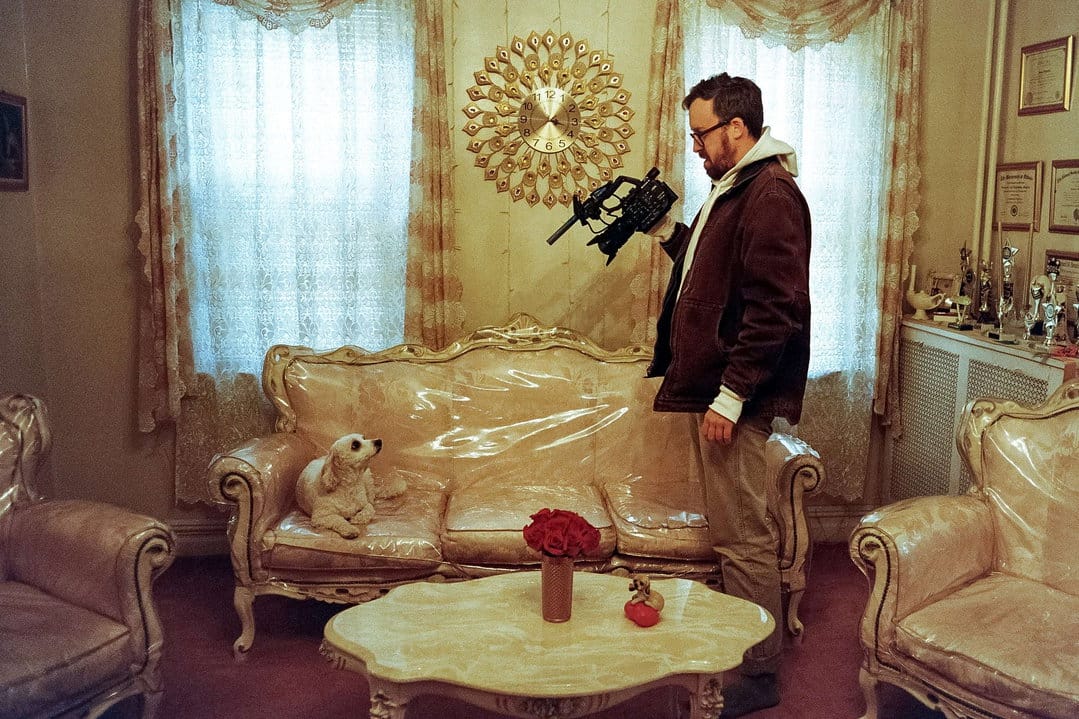
How To with John Wilson premiered in October 2020. Alongside Wilson and Fielder, its executive producers included Michael Koman and Clark Reinking, as recorded in HBO’s credits.
Wilson supplied a voice full of pauses and uncertainty. When a sound editor removed some of its clicks and tics, he asked for them back. The imperfect delivery belonged to the work.
Fielder’s support also reached the street. In his 2026 interview with It’s Nice That, Wilson remembers Fielder encouraging him to approach people during the first season. A refusal did not have to end the day.
That is a more useful picture of collaboration than the idea of an effortless observer. The person behind the camera could be anxious and still learn to begin a conversation.
How he turns a walk into a story
In MoMA’s visit to his home and workspace, Wilson describes taking a train into Manhattan, choosing a stop and walking until he gets tired. An initial idea gives the outing direction without deciding everything he will find.
His references include the Maysles brothers and Robert Frank. He also digitises strangers’ family videotapes, preserving moments whose significance can change over time.
The edit gives those discoveries their relationships. Wilson told It’s Nice That that he keeps favourite shots in a large sequence, then searches through it. Looking for one image can remind him of another and change the idea.
That helps explain the films’ movement. A seemingly unrelated image can answer the narration, interrupt it or quietly make it ridiculous. The order matters as much as the material.
For another filmmaker shaped by observing real life, read Adolpho Veloso’s story, including the documentary background he brought to cinematography.
After the series: making a room for an audience
The third and final season of How To began in July 2023. Its end left Wilson with the less glamorous problem of finding a routine again.
At 9:20 in the MoMA film, he explains that he leased a small commercial space and began building a theatre with friends. The camera catches the work while the room is still becoming a cinema.
That project became Low Cinema in Ridgewood, Queens. Making films and making somewhere to watch them had become connected parts of his life.
The History of Concrete and the next chapter
After some false starts following the series, Wilson took his camera to a Hallmark writing workshop. He told The Hollywood Reporter that it initially sounded like an amusing way to spend an afternoon.
It became part of The History of Concrete. The film joins his interest in the material beneath a city to the question of how a filmmaker finds a project and persuades others to support it.

The work is in finding a shape for people and events that did not arrive as a ready made story. In the interview below, Wilson compares joining those characters into one narrative to solving an exceptionally difficult Sudoku puzzle.
He also describes the precision of a visual joke: the audience needs time to read the image before his voice delivers the punchline. The wandering structure still depends on exact decisions.
Sundance records the premiere on 22 January 2026. This month, the film reaches the BFI London Film Festival, whose programme lists screenings from 13 October.
Wilson’s delight at hearing cinema audiences laugh gives this chapter a particular warmth. After years of recording people, assembling images and sending finished work away, he can sit in the room and hear what comes back.
A few useful details
What was John Wilson’s big break?
How To with John Wilson brought him to a much wider audience in 2020. Nathan Fielder helped develop and pitch the series after meeting him in 2018.
Did he make films before television?
Yes. His student work and online shorts preceded HBO, including Looner, How to Clean a Cast Iron Pan and Temporary Color.
What did he make after How To?
His 2026 documentary The History of Concrete follows the television series. He also helped build Low Cinema in Queens.
Where can you follow his work?
Explore John’s Movies, his IMDb credits and @peepingjohn on Instagram, linked from his It’s Nice That interview and confirmed in his MoMA film.
For another story of early films opening a larger door, read Christopher Nolan’s beginnings and breakthrough.
Building a home for your own films? Explore Vidreno with a free account.