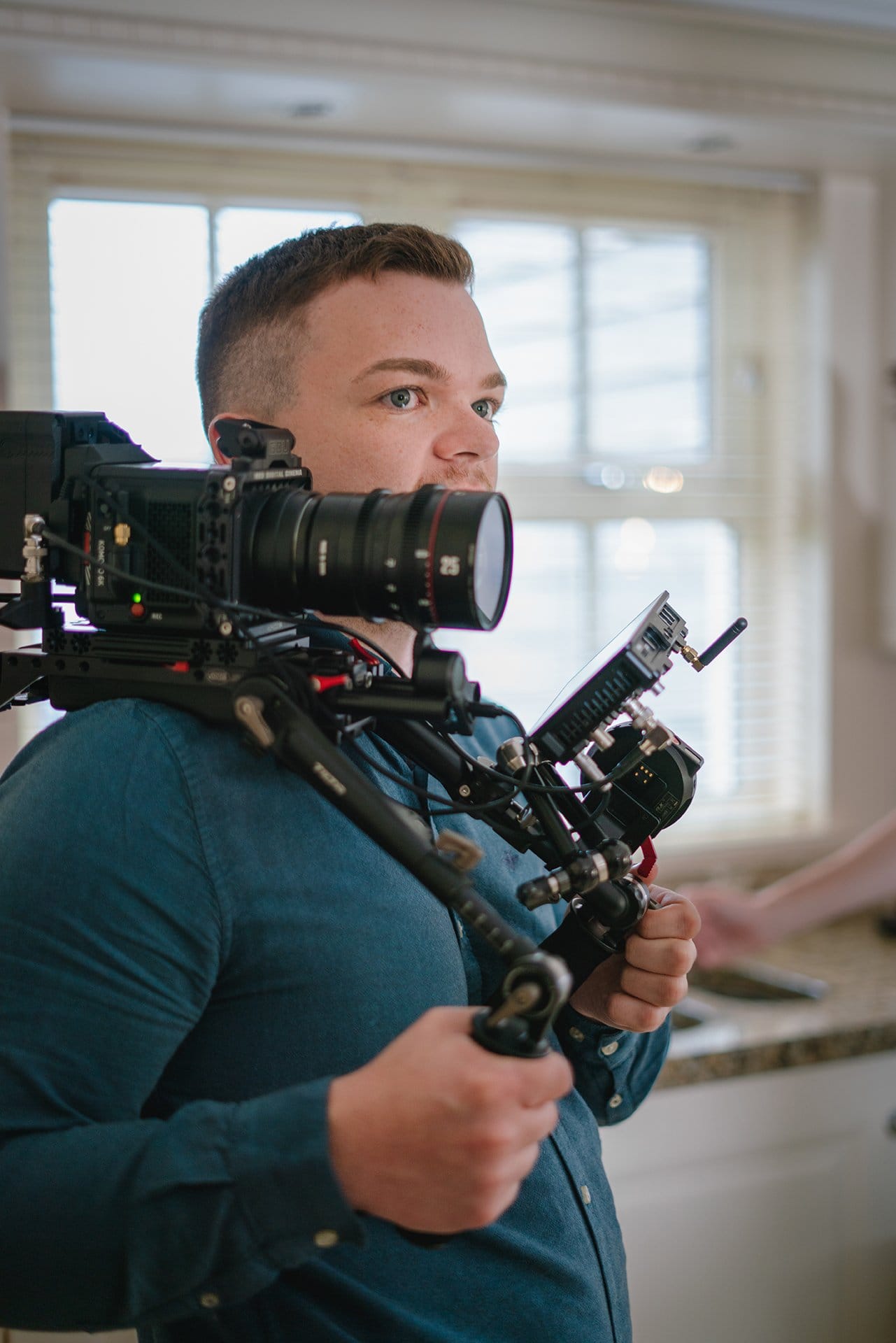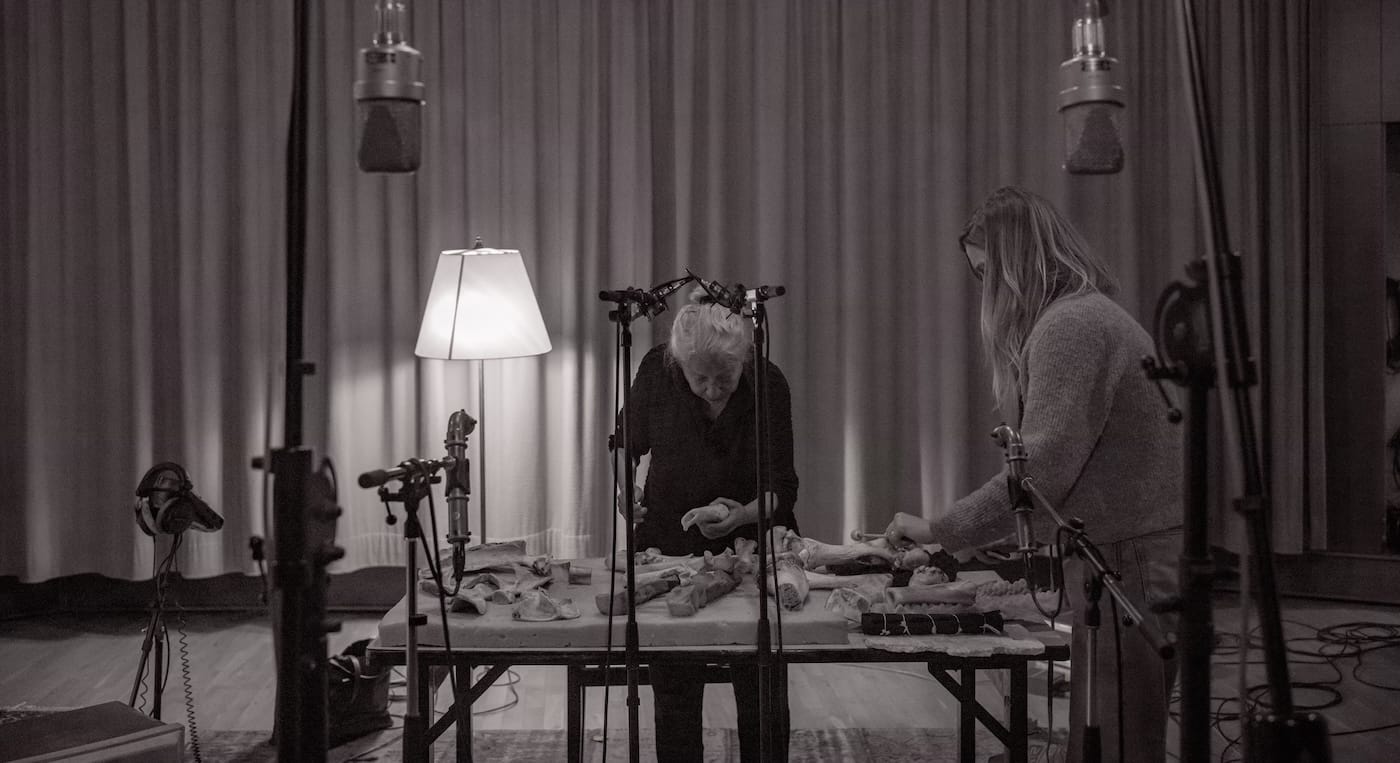
A table covered in bones, microphones hanging above it, musicians trying to make something speak. The photographs from 28 Years Later: The Bone Temple show a recording session that looks almost like an excavation.
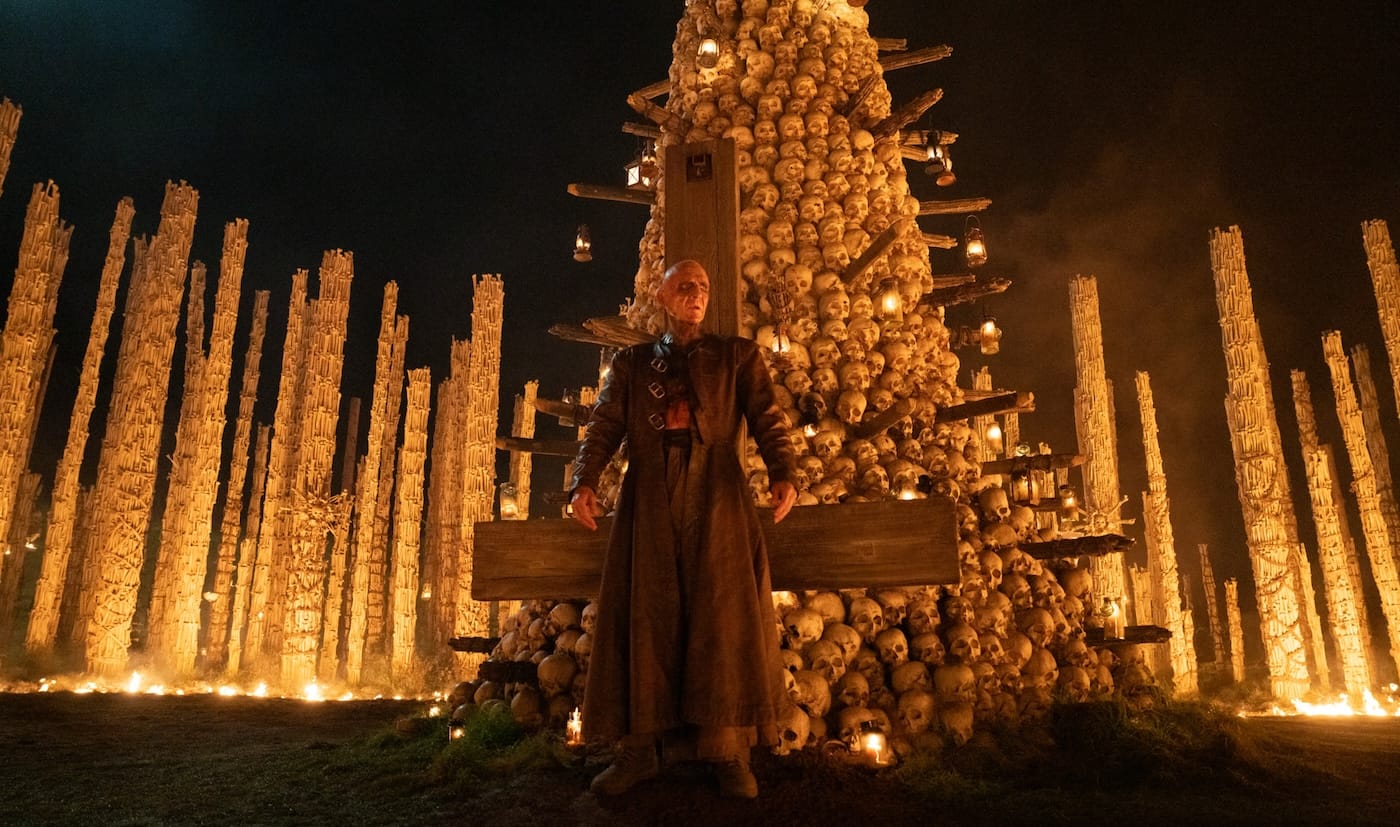
For composer Hildur Guðnadóttir, those materials belonged to the story. Nia DaCosta’s film, written by Alex Garland, placed an extraordinary structure at its centre. She wanted its physical character to reach the audience through sound.
That led to bone percussion, flutes and an enormous horn. But the score also needed tenderness, and enough force for the attacks. Making those parts belong together is the interesting story behind the unusual instruments.
A theme before the cameras rolled
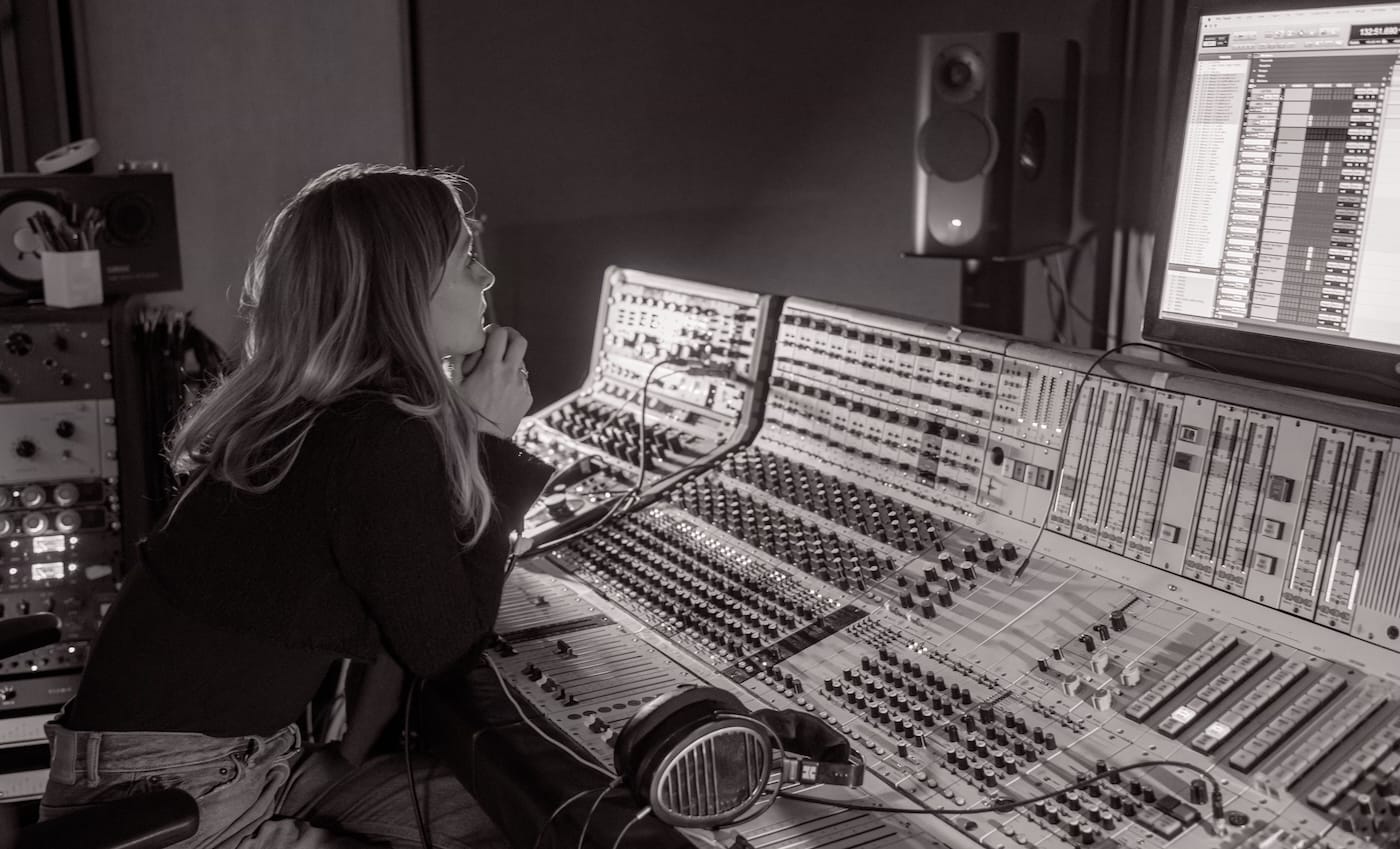
Guðnadóttir and DaCosta had already collaborated on Hedda. In her Soundtracking conversation with Edith Bowman, the composer describes a director with a clear sense of direction who remained open to what collaborators could bring.
Reading The Bone Temple, Guðnadóttir felt drawn towards an elegant, baroque approach. DaCosta wanted strings. The main theme followed their first discussions, before the film was shot.
At 16:04 in the interview, she explains that the director could hear that music before going into production. They had an actual sound to respond to while the film was still taking shape.
The temple suggested its own instruments
In her Screen International interview, Guðnadóttir traces the idea to early sketches of the temple. Bones were part of its visual language. She began imagining them as the material of a small ensemble.
The set could not simply supply her instruments. In the Soundtracking interview, she recalls discovering that its bones were made from foam. The appearance was right for the camera; the material would not give her the sound she wanted.
A butcher, a pot and a lot of experimenting
She contacted a friend who owned a burger restaurant and arranged to get leftover bones from the butcher. She boiled them, removed as much marrow as she could, then started testing what sounds they could make.
That sequence matters. The idea did not arrive as a finished orchestration. It began with preparing the material and finding out how it behaved.
The resulting collection included percussion and flutes. A giant horn became another prominent voice. Asked on camera which animal it came from, Guðnadóttir says she does not know.
What the bones brought to the sound
Speaking to The Credits, Guðnadóttir describes a rounded, rich texture when she strikes bones, different from the sharper quality she hears in plastic, steel or glass.
She wanted the music to retain something raw. That is a useful distinction: an unusual object can be polished until its identity disappears. Here, its character was the reason for using it.
The work was messy too. In the Soundtracking conversation she remembers the smell of the sessions and marrow still escaping from the instruments. The pleasure she describes sits alongside the practical business of making them work.
For a different story about an instrument shaping a score, read how Hans Zimmer and Roger Sayer developed Interstellar’s organ sound. In both cases, the performer and the physical instrument are part of the writing.
Osmium supplied another kind of energy
Guðnadóttir was working on an Osmium record when the script arrived. She told The Credits that her band felt right for the film’s attack sequences. Loud, experimental music was already part of her musical life, including work with Sunn O))).
The score could therefore draw on several distinct resources:
- Strings: room for elegance, emotion and the humanity within the story.
- Osmium: the force she wanted for the attacks.
- Bones and horn: physical textures connected to the temple.
These are the broad ingredients she describes, rather than a rule assigning every scene to one sound. The contrast gives the music somewhere to move.
Making a sequel without hearing its predecessor
There was another unusual constraint. In her In The Seats interview, Guðnadóttir explains that she had read the scripts for both films, but had not seen or heard the first 28 Years Later while making the sequel.
She knew Young Fathers were composing its music. She could follow the story on the page, but could not use that score as a reference.
At 11:52 in the conversation, she describes the combination of freedom and nerves. By the time she watched the earlier film in a cinema, her own work had already been delivered.
She still valued the series’ use of bands and the contrast between beauty and horror. Those were ideas she could respond to without matching a score she had not heard.
The songs Kelson keeps for company
The original score sits alongside existing songs. In the short Reuters interview below, Ralph Fiennes credits Garland with choosing and placing that music in the story.
His explanation of Kelson singing Duran Duran is simple: the character enjoys it, and it helps him hold himself together. Music can keep an isolated person company.
That gives the soundtrack a human scale. The bone instruments connect us to the film’s extraordinary setting; a familiar song connects us to someone trying to live inside it.
A few useful details
Who composed The Bone Temple?
Hildur Guðnadóttir composed the score for Nia DaCosta’s 28 Years Later: The Bone Temple. Their collaboration also includes Hedda.
Were real bones used in the music?
Yes. Guðnadóttir made percussion instruments and flutes from bones. The foam bones used for the set were a different material serving a different purpose.
Which band contributed to the score?
Guðnadóttir brought in her band Osmium, whose sound she connected with the attack sequences.
Was the music written before filming?
The main theme was. Guðnadóttir describes writing it after reading the script and talking with DaCosta, giving the director an early sense of the music.
For another score that grew from musicians experimenting together, explore how Kyle Dixon and Michael Stein made the Stranger Things theme.
Making films of your own? Explore Vidreno with a free account.