
A subscription can look attractive on a spreadsheet. Sell once, collect every month. The missing question is what makes somebody want the second month after they have watched the film that brought them in.
That is the decision this guide helps you make. We are choosing the audience promise and selling model, rather than ranking platforms or choosing a rental price. Our film pricing guide handles the separate question of what to charge for a title.
What is the difference between SVOD and TVOD?
SVOD means subscription video on demand: viewers pay periodically for access to a collection. TVOD means transactional video on demand: viewers pay for a particular purchase or rental. A rental's access expires under the stated terms. A purchase offers the continuing access described by the platform and seller.
OTT describes delivery over the internet, not a single payment model. An OTT service can offer subscriptions, individual transactions or both. Vimeo's guide to selling models gives examples of those distinct offers.
A television app is another decision again. You can evaluate the selling model before commissioning an app. Our guide to selling a feature through a web page covers the viewing journey and device checks.
What are people coming back for?
Start with a sentence you could put beside the payment button. “Rent this documentary for the stated viewing period” is a complete offer. “Join our film collection” needs more explanation: which films, why this collection, and what makes keeping access worthwhile?
You do not necessarily need a new film every week. A carefully curated archive can have lasting value. But a large file count alone does not show that viewers want ongoing access. Five relevant films can be a stronger reason to return than fifty unrelated ones.
| Audience situation | Model to consider first | Question to answer |
|---|---|---|
| People arrive for one documentary or premiere | Individual rental or purchase | Can they understand and buy that one offer? |
| A consistent audience wants a continuing series | Subscription | Can you maintain the promised release rhythm? |
| A specialist archive has repeat research or viewing value | Subscription or individual titles | Do viewers want ongoing access or a few specific films? |
| A catalogue serves several unrelated audiences | Individual titles first | Would one membership ask people to pay for work they do not want? |
| Regular members and occasional premiere buyers both exist | A clearly explained combination | What is included, and what costs extra? |
These are decision prompts, not universal rules. Use audience interviews, actual returning viewers and purchase behaviour when available. A social follow or a polite expression of interest is weaker evidence than someone paying and coming back.
Write a three month viewing promise
Before pricing a membership, fill in three rows on a page. For each month, record what a member can watch, why it matters to that audience and whether you can reliably deliver it. Include the existing archive where it provides real value.
- Month one: the film or collection that gives somebody a reason to join.
- Month two: the next useful viewing experience, rather than a vague promise of more content.
- Month three: what continues after the launch excitement has passed.
For a hypothetical wildlife film collective, that might be a finished coastal documentary, an already completed fieldwork film and a curated archive programme. If the second film is only an idea and nobody has time to curate the archive, the subscription promise is not ready.
Compare renewals, not just the first month's sales
Here is an intentionally simple worksheet. Imagine 100 people each paying $8 to join a monthly collection. Of that original group, 70 pay in month two and 50 in month three. With no new subscribers, gross receipts across those months are $800 + $560 + $400 = $1,760.
Now imagine 100 people buying one film for $12. That produces $1,200 once. They might buy a later film, but that is a separate sale to earn, not an automatic renewal.
| Illustrative offer | Month one | Month two | Month three | Gross total |
|---|---|---|---|---|
| $8 monthly collection; 100, then 70, then 50 paying viewers | $800 | $560 | $400 | $1,760 |
| One $12 film purchase by 100 viewers | $1,200 | $0 assumed | $0 assumed | $1,200 |
The subscription brings $560 more in this example, before any fees or costs. That advantage disappears if the extra programme and operating costs exceed it, all else equal. With only 30 renewals in month two and 10 in month three, subscription gross receipts would instead be $1,120.
These are invented planning scenarios, not industry retention benchmarks, a forecast or a comparison of real customer results. They use the same starting group only to make the arithmetic readable. In reality, a subscription and a single film may attract different numbers of buyers. Model those differences as well as fees, refunds, taxes and your own costs before treating a larger gross number as better.
Can you offer subscriptions and individual films together?
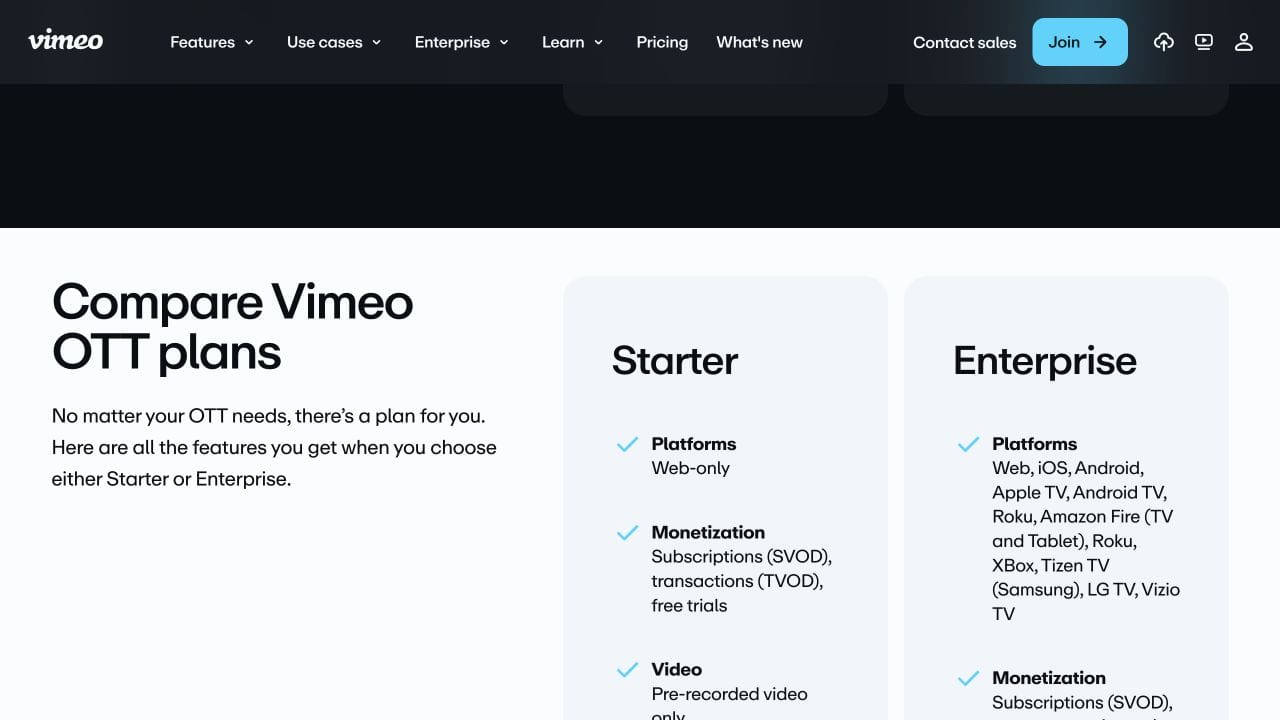
Yes, on a platform that explicitly supports both. For example, Vimeo OTT describes separate subscription and transaction products. That is a capability to check, not a reason to launch both on day one.
Keep the promise clear. If a new premiere costs extra, say so before someone joins. If individual purchases retain different access from a subscription, explain that difference. A viewer should not have to read a support article to discover that the film they wanted was excluded.
You also need evidence that the extra complexity serves two real audiences. Adding a second checkout option creates more terms to explain and more questions to answer. Start with the simplest offer that matches the people you can reach.
When does selling individual titles make more sense?
For one finished film, occasional releases or an audience gathered around a particular subject, an individual purchase or rental is often the clearer starting offer. You can sell the work that exists without promising a continuing programme.
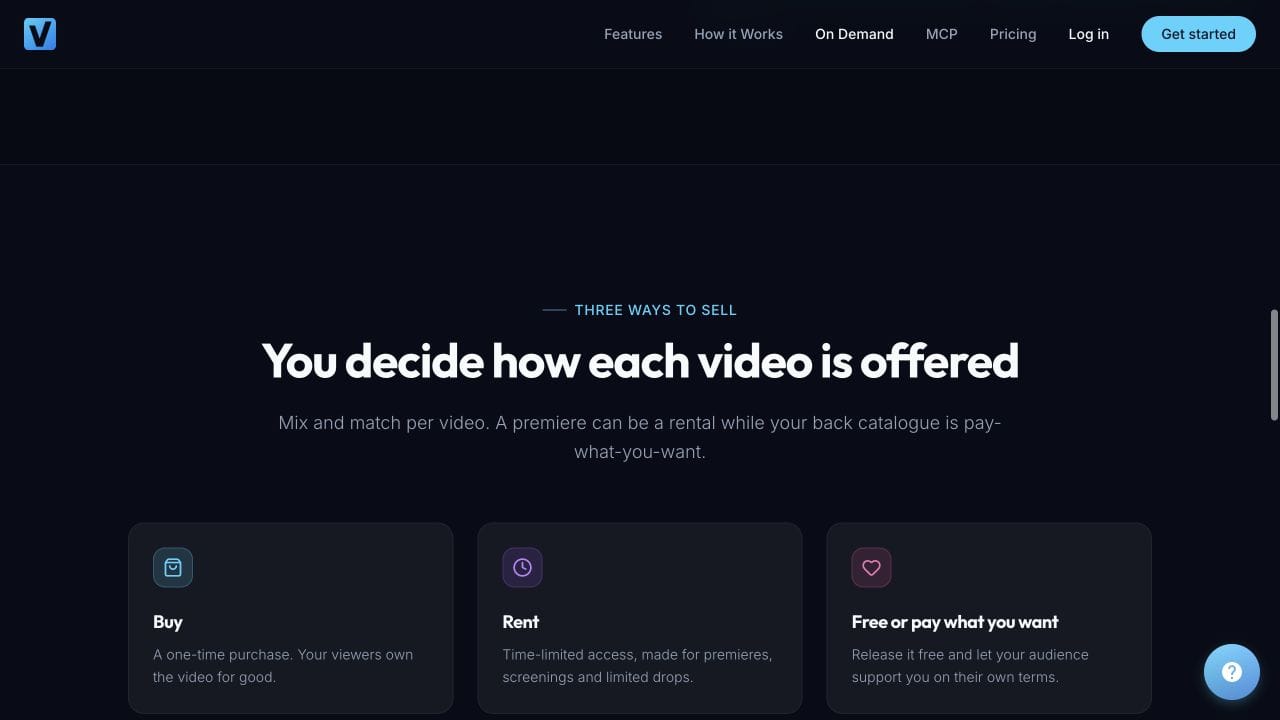
Vidreno On Demand provides public film pages with purchases, rentals and free access with pay what you want. It prices videos individually. Do not choose it on the assumption that it supplies a recurring library subscription. Vidreno Hosting is separate and serves embedded video on customers' websites and apps.
| Item | Published fee or calculation |
|---|---|
| Required platform subscription | None |
| Selling fee | Flat 10% per sale, including payment processing |
| Illustrative $12 purchase | $1.20 fee; $10.80 left after that fee |
| Illustrative 100 purchases at $12 | $1,200 gross; $120 fee; $1,080 left after that fee |
Those amounts follow the published On Demand offer. They are receipts after the stated fee, not profit. Your production, release and other applicable costs still matter. The practical benefit is that you can begin selling one title without a required monthly platform subscription.
What should you measure before expanding?
For individual films, record how many relevant visitors reach the offer, how many buy, receipts after fees and whether previous buyers return for another title. For a subscription, also track the original joining group over later paid months. New signups can make the total look healthy while earlier members leave.
Ask people what brought them in and what would make them return. Then compare their answers with what they actually watch or buy. Keep a review date and a short record of changes so you can distinguish a new release from a price change or a different promotion.
Film Courage's interview with filmmaker Josh Folan gives useful context on the preparation and audience work behind self distribution. It is broader than subscriptions, but it is a useful reminder that the selling platform does not do the release work for you. It is not a source for current fees or our illustrative renewal figures.
Watch the Josh Folan interview on YouTube if the player does not load.
Frequently asked questions
How many films do I need before offering a subscription?
There is no reliable universal minimum. The collection needs a clear audience and a reason for ongoing access. Test that promise instead of treating the number of uploaded files as proof of demand.
Do I have to release a new film every month?
Not necessarily. An archive or carefully curated collection may provide repeat value. Be explicit about what members receive and avoid promising a schedule you cannot maintain.
Are annual subscriptions a way to avoid worrying about retention?
No. Collecting a year in advance changes payment timing, but you still owe the promised access and experience. Review renewals and costs over the actual period rather than treating the initial payment as evidence of lasting demand.
Can a short film support a subscription?
A short can introduce a wider collection, but its running time alone does not create a recurring offer. If people only want that one film, an individual purchase or rental may be easier to explain.
Should I automatically move existing buyers into a membership?
No. Treat a subscription as a new offer and preserve the access terms you already promised. Make clear what changes and let buyers decide whether the additional offer is useful.
What if I do not know whether viewers will return?
Start with a clear individual release and measure interest in the next one. If you already have an archive, ask viewers which parts they would revisit. Build the evidence before making a recurring programme commitment.
If your next step is to sell a particular film, Vidreno On Demand gives you a public place to offer it without a platform subscription. If your next step is a continuing channel, first make sure you can explain what viewers will still value three months from now.